Category Archives: Free markets and their discontents

Philip Pilkington: Vote or Die! – The Coming Irish Election Blackmail

By Philip Pilkington, a journalist and writer living in Dublin, Ireland
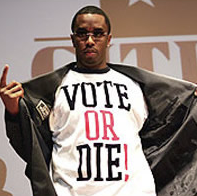
Vote or die muth#%#^*#, muth#%#^*# vote or die,
Rock the vote or else I’m gonna stick a knife through your eye,
Democracy is founded on one simple rule,
Get out there and vote or I will muth#%#^*# kill you.

– P. Diddy ‘Vote or Die

The Irish Taoiseach Enda Kenny has announced that a referendum will be called so that the Irish people can vote on the new and oh-so-suicidal fiscal compact.

Read more...

Adam Davidson Praises Economic Exploitation

There has been so much news on the mortgage beat the last few weeks that I managed to neglect one of my missions, which is my personal Ben Stein watch on Adam Davidson, who operates as the Lord Haw Haw for the 1% in his column in the Sunday New York Times Magazine.

His latest piece, “Why Are Harvard Graduates in the Mailroom?” is more accurately titled “In Praise of Exploitation.”

Read more...

Michael Hudson: 2,181 Italians Pack a Sports Arena to Learn Modern Monetary Theory – The Economy Doesn’t Need to Suffer Neoliberal Austerity

By Michael Hudson, a research professor of Economics at University of Missouri, Kansas City and a research associate at the Levy Economics Institute of Bard College

I have just returned from Rimini, Italy, where I experienced one of the most amazing spectacles of my academic life. Four of us associated with the University of Missouri at Kansas City (UMKC) were invited to lecture for three days on Modern Monetary Theory (MMT) and explain why Europe is in such monetary trouble today – and to show that there is an alternative, that the enforced austerity for the 99% and vast wealth grab by the 1% is not a force of nature.

Read more...

Robert Shiller Has Arrow-Debreu Derangement Syndrome

I know it’s dangerous to judge an article by its synopsis, but Harvard Business Review articles, unlike their academic cousins, are designed to be easy-breezy, so there is much less risk in taking one of its previews at face value. Here is what the HBR says Yale economist Robert Shiller presents longer form in its January-February edition:

Read more...

ECB President Draghi Declares War on Europe’s Social Safety Nets

I’m late to the remarkable interview given by ECB president Mario Draghi to the Wall Street Journal. I find the choice of venue curious, since the Financial Times has become the venue for top European politicians and technocrats to communicate with English speaking finance professionals.

But Draghi’s drunk-on-austerity-Kool-Aid message was a perfect fit for the Wall Street Journal.

Read more...

Philip Pilkington: Ireland – The Problem Isn’t Ignorance

By Philip Pilkington, a writer and journalist based in Dublin, Ireland

Speaking with a senior figure in Fianna Fail (the party that were kicked out of government last year by the Irish people) earlier this week something dawned on me for perhaps the first time. Namely, that the leaders in Ireland might know exactly what the issues and the problems are in Europe but they remain completely powerless to solve them.

Read more...

Paul Mason of BBC on How Austerity is Reducing Greece to Developing Country Status

The BBC’s Paul Mason, fresh back from Greece, gives a report on Democracy Now of how living conditions have deteriorated as a result of the imposition of austerity measures. One of the stunners, mentioned in Atlantic Wire (hat tip Lambert), is that not only will some Greeks have to work without pay, some will have to pay for their jobs (yes, that is not a typo). The euphemism is a “negative salary.”

Mason also discusses how this program is radicalizing the public. Communists, Trotskyists and other extreme-left groups are polling at 43%. That’s a strikingly high number. This plus the level of dissent on the street suggests Greece is on its way out of the eurozone. But will the technocrats prevail? As Michael Hudson has stressed here and in other commentary, the banks are succeeding in stripping Greece of assets, an operation that used to be possible only via military force.

From Democracy Now (hat tip Philip Pilkington):

Read more...

Michael Olenick: Shocking Economic Insight – Mass Foreclosures Will Drive Down Home Prices

By Michael Olenick, creator of FindtheFraud, a crowd sourced foreclosure document review system (still in alpha). You can follow him on Twitter at @michael_olenick or read his blog, Seeing Through Data

“A lie told often enough becomes the truth.”
— Vladimir Lenin, adopted and reused by Joseph Goebbels

Every doctor knows the fastest way to stabilize a patient is to kill them, because there is nothing more stable than death. While that solution may be fast and inexpensive it’s also sub-optimal. Yet pundits repeatedly posit the fastest way to end the housing crisis is through mass foreclosures. In a strict sense they’re right, that will achieve stability, though so will other policies calibrated to cause less micro and macroeconomic damage .. and a lot less human suffering.

Read more...

Navigating Global Prosperity: An Interview with Paul Davidson

Paul Davidson is America’s foremost post-Keynesian economist. Davidson is currently the Holly Professor of Excellence, Emeritus at the University of Tennessee in Knoxville. In 1978 Davidson and Sydney Weintraub founded the Journal for Post-Keynesian Economics. Davidson is the author of numerous books, the most recent of which is an introduction to a post-Keynesian perspective on the recent crisis entitled ‘The Keynes Solution: The Path to Global Prosperity’.

Interview conducted by Philip Pilkington

Philip Pilkington: Keynes famously claimed that the ideas of economists are extremely powerful and have huge influence on the way policymakers think. What struck me about your book The Keynes Solution was how well you related Keynes’ theoretical ideas to the problems the world is currently facing – and the proposed solutions. Before we talk in any detail about these ideas let me ask you this: to what extent do you think that Keynes was right about the ideas of economists?

Read more...

Can Rep. Bachus and His Money-Crazed Congressional Colleagues Be Stopped from Insider Trading?

By Lynn Parramore. Cross posted from Alternet.

Back in the Gilded Age, venality was the rule in Congress. Bribes were as common as tobacco pipes. Lawmakers fattened their bank accounts through insider deals, with the needs of ordinary people an afterthought. Nelson Aldrich, a powerful Republican who served in the Senate from 1881 to 1911, was that corrupt era’s political poster boy, serving on the Finance Committee and using his position to invest in railroads, sugar, rubber and banking deals that made him rich.

Sound familiar? It should. We’re well on our way to repeating that money-crazed chapter in American history as a growing list of legislators use their office to play the game, “Who Wants to Be a Multi-millionaire?”

Read more...

Austerity Policy Destroying Greek Society

Although we’ve featured quite a few news reports on the impact of austerity in Greece, this report from Dimitri Lascaris, a lawyer with family in Greece, via Real News Network, gives a flavor of how conditions have deteriorated, even in small towns where social ties are presumably tighter than in Athens.

Read more...

New York Times Tells Us Only Chinese Near Slave Labor Could Handle Steve Jobs’ Demands

A New York Times story, “How U.S. Lost Out on iPhone Work,” uses an Obama dinner with Silicon Valley titans to frame its tale of why the US middle class should roll over and die. I am of course exaggerating for effect. But not by as much as you might think. The story by Charles Duhigg and Keith Bradsher does a very good job of explaining why Asia, and China in particular, has come to dominate consumer electronics manufacture, using the iPhone as focus.

The problem with using the microcosm to illustrate the macrocosm is you need to choose the right microcosm.

Read more...

American Exceptionalism and Euro-Bashing, Adam Davidson Style

Adam Davidson has an article in the Sunday New York Times Magazine, “The Other Reason Europe is Going Broke,” that manages the impressive feat of making you stupider than before you read it. It misrepresents most of the few facts it contains in appealing to American prejudices about our cultural, or in this case, economics superiority, to sell worker bashing.

Davidson uses the spectacle of Europe going into an economic nosedive to claim that one of the big things wrong with Europe is its spoiled workers. The piece is anchored in a glaring, fundamental misrepresentation. It argues that Americans are much better off than Europeans because we have a higher GDP per capita (more on that in due course) and asserts that that is because Europeans are not able to compete in world markets:

Read more...