Yves here. Given both the rapid, wrenching slide of the US into authoritarianism with the execution of Alex Pretti and that many in the US will be contending with snow and cold (hopefully by being able to stay indoors and having power stay on), a break from our regular programming seemed appropriate. The article below discusses possible personal benefits of virtuous behaviors like compassion and patience.
I would be curious to get reader assessments of the study’s methods. It sadly also seems noteworthy in our increasingly narcissistic culture that good conduct may need to be sold as a personal benefit, just like wearing a fitness tracker to make sure you get in your 10,000 steps a day.
I also have doubts about the emphasis on states of mind, as opposed to what might be called “right action”. Does merely feeling compassionate rate, like being moved by a sad story, or is altruism more consequential? Is having an attitude of patience “better” than more difficult mental wiring that produces conduct that might be mistaken for patience (impatience combined with tenacity, so that one winds up with “stick-to-it-ive-ness” in behavior)?
By Michael Prinzing, Research and Assessment Scholar, Wake Forest University. Originally published at The Conversation
Virtues such as compassion, patience and self-control may be beneficial not only for others but also for oneself, according to new research my team and I published in the Journal of Personality in December 2025.
Philosophers from Aristotle to al-Fārābī, a 10th-century scholar in what is now Iraq, have argued that virtue is vital for well-being. Yet others, such as Thomas Hobbes and Friedrich Nietzsche, have argued the opposite: Virtue offers no benefit to oneself and is good only for others. This second theory has inspired lots of research in contemporary psychology, which often sees morality and self-interest as fundamentally opposed.
Many studies have found that generosity is associated with happiness, and that encouraging people to practice kindness increases their well-being. But other virtues seem less enjoyable.
For example, a compassionate person wants to alleviate suffering or misfortune, but that requires there be suffering or misfortune. Patience is possible only when something irritating or difficult is happening. And self-control involves forgoing one’s desires or persisting with something difficult.
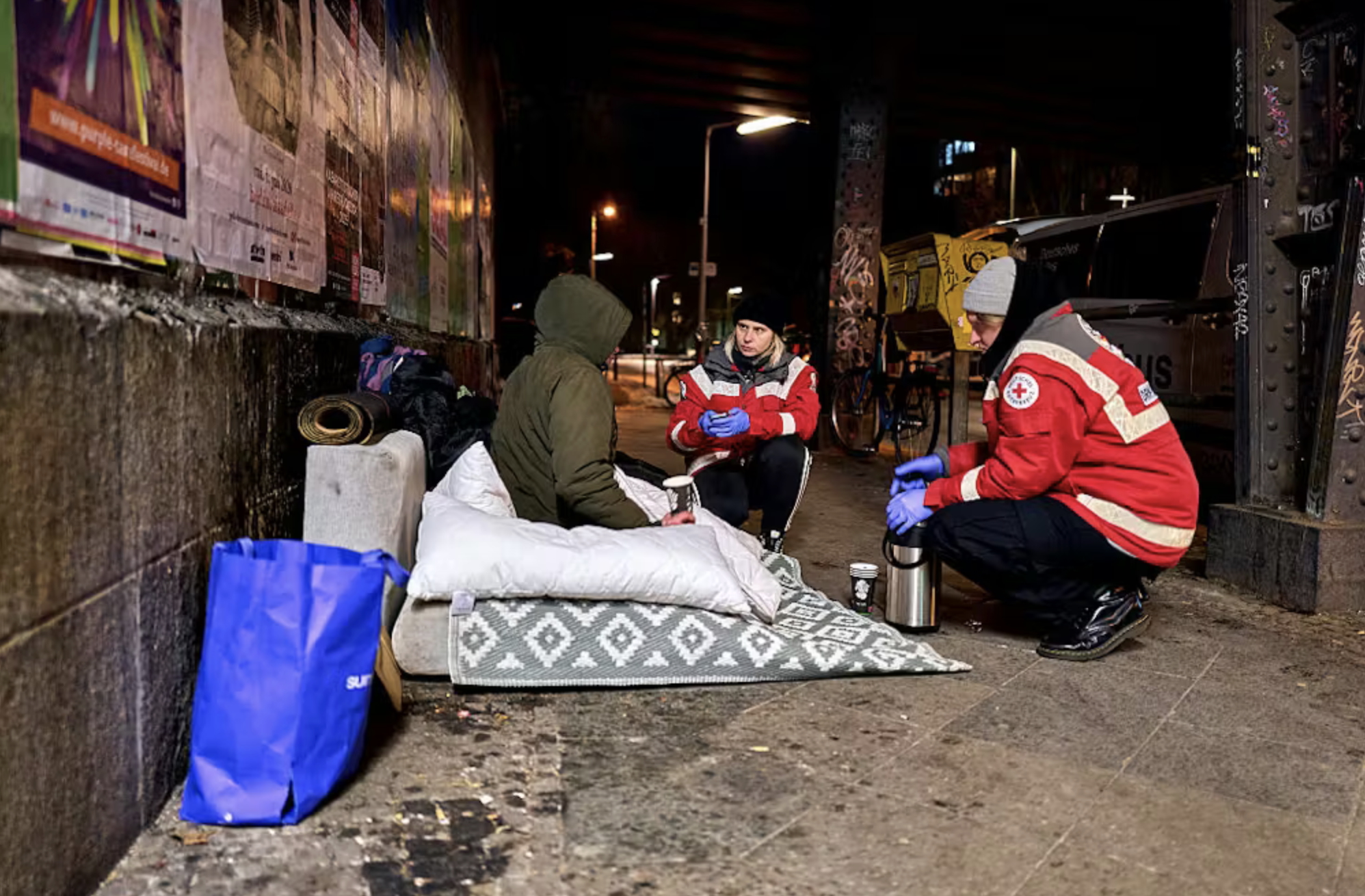
Could these kinds of virtues really be good for you?
My colleagues and I investigated this question in two studies, using two different methods to zoom in on specific moments in people’s daily lives. Our goal was to assess the degree to which, in those moments, they were compassionate, patient and self-controlled. We also assessed their level of well-being: how pleasant or unpleasant they felt, and whether they found their activities meaningful.
One study, with adolescents, used the experience sampling method, in which people answer questions at random intervals throughout the day. The other, studying adults, used the day reconstruction method, in which people answer questions about the previous day. All told, we examined 43,164 moments from 1,218 people.
During situations that offer opportunities to act with compassion, patience and self-control – encountering someone in need, for example, or dealing with a difficult person – people tend to experience more unpleasant feelings and less pleasant ones than in other situations. However, we found that exercising these three virtues seems to help people cope. People who are habitually more compassionate, patient and self-controlled tend to experience better well-being. And when people display more compassion, patience and self-control than usual, they tend to feel better than they usually do.
In short, our results contradicted the theory that virtue is good for others and bad for the self. They were consistent with the theory that virtue promotes well-being.
Why It Matters
These studies tested the predictions of two venerable, highly influential theories about the relationship between morality and well-being. In doing so, they offered new insights into one of the most fundamental questions debated in philosophy, psychology and everyday life.
Moreover, in the scientific study of morality, lots of research has examined how people form moral judgments and how outside forces shape a person’s moral behavior. Yet some researchers have argued that this should be complemented by research on moral traits and how these are integrated into the whole person. By focusing on traits such as patience, compassion and self-control, and their roles in people’s daily lives, our studies contribute to the emerging science of virtue.
What Still Isn’t Known
One open question for future research is whether virtues such as compassion, patience and self-control are associated with better well-being only under certain conditions. For example, perhaps things look different depending on one’s stage of life or in different parts of the world.
Our studies were not randomized experiments. It is possible that the associations we observed are explained by another factor – something that increases well-being while simultaneously increasing compassion, patience and self-control. Or maybe well-being affects virtue, instead of the other way around. Future research could help clarify the causal relationships.
One particularly interesting possibility is that there might be a “virtuous cycle”: Perhaps virtue tends to promote well-being – and well-being, in turn, tends to promote virtue. If so, it would be extremely valuable to learn how to help people kick-start that cycle.


I tend to agree with Yves Smith’s note up top: Right action matters. Right livelihood matters.
I happen to be reading the new biography of San Francesco di Assisi by Alessandro Barbero. Saint Francis also stressed a kind of patience, happiness, and placidity — as well as moderation. The ethic of the Franciscan movement certainly evokes the Eightfold Noble Path of Buddhism, which considers itself the way of moderation and self-control.
Yet I have some trouble with this grouping: “compassion, patience and self-control.” Compassion is an emotional and ethical stance. Self-control is possible even without compassion. So the authors might have separated the virtues more. Yet “compassion, patience and self-control” remind me that even the tarot cards contain Temperance, Strength (Fortitude), and Justice. The Hermit is sometimes interpreted as Prudence.
All of these virtues help to shape a person into a viable member of a larger group. One only has to look at social media to see what happens when self-control and compassion are in short supply. You now can witness postings of people in comment sections (elsewhere) in favor of the murder of Goode and Pretti.
Yet we also should be of “sterner” stuff. I have always liked philosopher / political theorist Norberto Bobbio and his description of civic virtues: ‘Hope is a theological virtue. When Kant states that one of the three great problems of philosophy is “What must I hope for?,” he engages the problem of religion with that question. Yet secular society holds to other virtues: rigor in our criticism, a methodical doubt, moderation, not engaging in abuse of power, tolerance, respect for the ideas of other people, in short, worldly and civic virtues.’ (from De Senectute, Einaudi, Turin 1996)
In short: Give up on the “thoughts and prayers,” eh.
Perhaps this is a kind of crass interpretation, but IMO, compassion (or perhaps what I’m thinking of is “empathy”, compassion being the response to one’s empathetic experience of others’ suffering) is painful — others’ suffering hurts you. But I’d rather live in a world of such people, and so I want to be that kind of person, too, so that such a world is less impossible.
I wonder whether it might be that a certain amount of public-spirited behavior arises out of a desire to alleviate the internal suffering the doer experiences in contemplation of others’ suffering. That sounds a bit selfish, but again, I think it’s a better world if people are not indifferent to others’ suffering (even if the reasons are not perfectly other-centered).
I have been in pain for more than 3 decades and at present I would not be able to walk at all without Chemical Cautery.
Every step is painful and will be as long as I live.
If I want a livable quality of life I have to be kind and thoughtful to the degree I can because it makes the space within which I live and act bearable at worst and joyful at best.
It is a conscious choice not to be a miserable asshole, easy because I don’t enjoy being miserable.
Not knowing the source of your pain, my recommendation may or may not be useful. I have chronic pain associated with ME/CFS probably due to neuralgic hypersensitivity that has been ameliorated with low dose (5mg/day) Naltrexone.
Tom Stone: If I want a livable quality of life I have to be kind and thoughtful to the degree I can because it makes the space within which I live and act bearable at worst and joyful at best.
Thank you. You are wise.
It’s basic wisdom that almost anybody but a sociopath or otherwise mentally disadvantage person can access and make use of, and no doubt you’d have preferred to not have experienced the adversity and pain that has taught it to you. But it’s wisdom.
Well, thing is, all these studies are utterly worthless as long as they only focus on polling and sampling Westerners who’ve been drowned into Christian values and modern/enlightenment liberal societies – not that everyone is a true believer, but the whole society has been built around them and it still permeates the overall culture and education, and the bulk of laws and social norms. So people living in our societies usually have integrated, even if only in their subconscious, that killing is bad, being nice to others is good, that the weak and poor are by essence admirable, that kind of things – which would’ve looked like sheer lunacy to an Assyrian, Aztec or Roman of old.
To be effective, you’d have to study societies who have no such values at the very least are not Western or Christian at all, and compare the result. At the very least, test that in places like China, parts of Papua New Guinea and Afghanistan.
Not saying the results won’t be the same; they very well may be. I’m a bit agnostic on that. Just that I’d mistrust and consider pure ascientific junk a study that only relied on Europeans and Americans.
Worthless? Only if you start from a POV of assuming things like compassion or empathy are distinct things in themselves, like a chemical reagent or a physicists spherical cow, and not embedded in the society and culture a person grows up in. We’ve all seen the videos of bears or big cats raised in a human family, they’re obviously not behaving they way they would in the forest, or in a zoo.
Of course these studies are worthless, because what’s the point of proving that people raised in a certain society feel better when they actually conform to that society’s traditional centuries-old norms? That’s the whole point of such norms, that after a couple of centuries of enforcing them, teaching them, educating kids into them, people will actually begin to feel genuinely bad when they don’t follow them. And that, whether one finds such norms good or bad – that value judgment is irrelevant here.
These studies are only interesting if they actually show that such behaviour has benefits unrelated to social conformity – as in, that behaviour is actually psychologically good for you, no matter what the society tells you, and is not just a social construct. That would be actually informative for once, but for that, you’d need a genuine control group. Otherwise, it’s pretty much confirmation bias.
You may as well study if people feel more integrated into US society and feel mentally better when living in the USA if they actually can speak English.
Just spherical cows in my book. The whole idea that you could come up with a description of morals/ethics/emotions from observations of adults from different culture as a ‘control’ – sounds like economists creating multidimensional calculus theorems based on their homo economicus ‘rational consumer’.
While these studies may or may not much use, I’d rather people were trying to understand why for so many, society’s norms don’t work. Why are so many psycopaths drawn to the CEO ranks? ICE? Or identify so viscerally with DJT? Asking how these traits work embedded in the culture they’re taught in is a first step.
That would be more helpful than any attempt at reducing human behavior to spherical cows under controlled experiments. As valid as RCTs and controls are in chemistry or physics, where you can focus in on a suitable scale of complexity, they seem undergunned in taking on the chaos of human behavior, even before trying to understand behavior of large groups. Just look at how well it worked for economics in 2008.
with a very personal anecdote that has ended up being quite foundational to who i am, i will refute:
when i was 16-18, i inadvertantly ran an underground railroad from tomball texas to planned parenthood, there, south of downown houston.
i did this because i felt it was the right thing to do.
steeped from very early on…being a weirdo genius kid who somehow learned to read before he was 3…due toarthurian romance, tolkien, and such.
frelling Ivanhoe.
thats who i thought we were, starting out.
(and it remains who i am)
so fast foreward, im 18, and one of those chicks i helped get an abortion i am hot for.
but i am “The Brother”, as it were…but i was smitten, regardless.
so she, knowing that i am hers to use, calls me from a payphone, band bag full of shoes, and nowhere to go.
Knight Errant in me sez, “welp, we must go rescue her!”…and so i did.
and thus began my criminal career.
because her dad was a secretly violent and psychotic town father, whose brother was chief of police.
so words like rape and kidnapping were levied against me.
never charged…and i never had sex with her, anyways…as it would have been wrong to do so under such circumstances.
i was punished for this act of chivalry…for doing what i thought my civilisation required of me in that kind of situation…forever afterwards…even unto today(follow-on effects).
but i would do it again, in a heartbeat…because it was the right thing to do.
leaving her idiot sexy ass on the side of the road would have been wrong.
doing the right thing, as you see it, and damn the consequences…well…thats the real thing, aint it?
i had no idea how powerful and connected her dad was…just that he was a violent psychopath who somehow hid it from the world.
i dissed him, in his mind, and he set the dogs upon me…and eventually caused me to flee onto the road for almost 10 years.
virtue, iow, often has consequences in an otherwise unvirtuous world.
some of you more erudite folks might see the meaning behind my long-term handle,lol.
i use “amfortas” rather than “anfortas”, sourced from the source material that Wagner used for Parsifal.
and i like the mouth-feel better.
and im wounded in the hip, which was a euphemism for castration, btw….ergo, the land lies fallow/becomes the Wasteland, etc, etc.
i came way out here, in part, to finish my disappearing act…and i may have done it too well,lol.
last background check i did on meself showed me in austin, and then nothing…and that was 31 years ago.
cops back then were fed a steady diet of amfortas lore…i was a white slaver(!!???!!) and a heroin trafficker(!!??!!) and an all around folk devil.
her dad could really hold a grudge,lol.
point is, virtue often carries an enormous and unlooked for price
fellow wrongly-accused heroin trafficker, satanist etc here, whose adolescent-charges were levied upon him in ioway/meenasoda. in the town i went to highschool, central MN, in the course of life’s first romance at age 16, discovered over time that the father of her family of four girls, one boy, had persistently throughout their lives molested the girls. he did eventually go to trial (i’m from a journalist-family after all) but got off – he was a judge and boardmember of the hospital, etc. ‘too big to fail’.
as far as compassion or kindness go, what springs instantly to mind is my now-deceased friend, a captain in the army during vietnam times, an avowed atheist who took no shit. which never stopped him from providing endless immediate examples of small and large acts of selfless kindness to others. some would occasionally ask him, ‘but you don’t believe in god…why would you do such a kindness to another?’ his reflexive bark of an answer was always, ‘it’s good for me.’
in other societies, far less wealthy ones, it seems to me to be so much less of a question. all life is naturally understood to be suffering, whether buddhist or christian milieu, and so the normal reaction is to help, and be helped, by sharing in another’s burden. it makes sharing in life’s joys and humors more possible as well.
An act of real courage. Something all together too rare.
“…not just a social construct.”
There is no human that ever lived beyond a few hours that has not been the embedded in a social construct of one sort or another. While both affiliative and antagonist behaviors have deep evolutionary roots, and can be found in every human grouping, not to mention even among some species of bacteria, they are subject to significant degree of cultural variability in humans. Getting to some kernel of individual emotional cost/benefit analysis free of social context is like talking about the behavior of an organism in an airless vacuum: not possible. As to whether that put us in agreement or not, I’m not sure.
For more on the objection you raised see: Syed on the acronym W.E.I.R.D.
What is well-being to one may not be to another. For me, it is that my violin still sings, even if no one knows any longer, it is selfish, I admit. What is virtue to one may not be to another. For me, virtue is found in elevating others, human and all life, in their own quest for well-being, but only to the shared common plane. Never to kick down, only to kick those who have taken too much. I mean to be kind, but I’m not perfect.
Pirate Television: The Myth of Capitalism with Michael Parenti
Worthless? Only if you start from a POV of assuming things like compassion or empathy are distinct things in themselves, like a chemical reagent or a physicists spherical cow, and not embedded in the society and culture a person grows up in. We’ve all seen the videos of bears or big cats raised in a human family, they’re obviously not behaving they way they would in the forest, or in a zoo.
“Virtuous”–nebulous, essentialist construct. Self-attributed by liberals, offered in place of grounding in political economics, history, etc. I’d look at something more measurable, like cheerfulness and generosity (even those being very challenging to define) for better measures. And how do we get from a study like this to the infamous business of virtuous consumption?
Wrong and misleading. Virtue is a long-standing concept actively debated for the entire history of religion and philosophy, including but hardly limited to the Greeks and Stoics and those of the Catholic Church:
https://ascensionpress.com/blogs/articles/complete-list-of-virtues-and-vices-every-catholic-should-know
Many modern thinkers have discussed what happens when religious notions of virtue fade and what happens to human conduct as a result, notably Nietzsche in his Will to Power, and Sartre in arguing you could live a worthwhile life even if you were an atheist if you embraced existentialism and absurdity.
In Buddhism there is a great focus on compassion, and it is certainly seen as pro-social and personally beneficial, but the Big Idea is that it is indispensible for liberation.
It is also beneficial for meditation mechanics. Ambient worries about whether James or Julie knows you were the one who stabbed them in the back tends to become an intrusive thought to say the least.
This is one benefit for those type A personalities who habitually overbook their time. They don’t have time to worry about grudge debt.
Chiming in very late here…. I was hoping that someone would mention Buddhism. At the end of a meditation session, it is common to close with ‘May our practice be for the benefit of all beings everywhere’. I sometimes feel that there is a selfish aspect to Buddhism and mindfulness, focusing so much on self improvement. But a teacher once explained that kindness does spread. And the Buddha wanted everyone to achieve enlightenment and felt much that it could spread. If we are able to be kind and compassionate to others, not only do we enjoy the good feelings that behaviour brings, it may spread as others follow our example. I have certainly seen it in traffic. I let someone merge in front of me and that person lets others and people behind me start letting people merge. Stand in line awaiting a grumpy cashier, smile and be pleasant to her and lo and behold she is smiling too. I am so far from enlightenment it is unlikely to happen before I die. But I am convinced that the trying is good for me and maybe others too, especially around compassion and mudita (taking pleasure in others’ happiness and good fortune). Same teacher also said that having a good meditation session is not the measure of progress on the path, it is whether or not you are less of an a-hole than you were before you started.
This is the first sentence of Adam Smith’s first book, The Theory of Moral Sentiments (1759), published 17 years before his more familiar Wealth of Nations.
“How selfish soever man may be supposed, there are evidently some principles in his nature, which interest him in the fortune of others, and render their happiness necessary to him, though he derives nothing from it except the pleasure of seeing it.”
I confirm this every time I see a smiling or laughing child. I don’t need any research. Some things are just self evident.
For backup, Adam Smith is good enough for me.
From a Scottish gentle man who knew a realm where that was true.
I have read his theory.
We have seen the purposeful development of realms that deride the fortunes of others, except in their exploitation and expropriation. Not by the many, but by the few.
The many are brought on board, as the few may enable.
The drift is to a coarser society.
Previously socially unacceptable behaviors that would in the past (and presently within some cultural and jurisdictional boundaries) lead to being shunned, imprisoned, burned at the stake as a witch, and other unpleasant fates have come more recently to be understood as neurobiologically determined conditions over which we have no control, leading in some instances and in varying degrees to social acceptance and more compassionate treatment of the neurologically atypical. For discussion of this cultural trend see Robert Sapolsky’s lecture on individual differences, part of his series on the biology of human behavior—scientific understanding, as with some religious and philosophical insights, may also be employed in service of more broadly applied empathy and compassion.
Compassion for others, built on empathy, is like most other things – it can be good in the right context, and bad in other contexts.
If the people that you have helped have prosocial leanings, then they may ‘carry it forward’. At the least they will feel gratitude.
But, if the people you have helped have antisocial leanings, from a genetic predisposition or from a hard start in life, then first they will think that they deserve your help so no gratitude needed. And second, if they see a way to benefit from your largesse, they will not care if they hurt you in the process.
Real story. A young man I knew, hoping to emulate Christian teachings about helping the less fortunate, gave some homeless druggies a place to stay in his apartment. Yes, sure, naive. And apart from the smell, it worked until he found that they were stealing all of his possessions to sell for drugs. And they swore they didn’t know how his stuff was disappearing. He learned a hard lesson and changed the locks.
Some of us have had a very hard start to life when little and it can change the young brain so profoundly that they will never feel gratitude or empathy or compassion or mature love.
had that one too. age 19, discovered i could make enough money off my music to pay rent. all i needed or wanted, so decided to open up my flat to every grimy soul fallen outside societal norms, streetfolks, had about fifteen people living there. thankfully there were a couple of ‘enforcers’ – one native american guy and a old hippie from Alabama – that kept things fairly in line. theft only happened once over those months.
i never opened my door like that again, but certainly don’t regret the experience.
“TikTok competitor UpScrolled surges on App Store amid allegations TikTok suppresses Anti-Ice videos.
TikTok will “die a slow death”.
According to Buddhist Mahayana doctrine, our lives are totally interdependent with others’. Even on a mundane level our happiness depends on others. Dr. Martin Luther King got that right.
Compassion is necessary, but it must be combined with wisdom. Wisdom not based on concepts but on direct understanding of living situations. Compassion without wisdom can easily lead to “help” that makes things worse, which Chogyam Trungpa called “idiot compassion”.
The short answer is that practicing compassion properly makes one’s life much better in a big way.
Sadly, the current culture in the U.S. — “Good conduct” does not pay. It is a trait or series if traits or behaviors that society does not hold in much regard. It’s basically a losing strategy.