Yves here. Hopefully most readers were either not candidates for or managed to escape the bad orthopedic surgery fad of prettying up knee cartilage in symptomatic patients.
Quite by accident, I got early exposure to the fact that orthopedists have only four remedies: rest, ice, compression and elevation; physical therapy; steroids, and surgery, and that too many are willing to recommend surgery when none of the first three do all that much.
Forgive me if you have read this story before. In the early 1990s, after I paid for the privilege of having a trainer injure my knee,1 I was referred to what I was told was one of the two best knee specialists in New York City. We had chatted briefly about Harvard, since I knew a few people in his class, but no one in common.
After 10 days, I was no better. He ordered an MRI.
When I came for the next visit, he tossed the radiologist’s report at me and said, “You went to Radcliffe. Tell me what you think this means.”
The report was five paragraphs on a single page. One paragraph was the diagnosis.
I said, “It says possible tear of the medial meniscus or possible false positive. It could be a false positive.” I knew tear of medial meniscus = surgery.
The doctor said, “They all say that to cover their ass. I’ll go in on a Friday and clean up what I see. You’ll be walking on Monday.”
I walked out, thinking, “I am not having you go on a fishing expedition in my knee.”
This was one of these cases I have come to designate, “What looks like bad luck is good luck.”
If the orthopedist had not made me read the radiology report, I would have sought a second orthopedic opinion. I realized I needed a second radiological opinion.
One of my college friends was married to a radiologist. I called her. She put Frank on the phone.
Frank said, “Read me the report” which I did.
He said, “Who signed it?” I gave the name.
Frank said, “I know him. He would not write “Possible false positive” unless he had a real doubt. Send me the films”
An entire team at Cedars Sinai looked at the image. Frank called and said, “Your knee looks perfectly normal.”
The second part of this anecdote is the orthopedist saying that he would “clean things up” regardless, as in trim any rough-looking cartilage. I did not grasp that part until I met a man in his 50s in yet another NYC gym, doing what I recognized as knee rehab exercises. I made sympathetic noises, saying I hoped he was getting some relief.
He perked up and told me that he saw his orthopedist every 18 months or so, and he would “scope” his knee and “clean up” any rough cartilage.
I was horrified. How could gradually shaving away your knee cartilage be a good idea? I asked a physical therapist friend who rehabbed elite athletes and he concurred.
By Elisabeth Rosenthal. Originally published at KFFHealth News
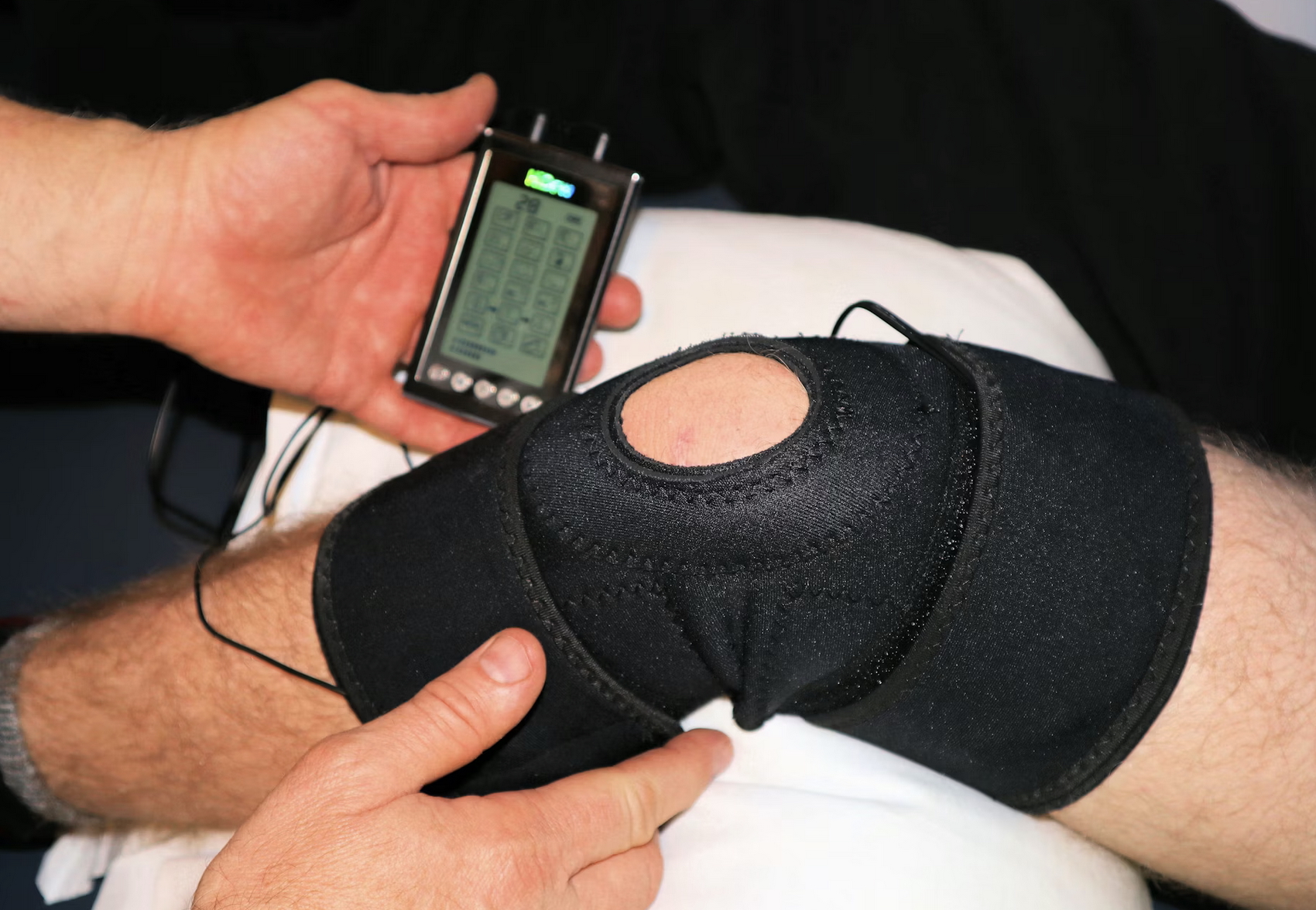
Thousands of Americans who undergo a common knee surgery might be making their problems worse rather than better.
Researchers who followed patients for 10 years after they received either the actual procedure, arthroscopic knee surgery to trim degenerative cartilage tears, or merely “sham surgery” — a skin incision — for knee pain, found that the surgery provided little or no benefit and was, in fact, associated with accelerated osteoarthritis and higher rates of reoperation. That generally meant a total knee replacement.
“I don’t know how I would defend this procedure at all,” said one of the study’s authors, Teppo Järvinen, an orthopedist and the head of the Finnish Centre for Evidence-Based Orthopaedics. “What has been shown dramatically is that patients who have this procedure have more pain — they do worse. All the scores pointed in the same direction.”
Järvinen said the Finnish study, published in April in the New England Journal of Medicine, was the first to show the surgery left many patients worse off. Though the study was small, the results were compelling, he said, because his team picked the patients “most likely to benefit.”
The study does not apply to cartilage tears incurred from an acute pain-causing injury. It included subjects middle-aged or older who were experiencing knee pain and whose MRIs showed cartilage tears.
Evidence has been accumulating steadily for over a decade that arthroscopic knee surgery to shave torn, degenerative cartilage does not help more than physical therapy. Arthroscopic rates in Finland have dropped 90%, Järvinen said. They have been falling in the U.S., too, but at a far slower rate.
One study of commercial claims in the U.S., which counted over 2 million meniscus surgeries from 2010 to 2020, found the number decreased by about 4% each year. Most procedures were performed on women and patients in their 50s.
In the traditional Medicare fee-for-service program, the number of procedures has declined steadily in recent years, from about 169,000 in 2014 to 91,000 in 2024, federal data shows. These figures do not include beneficiaries in Medicare Advantage, private insurance plans that cover more than half of Medicare enrollees.
Prior studies of scans have found that such tears are common in people over 50, the result of wear and tear and often not painful.
“Nothing supports the idea that a patient’s pain comes from the meniscus,” Järvinen said.
Robert Brophy, director of the Orthopaedic Clinical Research Center at Washington University in St. Louis, said that “evidence is growing for judicious use of this surgery in this population.” But, he noted, “many patients do benefit.”
All the same, he acknowledged that current practice among his peers is “all over the map.” For example, data showsthat surgery for meniscus tears in the Medicare population is far more common in the South than in the Northeast.
A massive study committee of orthopedic societies in Europe and the U.S. last June released a consensus statementnoting that “degenerative meniscus lesions can be treated with comparable results with either non-operative (including physical therapy) or surgical approach.” It recommended a trial of physical therapy before surgery but still endorsed the operation.
A concerted campaign by orthopedic specialty societies called the Save the Meniscus Society has been ongoing for years. The group advocates for protecting and maintaining long-term knee health through nonsurgical treatments, surgical repair, and other therapies.
One inherent issue in all medical specialties is that appropriate treatment is often in the eye of the physician beholder, meaning that specialists create the guidelines for when a treatment is in order. And financial considerations may influence that decision, Järvinen said.
In the U.S., physician payments are decided by the Relative Value Scale Update Committee, or RUC, a committee of the American Medical Association composed largely of specialists. Department of Health and Human Services Secretary Robert F. Kennedy Jr. and his advisers have reportedly looked into wresting control of that committee from the association, though it’s not clear how that could be done, since the AMA owns the billing codes used to calculate patients’ charges.
Arthroscopic knee surgery takes 30 to 60 minutes in the operating room, and the patients spend a few hours recovering in a surgery center or in a hospital outpatient department. Medicare allots on average $2,159 to $3,875 for the procedure, depending on where it is performed; patients pay 20% of the fee as coinsurance. There may be additional costs, for example, if more than one doctor is involved in the procedure. Commercial insurers average well more than twice that, said Marcus Dorstel, a senior vice president at the data analytics firm Turquoise Health, adding that the amount providers charge for the procedure varies widely. Those charges do not include the fees of the surgeons and the anesthesiologist.
Treating chronic knee pain has a variegated history.
Fifty years ago, the treatment for cartilage tears, from acute injury or from wear and tear, was to remove the entire piece of cartilage. At that time, doctors did not consider it a shock absorber but a useless, vestigial piece of tissue like the appendix.
Today, the first-line therapy for a painful knee with degenerative tears is physical therapy and, for some people, weight loss. Then there is arthroscopic surgery, depending on the view of the surgeon about its utility.
There is also a menu of injections: Steroids have proved scientifically valuable in the short term. And injections of stem cells and plasma-rich protein are widely offered but are controversial — and not covered by most insurance — because studies have been at best inconclusive about their benefit.
And as orthopedists are backing away from shaving off meniscus tears, they are highlighting a newer procedure — sewing the torn cartilage back into a whole. But that is typically an option for patients under 50 with acute injuries and clean tears, and it is unclear exactly which patients might benefit.
When all else fails, there’s a different surgery that’s also a big moneymaker for hospitals and doctors: knee replacement.
____
1 When years later, said trainer, with the first name John, showed up a gym I was using. I said to one of its staffers, “That’s the guy who messed up my knee.”
The response? “Oh, you mean Johnny Kevorkian? His other nickname is ‘007, Licensed to Kill.'”


This does appear to reflect the best evidence available today. My own point of anecdata:
I’m about to celebrate the end of my seventh decade on the planet and about a year and a half ago I finally abused my knee to the extent that I couldn’t walk on it for a couple of weeks. My regular physician (an osteopath) was on vacation and I had to beg his sub for a physical therapy referral. Fortunately my young-ish P.T. had been trained in Paris, France and his approach of traction, yoga stretches, and a stationary bike gave me near total relief.
I saw my regular physician about six months later and he ordered an MRI and made a referral to the best surgeon in our region. The surgeon opined that yes, there was lots of wear and tear(s) but that my P.T. regimen meant that osteoarthritis was nearly nil. He said that his experience is that arthroscopic “clean-ups” do more harm than good and that I should simply monitor my arthritis situation and wait and see if a total knee replacement is ever necessary — which might be never.
Thanks for this.
I knew a young bicycle racer (seriously good amateur ) who “blew out his knee” – as he called it – on a long hill climb standing on the pedals the whole way, until the knee went. Doc said torn meniscus, need surgery. Bicyclist hesitated, opted for leg reconditioning exercises. For him that worked. He later said he met other cyclists who did have the arthroscopic knee procedure and it didn’t help them.
This is all anecdotal.
For myself, with knees starting to become painful (from too much sitting?) and no known knee injuries or arthritis I’ve found these exercises helpful. Disclaimer: I am not a doc or a physio therapist. This is just my anecdote. If in doubt, check with your medical provider.
https://www.youtube.com/watch?v=ikt6NME0k9E
Show me the incentive and I will show you the outcome – C. Munger
Having recently needed to visit and ER is beijing a month ago, I saw two doctors and got a catscan and blood work in two hours. Discussions with friends and they cannot believe how distant the US medical system has become from the Hippocratic Oath –
“Do no Harm (unless its more profitable).”
I have a similar story of a lucky intervention. After years of heavy training for sports, I had a torn meniscus with severe inflammation and pain. I needed a cane for walking, and painkillers to sleep at night. The medical advice was surgery, but I had a friend who was an osteopath who told me that the knee surgery would introduce scar tissue and advised against it. I took the osteopath’s advice, and the pain and inflammation eventually resolved itself.