With Iran, the US is making the same sort of blunder that led to the war in Ukraine, of mistaking protracted patience and forbearance in the face of provocations for weakness, upping the aggression to an existential threat level, and setting off an arms, treasure, and prestige-draining conflict.
Despite Trump’s fondness of TACO, of huge threat displays followed by climbdowns after getting pretty minor concessions, his movement of so much military hardware into what is expected to become the Iran war theater has made that sort of retreat difficult. Larry Johnson provides these tables in his must-read Three Scenarios for a US Attack on Iran:
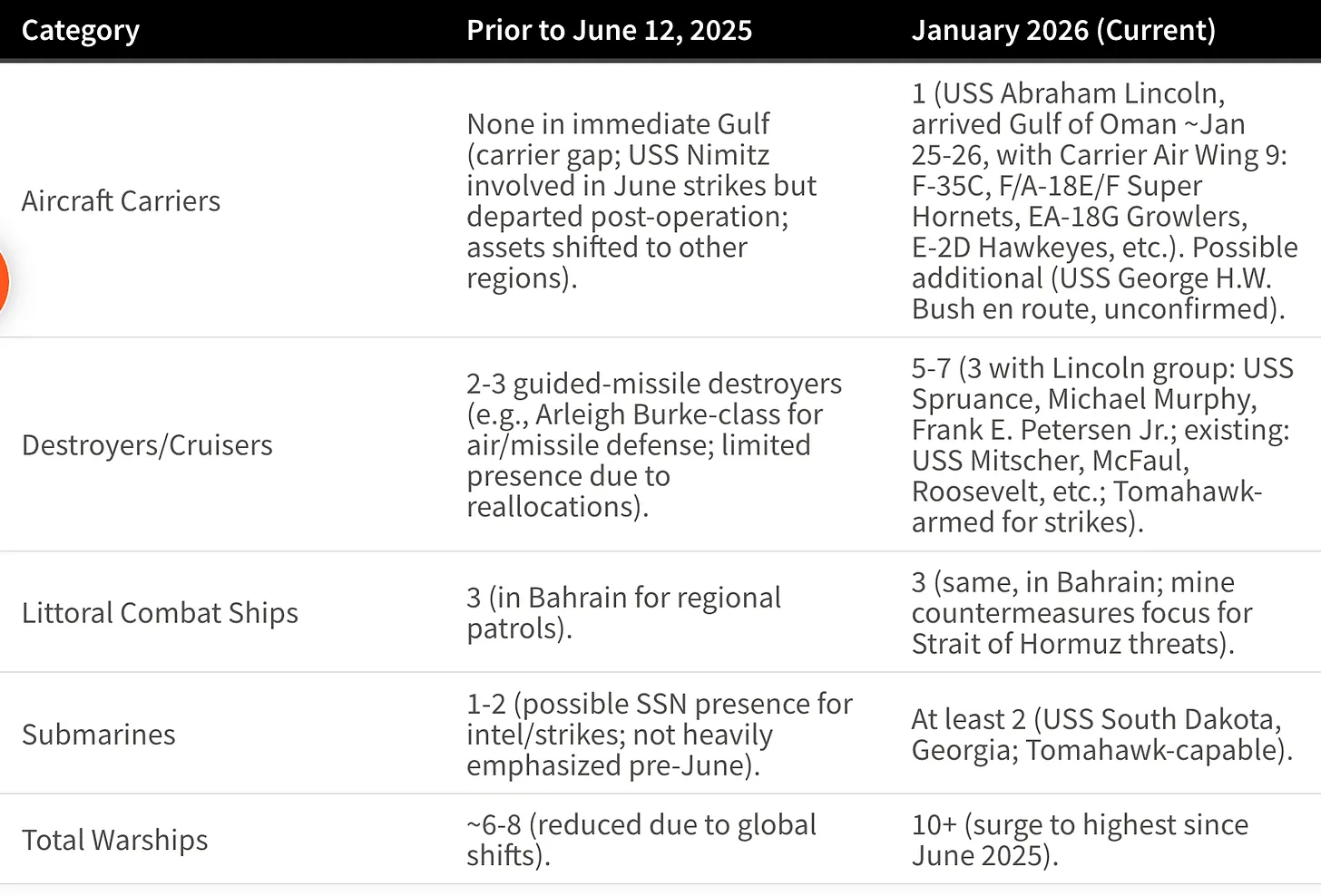
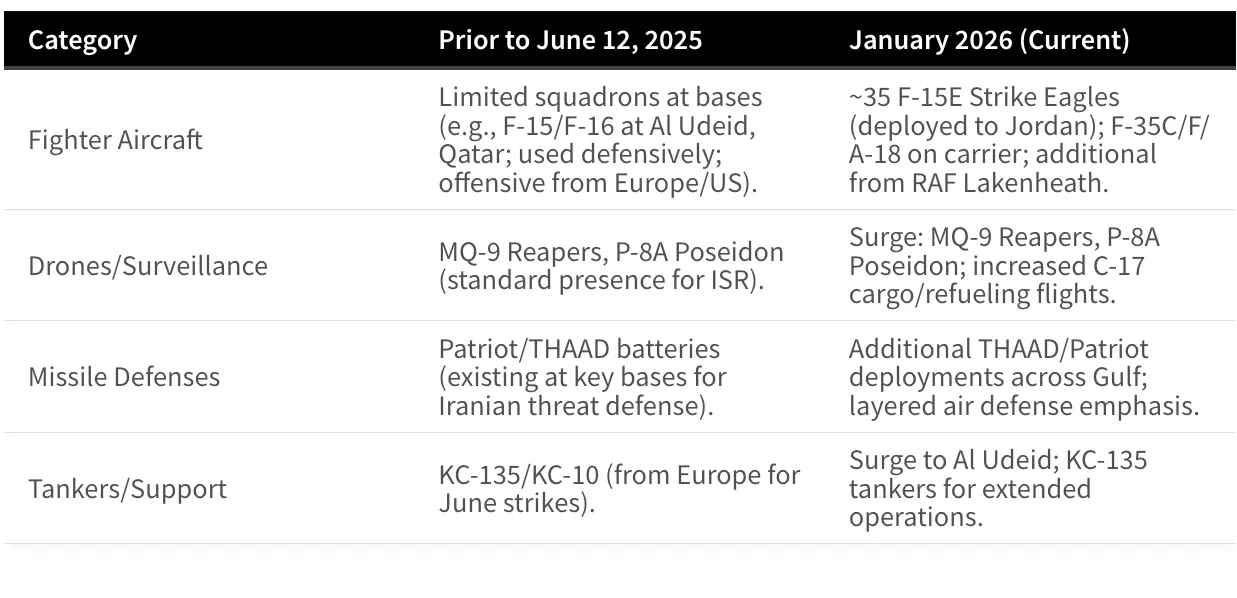
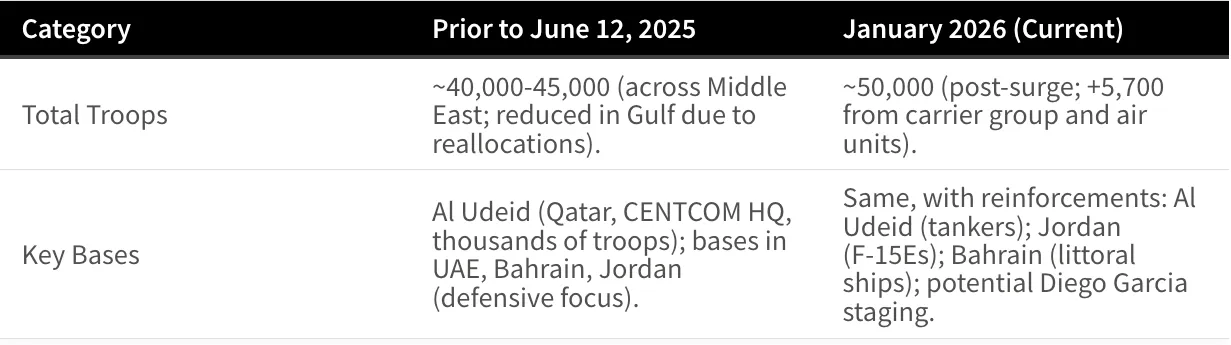
Mind you, we did see an earlier variant when Trump insisted he was gonna get those Houthis, that Biden had been too wimpy in dealing with them. Trump more or less turned tail after his Operation Prosperity Guardian was a big flop.
The wee problem here is that the Trump Administration is making demands of Iran that would amount to a surrender of national sovereignity. Per Mostafa Najafi:
The US has set 4 preconditions that make any compromise impossible: 1. Complete shutdown of the nuclear program and handover of all 3.67%, 20%, and 60% enriched material, 2. Limitation on the range and number of ballistic missiles, 3. Commitment not to equip and support resistance groups, 4. Recognition of Israel!
The Iran-US conflict has passed the stage of negotiation and compromise, and its fate will be determined by war.
This again parallels the US proxy war against Russia: no bargaining overlap between the position of the two sides, so no negotiated solution is possible. Either Trump blinks or the two sides duke it out.
The Trump advance against Iran is based on new intel that depicts Iran as more fragile than ever. From the New York Times on Monday:
President Trump has received multiple U.S. intelligence reports indicating that the Iranian government’s position is weakening, according to several people familiar with the information.
The reports signal that the Iranian government’s hold on power is at its weakest point since the shah was overthrown in the 1979 revolution.
Protests that erupted late last year, according to the reports, shook elements of the Iranian government, especially as they reached into areas of the country that officials thought were strongholds of support for Ayatollah Ali Khamenei, Iran’s supreme leader.
Those who follow independent media will have seen accounts that fiercely dispute that claim (note made before the fresh intel was made public), that even elements of Iranian society who were not wild about the regime have rallied behind it in the face of US/Israel existential threats. Massive pro-government rallies in the wake of widely-acknowledged foreign-instigated violent protest confirms that take. Scott Bessent even weirdly brayed about the US role in a run on the Iran currency which was the proximate cause of initially peaceful demonstrations. That means the currency plunge was not due to fundamental factors, ergo the prospects for Iran are not as dire as that episode suggests.
Independent commenators also point out that Iran has been bolstered by Russian support, critically in effectively disabling roughly 40,000 Starlink terminals smuggled into Iran to coordinate the protests. Russia is also reported to be strengthening Iran’s air defenses. However, that sort of initiative takes time and may not yet be of much help in the soon-coming US attack.1
As troubling are reports from the Israeli press that Israel is concerned that Iran might negotiate. From Al-Monitor:
From Israel’s perspective, settling for a nuclear deal rather than pursuing regime change could be seen as a missed historic opportunity.
Some Israeli politicians and senior leaders in Israel’s security apparatus are growing disillusioned with the idea of bringing down the Iranian leadership…
But this remains a minority view in Israel, especially following recent threats by pro-Iranian militias in Iraq and Hezbollah in Lebanon, warning that a US attack on Iran would ignite fires throughout the region.
And more explicitly, from Israel Hayom:
Israel cannot afford to stand aside and let events run their course. It must do everything in its power to ensure that the US is not tempted to enter negotiations with the Iranian regime. The mere existence of political dialogue would provide the regime with a lifeline vis-à-vis its protesting citizens, signaling the possibility of agreements that could ease conditions.
Political negotiations would seriously undermine the prospects for regime change precisely at a moment when that possibility is becoming tangible, even before considering the additional gains the regime could extract from such talks. Past experience offers little basis for optimism regarding what negotiations with the Iranian regime can deliver.
They are intent to achieve their aim of balkanizing Iran. Alastair Crooke said to Daniel Davis that Israel even had draft constitutions for new regions like a Persian Balochistan ready to go on the assumption that the last round of Western-intensified protests would topple the government.
In fact, the noise via Israel’s Channel 14, reporting on a CENTCOM-IDF meeting last weekend, is that the US is not (yet) committed to regime change (click through for a Google translation):
פרסמנו במהדורה | סיכום הפגישה בין מפקד סנטקום בראד קופר, לבכירי צה״ל הלילה:
אין מועד לתקיפה באיראן
לאמריקנים יידרש זמן לצבור כח רב
יחד עם זאת, ערוכים לתקיפה מיידית במידת הצורך
האמריקנים רוצים פעולה נקייה, מהירה ולא יקרה
התכלית – התמקדות במי שפגע באזרחים ומפגינים
נכונים…
— הלל ביטון רוזן | Hallel Bitton Rosen (@BittonRosen) January 25, 2026
But mischief-makers in the UK are trying to give US Iran hawks more ammo:
— Jonathan Cook (@Jonathan_K_Cook) January 29, 2026
Even though Trump is making his usual noises, here about Iran wanting a deal, that is not so, or at least not on anything dimly resembling the terms on offer:
❗️Iranian Foreign Minister Abbas Araghchi says Iran has not put forward any negotiation proposal to the US, noting that while various mediators are reaching out and several countries are in contact with Tehran in what he described as good-faith efforts, no decision has been made… pic.twitter.com/yyNO9aOwGo
— Daniella Modos – Cutter -SEN (@DmodosCutter) January 28, 2026
Foreign Minister Araghchi has just gone to Turkiye. Note that Alastair Crooke also said that Iran has made clear that if the US attacks, Iran will not only hit US airbases but also made clear to Saudi Arabia and other Gulf States that it would close the Strait of Hormuz for at least three months. The Saudis have said they will not let the US use their airspace for any attack on Iran. They and other states are reportedly petitioning Trump to negotiate. But Trump has adopted a non-negotiable position.
And the Iranians have now publicly rejected the face-saver of a Fordow 2.0, another performative US strike:
Our brave Armed Forces are prepared—with their fingers on the trigger—to immediately and powerfully respond to ANY aggression against our beloved land, air, and sea.
The valuable lessons learned from the 12-Day War have enabled us to respond even more strongly, rapidly, and… pic.twitter.com/kEuj0dmBaK
— Seyed Abbas Araghchi (@araghchi) January 28, 2026
Key points from Larry Johnson’s fine assessment of where things are going. Even though he sets forth three possibilities, he like your humble blogger regard a hot conflict as most probable. Key issues:
If combat operations last more than two weeks then the US will find itself in an almost impossible situation to sustain operations, especially if the Strait of Hormuz is closed. The most consistent public estimate for the operational U.S. Tomahawk inventory in early 2026 is approximately 3,500-4,500, leaning toward the lower end…
If Iran targets the US carrier task force with a huge drone and missile swarm, the destroyers and cruisers providing protection for the carrier will rapidly deplete their supply of defensive missiles… The only way they can re-load is to travel to a port facility that is specially equipped to handle the re-loading. Normally the US ships would go to Bahrain, but if the Strait of Hormuz is closed those ships will have to find an alternative site, which means the carrier will also withdraw from the Arabian Sea. The worst case scenario here is that the Iranians hit the carrier and take it out of action.
Unlike Venezuela, Iran represents a formidable military challenge. Iran maintains one of the largest and most diverse missile arsenals in the Middle East, primarily focused on ground-launched systems operated by the Islamic Revolutionary Guard Corps (IRGC) Aerospace Force. As of early 2026, Western estimates indicate over 3,000-4,500 ballistic missiles and around 1,000 cruise missiles in inventory, with ongoing production and upgrades post the June 2025 strikes on its facilities. However, I believe that Western estimates dramatically under count what is actually in the Iranian inventory because the vast majority of Iranian missiles are stored underground in hardened shelters.
Larry provides tables of Iranian missile types and their capabilities, which he says most will find “stunning”. He continues to drones, with more tables to back up his assessment:
Iran’s fleet of drones (unmanned aerial vehicles, or UAVs) is one of the largest and most diverse in the Middle East, with thousands in service across reconnaissance, strike, and loitering munition (“kamikaze”) roles. Operated primarily by the Islamic Revolutionary Guard Corps (IRGC) Aerospace Force and the regular army (Artesh), the arsenal emphasizes low-cost, asymmetric capabilities, mass production, and export to proxies (e.g., Houthis, Hezbollah, militias in Iraq/Syria).
As of early 2026, Western estimates place Iran’s active UAV inventory at around 3,000–4,000+ units (recon-attack and ISR combined), with significant growth from new procurements (e.g., 1,000+ long-range drones added in 2025 reports) and domestic production despite setbacks from the June 2025 strikes. Here again, I believe that Western intelligence has grossly underestimated the size of Iran’s drone fleets.
You have no doubt heard the tale about King Croesus of Lydia, who sought the advice of the Oracle of Delphi about his plan to attack Persia. He was given sounder advice than Trump is getting from his sooth-sayers, which was that he would destroy a great empire if he crossed the Halys River. The great empire that fell was his own.
And the fabulously rich “golden king” Croesus rise in power resulted from financialization. Lydian coins, the first standardized currency, were soon accepted all over the region.
After Croesus’ failed invasion, he was captured but legend has it that he was spared from execution by the intervention of Apollo and kept on as an adviser to the Persian king Cyrus. One wonder what Trump’s fate will be if he suffers an extreme reversal of fortune.
____
1 Scott Ritter has taken a minority view. He argued, IIRC on Glenn Diesen’s channel, that the seemingly failed regime change effort was actually a success. His claim is that the Iranian crackdown exposed their methods and operatives, and that he had specifically been involved in efforts like that. The problem I have with that view is that those opposed to US destabilization contend that 1. Iran largely destroyed networks it had taken Israel many years to build, particularly via tracking down who was operating the Starlink terminals and 2. Iran having shut down Starlink and choked the external Internet would limit the ability to share intel internally and thus come up with a good picture of Iran operations.


In yesterday´s Garland Nixon/Martyanov/Ritter – Martyanov stated that Iran:
“demands that Russia has now to be in charge of the assessment of the strategic sit around Iran and within Iran”
TC: 19:00 –
his entire comment on Iran-Israel TC 16:00 – 20:00
https://smoothiex12.blogspot.com/2026/01/later-today_27.html
They also estimated 350 TLAMs in that fleet now available which wouldn´t really achieve anything serious.
USS Lincoln will stay east of Oman, if it sends strike sorties each would need two or more refueling going in, KC 135 need refitted for drogue unique to navy receivers. KC 46are problem for some receivers. Lincoln Aegis could cover east of Hormuz. Not sure what use theirTLAM load.
USS Eisenhower carrier group is in Sixth Fleet, the Mediterranean. Quite likely close enough to provide missile defense over Israel.
The F-15 and A-10 presence is continuing rotation, it provides US’ frequent bombings in Syria and Iraq. The task group likely has roots in no fly zones of 1990s. The F-15 did shoot a lot of drones and cruise missiles the last two IRI strike programs.
Inclusion of Hizbolah, Quds, and Iraqi Shi’a militia in response to Trump should be considered. South Lebanon missiles, shoot.
Kingdom of Saudi Arabia and UAE closed airspace to U.S. combat forces.
Last land based air strikes would be stand off at least until they get results from SEAD. Those assets may not be plentiful, nor whacking IRI a big priority.
Maybe Trump will tell us he got 14 B-2 up at once….. Seems they did not do the job in June.
If IRI is as on the ropes as the B-2 raid successful.. Hard to know what to believe.
<"USS Eisenhower carrier group is in Sixth Fleet, the Mediterranean. Quite likely close enough to provide missile defense over Israel."
I think the Eisenhower is in Norfolk Naval Shipyard?
Overall naval forces are still somewhat gapped from typical.
Open source is sometime confusing. I read a piece on Ike entering 6th fleet, must have been dated,
The CSG air defense assets are available….
2 thoughts.
1: Johnson’s #1 sounds impossible, as Yves noted here there is no overlap and Trump’s demands are tantamount to surrender, not gonna happen even with a moral Iranian leadership which follows a stricture against initiating violence;
2: what if u.s. forces simply ignore Saudi and UAE closures of airspace?
My thought also, that as soon as things go sideways, their airspace will be violated by US military on an “as needed” basis.
WRT #2, exactly. Israel did not ask for permission while trying to assassinate Hamas negotiators and I think they crossed multiple Gulf countries’ airspace. There are two possibilities: 1) they are officially “denying” them, but they’ll wink and nod in practice and claim helplessness. 2) maybe they really are helpless, as their US sourced AD systems depend on US contractors whom they may not be able to control.
seriously, I first read “USS Ukraine” …
They haven’t laid the keel for that one yet. ;-)
Saudis and UAE have publicly claimed they wont allow their airspace to be used.
For all we know they will join in the attack themselves though.
None of the public claims by these actors can be accepted at face value.
For your information. X articles are not visible without an x.com account.
If you click on the image link, you cannot view it but you can view Jonathan Cook’s tweet including the image if you click on his twitter link below that. There may be a pop-up inviting registration but you can dismiss it.
At least on my mobile with an ad blocker and in the UK.
Did work for me, I click on the hyperlink with the date, not the “t.co” one. Usually works better!
Thank you DD GE, that works perfectly :)
Yes, as if the corrupt US warmongering chickenhawks need anymore ammo. The bribes they receive are plenty of incentive. It is quite easy to get paid and advocate to fight until the last drop of other people’s blood. They’re not “hawks” but blood-sucking parasites and necrophagists
One of the most important historical events of the first part of the 21th century will be the first sinking of a US aircraft carrier. I wonder if they are wanting to get that over with now.
Negotiations by all accounts should be unlikely. Iran negotiated a deal with Obama, and what exactly did that get them? Trump tore it apart. And whatever the deal would even be, once agreed upon, Trump will be back for more. If the Iranians have any brain and spine, they will not be bullied. On the other hand, so far they have been very reserved about handling any confrontation, up to the point of being seen as cowards. Maybe it’s what’s been keeping them alive, but maybe it’s what’s been keeping them under constant pressure.
Back when Trump pulled out of Afghanistan, I had the eery feeling that this was going to be in preparation for another misventure. One does not simply free up all that resource for it to just sit idly around. And not too long after that there was indeed Ukraine. So now that US supposedly has lost interest in Ukraine, well the shooting will have to continue in another shooting range… In that sense the buildup certainly makes sense. But it also makes sense as just a bluffing or pressuring tactic, so who knows.
In any case we will know soon enough.
Trump tried to pull out of Afghanistan but was ignored. Biden actually did it.
Sure, but makes no difference
Biden tried to avoid retreating from Afghanistan, but the Taliban made the decision for him.
Not to worry though – Biden’s neocons soon started another war in Ukraine.
It looks like our enfeebled President has succumbed to the wishes of the lunatic Netanyahou, and once again, there will be senseless death and destruction. Iran isn’t Venezuela, and the real shock and awe might be the result of Iran’s retaliation. So much for no more ‘endless wars.’
The endless war to end all endless wars?
NeoCon Sicilian Expedition?
I’ve got my ostracon ready for the vote in the agora! Guess whose name is scrawled on it?
“They” call us the ‘Mob’ for a reason.
Inconceivable!
Trump’s Caribbean armada hung around for months blowing up fishing boats and pirating oil tankers before making its move against the Maduros. It could be seen as a form of psychological warfare to have a big force sitting on one’s doorstep but just waiting and waiting. So while it’s not unreasonable to expect the attack to start once the NYSE closes tomorrow, the mafiosi running the show are unpredictable and might just let the situation drag out to maximize the intimidation aspect of it. Iran talks big, but whether they have the wherewithal to really put a hurtin’ on their adversaries before they get snuffed is in question. Will any other nations help them? Can China? If so, how? And Russia will probably try to stay out of it again, since their loyalty to the big Russian segment of the Israeli population seems to exceed their commitment to a strategic defense partnership with Iran.
I feel comparing Venezuela to Iran is a huge mistake for three main reasons.
1. Iran is much larger, both in term of population and territory.
2. Location – While the US could sail right up to the coast of Venezuela with little to no pushback, that is not possible with Iran. And now that Saudi Arabia has said no to being part of any US military actions, it makes things even harder.
3. Weaponry – Iran’s options for striking an armada “hanging around” the region are much larger and dangerous than those of Venezuela.
If anything, the above items could have the reverse psychological affect (especially number 3) and create problems for the US. Imagine serving on one of those ships for weeks on end, wondering when something may be coming your way. And this does not even address supply issues…
And Iranians are Shia who have a tradition of sacrifice. They lost a million people in the war with Iraq and did not surrender. Would Venezuela sacrifice 300,000?
Given all of the backstabbing and psyops that happen around Trump, the Middle East generally etc, it could be that the proclamation that US flights can’t go over Saudi Arabia, UAE etc is just another psyop ruse to lull Iranians and misdirect their efforts. Like the ‘ongoing negotiations’ in June 2025.
And then Iranians might find that is exactly where the attack comes from. No love lost between Sunni and Shia. We will find out the truth only when the attack happens.
US, Israel and the rest of the mid-east are a nest of vipers.
Another matter. I gather that Obama sent the Saudis into Yemen to secure the port of Aden, as pretty much the only viable alternative option to get oil out of the Gulf region, if war should break out with Iran. While the port of Aden does have an oil terminal, it certainly would need time and money invested into it to be up for the job, which hasn’t been possible yet. And that’s not to mention the whole political/civil war situation that’s still unresolved and a blocking issue for any hopes of secure oil transit.
So even with the cooling relations of the Saudis and the US taken into account, which might maybe explain them refusing their airspace to US sorties… I would assume that the possibility of losing the export route, and therefore cash flow, would weigh in heaviliy into their calculations. And this now becomes interesting. Can the Saudis get the Iranians to keep the Gulf open for them in exchange for not helping the US… And if the Iranians would close the Gulf anyway, would the Saudis pivot to help US in hopes of opening the Gulf back up sooner?
I also seem to recall reading that a big part of China’s oil imports come from inside the Persian Gulf. Has Iran ‘touched bases’ with China over this? Perhaps Russia has worked out some way for it to make up the difference in Chinese oil imports while the Straits are closed.
We live in interesting times.
Stay safe.
I would be shocked if the very far-sighted Chinese did not already have a sizable strategic petroleum reserve for this very contingency.
oh and the EU put the IRGC on its terror list…
RE: the note about Ritter’s comments:
“Iran largely destroyed networks it had taken Israel many years to build…”
Didn’t some pundits say something similar in June 2025? Maybe not always saying networks were destroyed, but that networks were largely exposed?
Fair point, but for this operation, perhaps it was Alastair Crooke who described how different ethnic groups were recruited (as in last time, IIRC a lot of Afghanis were driven out). That may say that Iran cleaned out more foot soldiers than higher ups.
John Kirakou, who was head of counterinsurgency ops for the CIA (in Pakistan?) did a lot of interviews of captives and said none were ideological. They were broke and the pay was good. Likely that at work to a fair degree in Iran.
But the going after the Starlink would have presumably enable more senior operatives to be snagged.
“… However, that sort of initiative takes time and may not yet be of much help in the soon-coming US attack…”
Very true, but we won’t know for sure until an attack occurs of course, and we hope, despite the high likelihood, that an attack will not come.
I think Alastair Crooke and also Johnson recently mentioned rumors that Israel was prepared to absorb 700 Iranian missiles during a new attack and that Israel was ready for the attack. If true, the question as always is will this escalate into a nuclear attack? Israel always has the thinly veiled Samson Option style policy. If/when the US suffers significant losses, would it also escalate and use nukes? There would be only one more rung up the “escalation ladder” at that point.
In saner times I would say no, but we have an Unhinged Emperor at the helm and his kakistocrat krew are not much saner. As usual, interesting time ahead, if we all survive, it will not be boring at least.
I think Pakistan has already answered the question. When Gaza genocide started, they said if israel used nukes, they would send some to tel aviv.
People have claimed this, but I have never heard it in an “official” context in which the Pakistanis are committed irrevocably to carry it out–assuming they are able (I don’t think they have long range missiles that can hit Israel and if they have to physically transport nukes (and I’d been told that they do not have technology for miniaturizing warheads sufficiently to fit onboard reasonable sized missiles), things could get rather dicey.)
Israel’s Samson option may be acceptable to the Iranians. If Israel destroys Iran, Iran likewise destroys Israel. And to the rest of the world two or more problems are solved (for a long while), but for the US, a rather biggish new problem is created with Israel ceasing to exist or at least returning to the stone age and its fleet being crippled, limping home with vast stores of US missiles depleted and not easly or quickly replaced.
Colleagues in Israel are extremely on edge based on conversations I’ve been having with them the last 48 hours. They are scheduled to fly out of the country on Monday and if the strikes start this Friday night (in previous rounds Netanyahu made a speech late Friday evening TLV time after shabbat and after the imam Friday prayer speeches in Iran), the travel restrictions and stay-in-place orders will go in force and the meetings out of the country will be canceled or go virtual. Last summer there was a lot of will it/won’t it stress around a separate meeting and they were discussing their options for exiting the country to attend the meetings anyway (like crossing over land at the Egyptian border). I’m due to fly on Saturday to arrive a little early, if it starts on Friday it will be too late for me to cancel and I’ll be observing from SW Europe.
sounds like real fun…
Human shields again.
Hopefully not from the Netherlands. KLM has already cancelled its flights.
The attack will most certainly come. Israel has over the past three years been making enormous strides in its pursuit of regional dominance, but it has done so at the cost of its global reputation and increasing internal strife. For the project of Greater Zion to be realized, Iran must be dismembered NOW–not five years from now, not even two years from now. The longer Iran survives, the more likely Israel’s overly aggressive actions over the past few years catch up with it, either through external pressure or (more likely) internal pressures.
Trump is a faithful vassal of Israel and will carry out its wishes to the fullest. Those wishes are that Iran be reduced to a balkanized state devoid of any real central authority or power. Trump will do his best to make that come about. I expect a series of decapitation strikes (50-60% of which will be successful)–never underestimate Israeli intel superiority–followed by a concerted bombing campaign intended to destroy as much critical and civilian infrastructure as quickly as possible.
I also expect Iran to be slow and measured in its response–despite its current rhetoric. Past behavior is the best predictor of future behavior. Its aim will be to survive the onslaught and then drag out the conflict as long as possible, only escalating incrementally, all while signaling an openness to diplomacy. The aim will simply be to outlast the American assault and cause just enough damage to US and Israeli interests without triggering a panicked and even more dangerous response, which would involve the Americans resorting to the regular use of tactical nuclear weapons.
“I expect a series of decapitation strikes […] followed by a concerted bombing campaign intended to destroy as much critical and civilian infrastructure as quickly as possible.
I also expect Iran to be slow and measured in its response–despite its current rhetoric.”
It has been repeatedly pointed in this forum that Iran’s civilian infrastructure is very vulnerable: difficult to protect, often on the shore of the Persian Gulf, dependent on a limited number of large nodes, and also run down after decades of sanctions and mismanagement. In particular, the situation with water distribution is dire at present.
If the USA and Israel severely damage that infrastructure, then Iran will not be able to sustain an attrition war. It will therefore have to make an immediate all out, broadside, fire ’em all counterattack to have any cards to play during the inevitable haggling that will follow the conflict. And that probably means targeting Israel’s civilian infrastructure (water, energy, oil&gas terminals, harbours), which is itself vulnerable too.
When the USA/NATO attacked Serbia in 1999, it moved from bombing military units to destroying the civilian infrastructure after realizing that the Serbs were very good at camouflaging their weaponry, and surprisingly competent at downing stealth aircraft from the US Air Force. The damage inflicted on Iranian military assets and morale during the 12-day operation was disappointing, hence I bet that the next offensive will focus on the civilian infrastructure; decapitation strikes will be disregarded.
Agreed, seems the only ‘moral’ fighting has been from the Russians. US/UK/is always seem to go after civilians and their living needs rather than actually fighting the military.
Evil in it’s purest form.
An Iranian response will have to be effective (as in, damaging the opponents’ offensive capabilities), protective (limiting damage to its own forces), and as you point out, measured (they will have no protection if they fire everything, but will keep being attacked if they don’t fire enough).
Their target selection will have to be very careful. Taking out nodal points, like aerial refueling or surveillance aircraft could be very effective. As others have noted, spoofing ships to fire all their missiles might be another way to use few valuable assets, but disarm the enemy.
Yes, I agree. I think many in the alternative press who are almost celebratory in predicting a huge Iranian response that decimates US and Israel assets are confusing analysis with desire. Iran will have to thread a very fine needle both in their target selection and pace of response. If vao’s astute points are correct about US targeting civilian infrastructure and what this will require of Iran in response, the task becomes even more difficult. Because if Iran responds too decisively—ie if the continued existence of Israel becomes put in question—then we WILL see a nuclear response. Iran obviously wants to avoid that at all costs even if (as many argue) they could still “win”. Nobody wants their cities to be nuked.
I like Larry Johnson but his predictions don’t always come to pass. His friend Ray McGovern thinks there will not be a major attack because it would be insane to do so.
And beyond the sanity question there’s the political danger should it inevitably fail.
Guess we will see whether a senile old man can take 300 million plus into a major war with no Congressional consultation at all.
Ray McGovern has been completely wrong on Ukraine negotiations, so I would not regard his take as good evidence v. Johnson.
Better is the new Simplicius piece, which argues at great length how Trump likes posturing and little-ish attacks.
The problem here, as I may not have said clearly enough in the post, is that Iran is not playing along any more with the US on showing (IMHO excessive) restraint when attacked. They are now realizing this is an attempt to rope-a-dope them. Any US attack going forward will serve as a justification for a very harsh response.
I don’t see how Trump saves face with no deal or no attack.
There is a real chance of an aircraft carrier sinking. What happens to Trump’s face then?
I have been wrong a few times in recent years but I doubt this. If anything US would get the serious backchannel warning from RU to what would happen if a missile hit their ships (in case Pentagon silenced their few capable analysts.)
The Exocet disaster during Falkland has been a “trauma” to the British articulated and addressed to this day. And that was tiny compared to a sunken nuclear-powered carrier in the news.
An important dimension of Trumpian “littleish” attacks is that they generate good PR without much consequence, one way or the other. Maduro is the obvious and recent example, but one might even include Soleimani to the list. The mystery non strike strike at Fordow probably is another example. The problem now seems to be that (not unlike Ukraine actually) the parties involved seem willing to play for real marbles–I mean both Iran and Israel–and if they do, US bases and aircraft carriers become expensive “collateral” damage (I say collateral because there’s no way Trump wants to use them for real war rather than as props for his glorious triumphs (in the Roman sense) since in a real war, they become very vulnerable targets.) I think the wolf has basically caught up to the little boy.
I always had the impression McGovern was mainly trying to stress publicly the positive aspect of Ukraine talks ie that both sides are at least in contact unlike before. McGovern trying to make his personal political cause in order to support a peaceful resolution. Even if he knows that the solid evidence for such a view isn´t really there. And he always has been hinting as we have been too, that Trump besides all his oddities also has to deal with the deep state structures and satisfy those. (If deep state and Trump are getting along better now with Venezuela and the other nonsense?)
I beg to differ. Perhaps you have not seen him on his regular Friday session with Larry Johnson on Judge Napolitano. It is at least every other week where they get into a dustup, with McGovern cherry picking some statement by Putin or another Russian official to hype that the negotiations are moving forward solidly to a settlement. It is frankly embarrassing and self-discrediting to see McGovern operate this way. Johnson, who is fond of McGovern, gets visibly annoyed in having to debunk this palaver. McGovern seems so emotionally invested in the idea that there must be a peaceful outcome that is has badly distorted his perspective.
hm, ok 🤔…
Washington and the US military of the time also thought it would be insane of the Japanese to attack Pearl Harbour too.
Three points. First, per the 12-day war, a significant fraction of assets in the theater will be for the defense of Israel (shooting down slow drones), as it is clear that has priority over everything – even at the cost of US vessels, I am sure. The armada is less offensive (pun intended) than it appears.
Syria shot down 89% of Tomahawks a decade ago, so if Iranian AAD is up to those standards (and it would be in Russia’s interest), they will be fairly ineffective (though glowingly reported initially), leaving standoff air power, which requires functioning area bases.
And US refuelers for attacks from out-of-drone-range bases are slow and aged and have like all US airframes horrid readiness rates and maintenance needs (under non-combat situations) – the US will have serious trouble maintaining tempe. Sure the US can fly more in, but they are a precious asset for other US war projects as the US cannot replace anything (even 155 mm shells) in timely quantity without rare earths (still embargoed) and its current MICC.
Second, Russia is producing 1000 geran a day and ramping, and some are reporting – Stansilav on Neutrality Studies – that Russia considers Iran’s survival existential to protect its caucus underbelly – Russia could easily provide Iran the assets to ensure US regional bases remain unusable for the duration.
Ironically, the inevitable closing of Hormuz / a lengthy war would be economically and strategically advantageous for Russia and disadvantageous for the West (EU efforts to fund Ukraine, US to find munitions it can’t make) as energy costs would push tottering Europe into full recession.
*https://www.youtube.com/watch?v=ZljYU00-EyU
I have found Stanislav a reliable source on Russian military strategy and doctrine.
The possibility / likelihood that Iran will close the straits of Hormuz for an indefinite period in response to war was for decades regarded as an intolerable threat by the West, both for its financial impact to specific players and for it’s disruption of the world’s overall energy system. Now, however, it seems to just be mentioned casually in passing in the western press. I don’t know if the geopolitical situation has actually changed somehow, or if the media is just deliberately playing down this aspect of what is likely to be a very damaging (optional!) war.
Also, recall the US’s terrible record at actually invading and overwhelming foreign countries. The US military has insufficient manpower to actually staff a boots on the ground invasion of any kind. Basically, the strategy has always been to rely on air power and keep blowing things up until something new becomes possible. With the development of very low cost unmanned aircraft and missiles, and the evolution of extremely effective AD systems, I think the whole calculus of this type of warfare has changed. Iran seems to have put together a pretty fearsome missile and drone force, whereas a sea-based US air force was quickly chased out of town by the Houthis not long ago.
Hotheads in the US it have perpetually wanted to attack Iran for most of my lifetime. I think they have usually been talked out of it by more sober analysts for what I assume must be compelling reasons. Now that all the sober analysts have been driven out of Washington, it looks like we will see what they have been warning everyone about.
Talking about the Strait of Hormuz, Iran just announced that it will have a live-fire military exercises in the strait from Sunday to Monday.
A literal warning shot.
Alastair Crooke has specifically said that Iran had told its Gulf neighbors that it will close the Strait of Hormuz this time if the US strikes. Given his depth of contacts, I take him far more seriously than the Western media. If Iran is threatening that explicitly, one has to think they have warned Russia and China too and they have either not tried to talk Iran out of it or have come to accept Iran’s lack of better alternatives.
Maybe Russia’s shadow fleet would shift from India to China.
Thanks for the post, informing and sobering.
There are also pipelines and the small but perhaps crucial rail tanker link now up and running between the East and the West. Some degree of fallback does China have in this arena.
The disastrous pr from Minneapolis and his falling polls might be driving him to look for both a distraction and a big win to buck up his base. Plus I assume Netanyahu is urging him on. Imo he goes for it.
When we are speculating…
I wonder what would be Trump’s reaction to clear defeat? So far he managed his military escapades without American causalities (at least such that they can’t be denied), the coupla of planes lost in Yemen were explained as “accidents”, and in all cases he got at least something he could brag about as win (the bombing of nuclear sites in Iran, Yemen promising to not attack US ships, Maduro in US court).
So what if this time Iran targeting US bases will result in dead Americans, they will shoot down some planes, and damage or even sink some ships, all without the Iranian government crumbling? What he even realistically could do apart from launching nukes?
<"the coupla of planes lost in Yemen were explained as “accidents”"
I know some Reaper drones were shot down over Yemen but unaware of any other aircraft. Yes, three F/A-18 were lost in the Red Sea, one from "blue-on-blue", one from arresting gear failure during a trap, and one from the carrier talking a large heel during missile evasion.
The assessment of these all point to procedural errors.
I think it safe to assume that any large offensive against Iran will have some loss due to op tempo. Whether it would have operational impact I don't know and commenters seem to follow their biases on that.
I’ve lost the inclination to take Pentagon statements at face value.
Apparently so has NNC.
“I know some Reaper drones were shot down over Yemen”
“Some” means at least 15 (acknowledged Western numbers) and up to 23 (claimed Ansarallah figures) of the large variant nicknamed “Reaper”. These losses are significant, and at about $30 million apiece, expensive.
As for the aircraft, the losses are probably caused by pilots and ground teams inexperienced in working under “real war” conditions.
I think the worst case scenario, we should imagine a worse case, is if the war goes sideways and Israel is on the verge of collapse. Then we have to know how far the US is willing to go to defend Israel. The pressure will be enormous.
Meanwhile, we should know if Israel needs a US green light to launch its own nukes. If not, expect the straight of Hormuz to be closed more than 3 months.
Israel won’t send the nuclear missiles on Iran in case Iran is too successful bombing Israel?
This only from a single source but he is definitely VERY spooky and has worked in Israel (and a combo of other weird spots that scream three letter agency asset). He says Israel has only about a dozen nukes, very old design, not high payloads. He actually went on about technical details as to why they were pretty low grade nukes as far as nukes go.
That does not mean, even if he is right, that Israel could not do a lot of harm if it fired them all at Tehran. But my sense if my contact is right is that is the most they could do.
Mohammed Marandi has said Iran could lose Tehran and still survive as a nation.
With the water shortages, Tehran could actually use a nudge to relocate… I’m not sure whether I’m serious here or not.
Say 12 nuclear bombs = 3 per city Tehran, Isfahan, Tabriz and Shiraz. What else would you need?
Tehran is located between mountains. If you are in the north of the city, you can’t see the south because of the smog. Old or new bombs, the radiation would linger for a long time and death by radiation sickness ain’t fun.
3 bombs on a city do a lot of damage. Read Annie Jacobson’s book. It is ugly.
Iran is also too far away from Israel to pose a radiation wind problem.
Note to comment below:
Israel has been able to commit genocide without real reactions. The political elite around the world is either bought or blackmailed by the zionists so they won’t say beep.
Back in the not so halcyon days of the Iranian Revolution Ayatollah Ruhollah Khomeini, if I remember correctly, he coined the phrase “The Great Satin” referring to the US. Also, when he spoke, for this I’m certain, he used the term “International Zionism” repeatedly. I think that says more than just Zionism alone.
My memory may be incorrect but I thought I read that Israel can get only to Tehran. It has to use standoff weapons. Recall Iran agreed to stand down to let US planes get to Fordow.
we are talking about the Israeli nuclear arsenal?
I have never encountered such a tiny estimate (90-200 was the most common)
The US by 1947 had 13.
I can´t really imagine that in 2026.
As missiles are concerned it would be interesting what kind they most likely have since Iran is so close.
I was surprised too, but recall that Israel’s Iron Dome fell vastly short of its hype. Larry Wilkerson said if you had asked him, he would have said that Israel had the best air defense system in the world (remember Israel’s tiny territory helps make that feasible). He was shocked at how badly it performed in the 12 Day War. So in light of that, this gossip might not be as incredible as it seems.
I have heard it suggested that Israel’s nuclear arms are something of a paper tiger. It’s not impossible that the US could have pressurised them to stop manufacturing them (as they did with Taiwan in the 1980’s), in exchange for creating the fiction of a ‘force in being’ – i.e. maintain the fiction that they have 200 working warheads. But it is certain that they have the science and manufacturing capacity to manufacture quite advanced nukes and it’s very hard to see what they would have had to gain by stopping at a dozen simple devices unless they got a very good quid pro quo from the US. That said, the only one we know to have been tested was probably a fairly crude uranium device that they worked on with the South Africans.
Israel would have no problem targeting all of the Middle East including all of Iran. The Jericho 2 missile has a range of around 1500km and the Jericho 3, which has been manufactured since 2011, has at least twice that range, and both have high payloads (i.e. they could deliver a crude device). Plus they probably have the capacity to arm cruise missiles launched from their submarines. Iran has no capacity whatever to protect itself from a Jericho 3 – so even with a handful of crude Little Boy type nukes, the major Iranian urban centres would be effectively smoked (not fully destroyed, but that would be little comfort to the survivors).
I’d caution about coming to any conclusions about Iron Dome. Outside of marketing bumph it was never intended to to intercept 100% of missiles incoming, this is an impossibility. It’s like arguing that Spitfires were a waste of money because German bombers got through to London. Wilkerson is a good military man but he’s not an aerospace specialist. Pretty much every genuine expert I’m aware of on the topic is hedging on any final judgement – there are simply too many data gaps.
I think it’s crucial to know if Israel needs a green light from the US to launch its nukes. If not, I think it’s a dangerous assumption to trust Israel. I once read the UK needs an ok from the US.
That being said, any report of a nuke going off anywhere in West Asia, Samson option or whatever, and oil prices will pass $200/barrel before you can finish your sandwich.
That would be tantamount to suicide by Israel e.g. one nuke would bring an entire religion that spans the globe down on them across the entire world.
It wouldn’t.
I’m sure it would harm their reputation and push other nations in the region (and the world) to get nuclear weapons, but no one is likely to act against them directly.
Skippy is right. Both “sides” of this particular struggle are run by theocracies. One thing you learn quickly is that religious nutters have no reverse gear and an at best tenuous grasp on objective reality.
Old timers here will remember the commenter from Washington State that skippy used to refer to as “Beardo.” That person was what I’ll call a “True Believer,” and he acted that way.
Reading history, the lesson that applies to this upcoming fracas is that religious wars are the absolute worst.
If Israel uses a nuclear device against Iran, then there are several ‘actors’ who would gladly supply Iran with atomic weapons to reply in kind with. Such ‘support’ need not be overt. A few jihadis willing to smuggle a pocket nuke or two into the so called “Holy Land” would also do the trick.
Stay safe and watch out for that radioactively glowing Jerusalem!
Worse mate … they have to make it come true or the prophecy dies and with it their authority. In that the person Beardo was fine in twisting facts/information to reach a outcome that supported his/their beliefs. Then proselytize. If cornered they respond with terms like deviant or sharpening their rhetorical steel. This is not just confined to religion, economics and other out of whole cloth ideologies is applicable here.
My comment was intentionally simple as the results of a nuke landing on any Muslim nation would, with a high degree of probability – unite all the factions. Not to mention if its air burst or ground and how it effects everyone down wind. I don’t mean necessary nation states but, all and sundry worshipers on the orb. Which in turn will put pressure on the nation states.
Not to mention it puts a target on any Jews back, regardless if they support Zionism or not world wide. Again I spent 20+ yrs of my early life with a Jewish last name via my step father and had no clue till I was in year 9, yet did military service with it. With that I despise how some want to force all Jews into the same little box.
Incorrect.
Iran is widely known to have created a dead handle missile strike capability. That would for starter obliterate Israel and turn all of Saudi Arabis’a oilfields into a massive burn zone.
fwiw when I spoke to Postol he made clear that Iron Dome is in effeect PR.
Which is why he for years had been suggesting bunkers, good early warning and short distances to bunkers for a contigency instead that would actually work in protecting people.
One also finds hints all over that disadvantageous evidence of missile debris due to flawed Irone Dome was always kept from the public eye since the beginning. This concerned Postol´s attempts to analyze the system but also others´ (mainly via film footage).
p.s. nukes – of course anything is possible as secrecy and PR are concerned. Technically the plutonium needs facilities and money. But once that is solved the question is of course mainly political.
But Yves´s point is interesting since I seriously never thought about it that way. As is the Taiwan case. Of course latter would suggest a smaller Israeli force but with the fiction held up because there is no China which needs to be seriousy considered. Just as the Americans did not want German nukes next to USSR.
I used to read Postol religiously, but I don’t now consider him a reliable analyst. He’s been caught out too many times with some sloppy analyses, especially on Korean missiles. He seems to have a strong desire to be proven right, which leads him to dig in to defend his theories even when the evidence shifts.
There is far too great a desire with Iron Dome for people to believe what they want to believe about its capabilities. A collection of random videos of questionable sourcing can be interesting for weapons tech nerds, but are no substitute for hard independent data, and that is almost impossible to come by for obvious reasons.
PK: Postol … seems to have a strong desire to be proven right, which leads him to dig in to defend his theories even when the evidence shifts.
Humans.
I’ve always considered Postol to have pros and cons.Con: he’s old and has been denied access to state-level data for decades, probably since Gulf 1 . Pro: his knowledge of physics and actual missile technology fundamentals* remains strong, so I don’t discard his analyses out of hand.
* There’s very little the Russians, or anyone, are doing today that wasn’t prefigured in one or another 1950s-60s Cold War project or science-fictional concept proposed back then. The main advances we see in 2026 — for instance, SpaceX’s vertical-landing retrievable launchers, new materials on Oreshnik, drone swarms – result mostly from the brute computational processing power people can unleash now to realize these things.
Yes – nobody is flawless in these things, but it is noticeable I think that the people who really know what they are talking about rarely comment when there is too much uncertainty. I find myself switching off whenever people throw around definitive statements about issues that we really don’t have anything more than open sourced educated guesses (e.g Iranian missile capacity, Chinese hypersonics, etc).
As you say, there is surprisingly little new these days. You could slot some of the aerospace articles I avidly read as a teenager in the 1980’s from Omni or New Scientist or Flight into a modern magazine and most wouldn’t notice. The X-15 is still a thing of wonder, 60 years after it first flew, as were many other rockets and aircraft of the period. Materials tech is advancing very rapidly which is changing some things, but otherwise, basic aerodynamics and the laws of physics still rule us all.
And the Russians and Chinese didn’t give up when CATIA/Siemens “perfected” aerospace engineering.
That may correspond a bit with Yves´s above point that McGovern might not be as adept any more as I want to believe – also due to age and being cut off?
Postol certainly is thick-headed. However it helped him a lot in his fights.
I mean, they sent the FBI to his office on campus to trap him. And a lot of other shit…
Well, as Michaelmas says…
They sent 3-4 FBI guys around to Postol’s MIT office to physically shove him around. I talked to him 8-10 years and he still sounded deeply shook up about it.
If you go by the blather … wipe everyone in the ME off the map if they look sideways at them and then the reality of the 12 day war its another story. I mean for how long has Israel used PR/Marketing to cajole everyone else, plus needed the U.S. to back it up aka without it – splat.
I am still pondering the reason or logic of setting up a Zionist state in the middle of a historical Muslim region. I mean they could have all come to the U.S. and a big chunk of land in the southwest – like home. Then the rest of the world would not have to contend with this stuff, all internal to U.S. politics without all the external grifting and paper bags or sexual entrapment.
As I have said elsewhere in comments, the LDS would be more than willing to help their fellow co-religionists resettle in the desert southwest of America. Add in the bonus of there being a population of “foreign” workers, the Latinos, that the refugees could treat like they presently treat the Palestinians and it would feel like home to the Ultras.
Stay safe.
Atomic weapons degrade over time. Perhaps Israel did build many bombs early on, but has not been able to maintain them properly? I understand that reconditioning atomic warheads is difficult, and even such countries as the USA and the UK have that problem with their own arsenal.
Still, only a dozen warheads is a full order of magnitude less than generally assumed, which sounds very odd.
I once read an economic analysis of Israel’s nuclear program that concluded that Israel can have nowhere near the number of warheads it claims, and more than that, it claimed insufficient costs for maintenance on even a small number of warheads, so your contact seems to be something of a confirmation of what I have read.
Israel’s use of nuclear weapons would immediately result in the Saudis and Turkey going nuclear and using these weapons against Israel in the next round of fighting. Israel cannot withstand the combined economic and military power of its regional adversaries indefinitely, even with the declining U.S. on its side.
It looks like the LDS in Utah had better start planning for “welcoming” their fellow Sons of Abraham en masse.
Soon the spectral glow from a radioactive Jerusalem will beckon in the night sky above the desert sands.
I fully admit that my “sources” within the LDS hierarchy are dead, but their lifetime included the six day war and most of next two decades. Based on them and multiple conversations that took place in my presence I think you may be overestimating LDS “support”. None of them would have welcomed a Jewish Zionist state in Utah or anywhere in the US. The support I knew of was based on prophetic information that both supported and was supported by Revelations. And Israel’s physical location was part and parcel of that and absolutely necessary. Their support of Israel and the push for a Middle Eastern Zionist state was all about Armageddon. Mormon views of the true state of Zion are strictly LDS based, there is or at least was no room for Jews who hadn’t embraced the Book of Mormon and become Latter Day Saints.
If that has changed I would be deeply shocked.
Maybe I am hopelessly naive, but wouldn’t the use of nuclear weapons against a population center–the first in 80 years–have an overwhelming psychological effect of disgust (and likely even hatred) at the perpetrator? Worldwide. Even co-opted lackeys would not be able to stand up against the general revulsion by their populations. We live in a world of iPhones, and the images of death, destruction, and misery circle the world in a microsecond. I would not want to be a citizen, living abroad, of a country that used the bomb.
Again, maybe I am naive.
The problem here is that the decision makers in Israel are now mainly True Believer religious fanatics. The opinions and attitudes of “non-believers” matter not a whit to them. Neither do the fates of fellow co-religionists who do not subscribe to their extreme views.
I hold the above opinion based upon personal experience.
Stay safe. Keep your potassium iodide handy.
I wonder whether nuclear powers such as Russia, Pakistan, and possibly France will take preventive measures as soon as they infer from whatever SIGINT/HUMINT that Israel is preparing an atomic strike. For instance, larding Dimona with oreshniks and sinking Israeli submarines wherever they are. Not having a plan ready for such a contingency would constitute a serious strategic dereliction of duty.
We can only hope. Israel really is that crazy. And the world has watched the steady genocide of Gazans without doing much more than “thoughts and prayers” (aside from the Houthis). Pakistan has said it will nuke Israel if Israel does resort to its Samson option. And it was my understanding Israel had 50-60 tactical nukes on hand, rather than the 10 aging ones Yves’ source claims. I hope her source is right. Fanatical Jewish Zionists + fanatical Christian Zionists + Neo-Cons is a recipe for Armageddon. But not the kind they envision. As Krushchev once said: “the living will envy the dead” after a nuclear war.
@elissa3, this is my reading as well.
Israel using nukes that they maintained in secret will very likely be met with worldwide outrage, disgust, and hatred. They may win the battle but they will have lost the war. And this is before we even get to the probably responses from Pakistan, the Saudis, et alia.
I have lost what limited ability I wanted to believe I possessed to understand u.s. policy. Is Trump playing out a real life version of the Millennium Challenge 2002 military war game? What is different? I am also curious why Iran would not launch a cyberwarfare attack on the u.s. homeland if the u.s. attacks Iran as Trump appears to intend. Cyberwarfare is often mentioned as a possible component of an asymmetric attack. The u.s. commercial and civilian Internet would seem like an attractive and relatively soft target for cyberattack. As u.s. corporations push more and more billing and selling online, taking down the Internet would damage Trump and his elite supporters where it could hurt them more than losing a few hundred thousand u.s. soldiers and some defunct military assets. I would add loss of ‘face’ but after its successes in the Ukraine, I think the u.s. and Trump have already lost a lot of ‘face’. Even if Iran did nothing but repel and survive an attack much as it did already, the start of war with Iran will probably have similar but probably more lasting negative impact on the u.s. stock markets than the recent threat of an eminent attack on Greenland. What am I missing that might explain how an attack on Iran makes any sense? I can guess at some of the downsides, including some dire outcomes I prefer not to entertain, but what does the u.s. gain if it succeeds in an attack?
Millennium Challenge 2002 was staging an actual invasion. So the aircraft carrier got pretty close in and an armada of small-ish boats were able to sink it.
I believe the excellent Larry Johnson “Three Scenario” article made some description of the horde of “minisubs” that Iran may have available. Those could be the “smallish boats” needed for prophecy fulfillment, I’d say*…. :-)
As someone who’s had the fun of participating in a variety of (land-based) military exercises, I would point out that the Folks In Charge are generally not very able to manage large-scale things very well and definitely do not like learning from experiences that go counter to what they FEEL should happen.
*I know, I know, the MC2002 boats were not minisubs … the minisubs would, IMHO, be even worse.
Has anyone else noticed that the name Netanyahu looks suspiciously like a Lovecraftian “Name” of one of the Ancient Old Ones or an Eldritch Being that all should be wary of if not flee from outright?
See, if the stars are right: https://lovecraft.fandom.com/wiki/Elder_Sign
Stay safe.
Keep your Mnar Stones handy.
“Ia! Ia! Netanyahu fhtagn!”
I find it interesting that the birth name of the last king of Judea before the Babylonian captivity, Zedekiah, was Mattanyahu…pretty close in meaning and spelling to Netanyahu. He was captured by the Babylonians and blinded after watching his son’s killed. Then taken to Babylon and died in obscurity.
All of this happened because the Judeans were worshipping false idols and committing social injustices.
The Zionists should be reading Jeremiah instead of Joshua. They forget that Yaweh always gets to the beat down.
Yes. YHWH is indeed a stern and unforgiving god. And also, apparently, somewhat of an equal opportunity scourge.
Be safe.
Traditional Semitic names (Akkadian, Hebrew, Ugaritic) are theophoric, i.e. little statements about one’s relationship to the deity. “Elijah” means “Jah (i.e. YHWH) is my God. “Netanyahu” means “given by Yahu,” i.e. “given by YHWH. Can someone please direct us to the divine gift return?
“Can someone please direct us to the divine gift return?”
Sounds like a job for the Miskatonic University Xeno-Theology Department.
The irony is that if attacked Iran has already discovered the weak points for the West in the middle east – Israel and TACO. If Iran is attacked I would expect that Israel is going to get pummeled, and this time TACO is not going to be able to negotiate a face saving attack – events will out of the West’s control.
Leading to the other big irony – why are we attacking Iran? They pose no threat to America, and we even had a deal with them at one time that allowed us to monitor (spy on that and more) their nuclear activities. But I think it devolves to America and the West being best able to maintain the illusion of global hegemony by acts of wanton destruction. But after twenty plus years of this stupidity American elites are still pursuing it even though it has not made America any safer and had cost us dearly in blood, treasure, and world standing (soft power).
Indeed, assuming Trump is following his typical tactic of seeking to monopolize attention and distract from the core issues affecting America, how does attacking Iran benefit him? The opportunities for serious losses appear to be prohibitive, even for TACO.
RE: One wonder what Trump’s fate will be if he suffers an extreme reversal of fortune.
Rather than sharing Croesus’ comeuppance, I’d much prefer that he meet the same fate as Manius Aquilius, which seems much more apropos.
There was also those of Crassus and Valerian, ironically also delivered courtesy of the Iranians….
Gordian and Julian had it comparatively easy…
Why now? What’s changed to make the US and Israel think they can win?
If it’s raw force, if the reports are to be believed Russia and China. Have delivered a lot of weapons. I would expect they will be providing lots of intelligence, satellite info etc so Iran won’t be as unprepared as they were before. If they have the large number of anti aircraft missiles, it’ll make a big difference.
On the us/israel, what’s new? They maybe have as many interceptor missiles as before but probably not more or enough. They can’t stop the missiles.
Even some kind of traitors in Iran but could that work?
My larger fear is that they are actually planning on using nuclear weapons. The US attacks, Iran responds by attacking Israel and they get to say it’s self defense by bombing Iran
So why now?
MPLS
MPLS = Multi Protocol Label Switching.
What do you mean???
Minneapolis?
Minneapolis
https://en.wikipedia.org/wiki/Mpls
I am disposed to the old saying: there’s no such thing as foreign policy. It just means that if a foreign policy story is big in the news then it’s not foreign policy, it’s domestic. Excessively simplistic but a handy mnemonic.
Cool to find someone who knows the protocol better than the city. Spent a chunk of my life on that back in the day and my name is on a couple of the Draft Standards. I remember at least one MPLS meeting in MPLS https://www.ietf.org/proceedings/62/
<"I would expect they will be providing lots of intelligence, satellite info etc so Iran won’t be as unprepared as they were before."
I could see Russia and maybe China providing intelligence that could some operational utility, but doubt that it would provide tactical utility unless it was tightly integrated into Iranian C2.
re: POLITICO
brief piece recommended by Ray McGovern:
“Trump plans strike against Iran nuclear “ambition”. Natl Defense Strategy: “Iran’s leaders have also left open the possibility that they will try again to obtain a nuclear weapon.” Risk WWIII for a “possibility”? See Gareth ‘Porter’s “Manufactured Crisis””
Trump threatens Iran with ‘massive Armada,’ ‘able to rapidly fulfill its mission, with speed and violence’
It’s the latest show of force in the international arena for a White House emboldened by a successful military operation in Venezuela.
by a Gregory Svirnovskiy (almost the perfect American family name!)
Jan 28th
https://www.politico.com/news/2026/01/28/trump-iran-threats-massive-armada-00751756
Perhaps the prophecy about Croesus would continue and the modern day Cyrus will go on to liberate the modern day Jews, ie the Palestinians…
I think that it is safe to say that without Israel, there would be no war threats against Iran. Israel just wants the US to do the heavy lifting and take the heavy casualties on is behalf. So I got an idea. With all that military power the US should take over Israel and turn it into an American Protectorate. It’s the sort of head fake that Trump would love. It would probably be cheaper running Israel than sending them tens of billions of dollars each and every year. And if the Israelis start to get uppity? Take away their free higher education system and introduce the American education system instead. That will teach them. And if they still get restless? Take away their free healthcare system and introduce the extractive American healthcare system instead. Pretty soon most Israelis will be in debt or be one illness away from living on the streets of Tel Aviv. Then charge them for being under the protection of the American empire. it’s only fair.
Several decades ago, I suggested that the only solution to the Palestine/Israel disaster would be to make Israel the 51st state. Throw in a NFL franchise to sweeten the deal (but make sure the balls are not peau de cochon). Huge savings in the USA military budget. A boon for flag manufacturers.
i think it was during the second intifada…but maybe before…that i dug in to the history….mandate, sykes-picot(sp-2), etcand landed on a un plan to internationalise jerusalem…make it a world city, administered by the un.
sounded good to me…but of course this was intolerable to usa/isrel.
and as the atrocities piled up at that time, i entertained the thought that nuking the frelling place was prolly the only realistic option…y’all cant learn to share the “holy land”, welp, then nobody can have it.
extreme, i know…but here we are some 20 years later, and it just gets worse and worse.
no more temple mount or rock where Mohammed launched from…whats left to fight over?
of course, even that would backfire with the zionist and amurkin lunatics.
so i dismissed the thought.
now, the best outcome i can see is that isr goes samson, and the ME finally comes together and flattens it.
what a shitty world they have made.
I think this strategy will be deployed again (shooting missiles from air and high enough to evade AD)
New Info On How U.S. Military Was Caught Off Guard By Israeli Strike On Qatar | The War Zone
Thank you for posting this most interesting report. The US has claimed to have been unaware of the Israeli action in advance, which I actually doubt, but without any evidence to offer in support of that opinion. Such contributions to the NC discussion are invaluable.
This sounds like a lie the Americans are telling the Qataris.
The US has a massive base in Qatar and they have radar from the entire middle east feeding right into that base. Most radar works on a 360 degree azimuth and doesnt have to be pointed at where you think missiles might come from.
During the Twelve Day War much was made of the standoff capabilities of the US in the Indian ocean. I wonder where all of those Iranian submarines are right now?
If you could take out the fleet and the air force on Diego Garcia that would make quite the statement.
There are two camps about the attack: 1-those who think that it will happen; 2-those who think that it won’t. NC seems to be clearly on the second camp, and I find your arguments (including Curro’s article today) compelling. However, camp 1 makes valid points: the outcome of the 12-day skirmish, combined with the clearly insufficient US assets deployed so far and the Iranian capabilities, make it impossible to think seriously that anyone in his right mind would be thinking of militarily defeating the “regime” in Teheran and causing a major political crisis there.
One could hint at bridging that gap through two arguments:
1-The orange madman being fed bad intel, but that would lead to the question of why the Pentagon (or whoever is really running this) would be feeding that intel and one would end just transferring madness from Trump to the Pentagon. Clearly stated, the argument would be that the US is an irrational actor, and that would explain things. Any argument based on the irrationality one of an agent, and in particular of the US, though, seems extremely unsatisfactory to me. They know their stuff. They may blunder (a lot), but they have a sense for this kind of thing.
2-The Tomahawks are just an excuse to trigger an exchange and then go nuclear, possibly after a fig leaf exchange and some propaganda stunt.
What would be the logic of going nuclear?
Leaving aside escalation risks with China, Russia et altri, or the (this time real) obliteration of any anti-proliferation structures left in the world: what happens if Israel (or the US) use a tactical nuclear weapon to, say, destroy an irrelevant or inconsequential facility in some far away mountain after days or weeks of Iranian relentless pounding of Israeli and American assets? The Iranian government would surely take notice of that. It may consider it (correctly, IMO) as a threat that next is Teheran. And they would probably stop the missile attacks. And they would be very tempted to acquire (and test?) a few nuclear heads.
That’s something that the Iranian government has been reluctant to do so far. The reasons (fatwa aside) probably have to do with Turkey and Saudi Arabia following suit: The Iranian bomb means everyone’s bombs. Avoiding that situation may have driven Iranian caution in the development of nuclear weapons more than anything else. But caution would not a possibility anymore, because the have been nuked.
What sort of new regional balances would come out of that, I don’t know; but one could expect that the recent warming of relations between SA and Iran would be thrown back into the cold: we would get a new nuclear cold-war scenario in the region.
The same way that what is ostensibly a serious blunder in Ukraine led to a military defeat and a stronger Russia, but allowed the US to drive a wedge between the EU (Germany) and Russia, a wedge that is going to remain in place for the foreseeable future, an ostensibly irrational attack on Iran may be aimed at driving a wedge between the Gulf monarchies and Iran, between the Abrahamic, US/Israel-led order, and the Axis of Resistance (in line with Curro’s article, again). If someone in Washington thinks that that is the best outcome that they can aim for, any pitiful US military performance in the coming war would be irrelevant. The destruction of Iranian capabilities or of the regime are irrelevant. They love a cold war (they won one, after all —at least, according to their own accounts). They will lose the war, but rule over one side of the conflict. Perhaps they will rule over a cemetery, instead of over functional societies, but hey, cemeteries are also real estate, aren’t they?
via Brian Berletic 2009 BROOKINGS Study
WHICH PATH TO PERSIA?
Options for a New American
Strategy toward Iran
https://www.brookings.edu/wp-content/uploads/2016/06/06_iran_strategy.pdf
Trump appeared more conciliatory in his latest appearance which means an attack is imminent. Probably at night time in Tehran after the markets close. Possibly tonight but almost certainly before Sunday night.
“The reports signal that the Iranian government’s hold on power is at its weakest point since the shah was overthrown in the 1979 revolution.”
Things tend to go sideways when the official intelligence report is just more internal propaganda.
I’m inclined to go with Alex Krainer’s analysis that all of this is posturing to appease a powerful Israeli and American/Globalist/British constituency by keeping up the appearance of looking tough, but in the event there is a strike on Iran, it will be a phony fireworks show just like we saw on Iran last year and more recently in Venezuela. The rest of Trump’s major actions go against the global world order in favor of a bipolar Bucks vs Bricks. The recent increase in defense spending is to rebuild industrial capacity, even if it’s for the worthless and functionless Golden Dome (which is what the Turning Point psyop was all about)