[Today’s Iran war post fired more or less fished but I had to run out. Since my absence was during the day in the Middle East, there may be consequential updates. Please return or refresh this page at 9:00 AM EDT just in case]
After having scored a seeming great success in getting the US to agree to a Memorandum of Understanding (MOU), Iran now seems to be having difficulty managing the spanners thrown by the US and its allies in the 60 day negotiation period, particularly the Gulf States. Yesterday, we highlighted a problem Iran will face that it seems not to have anticipated, that it will have to remain on a war footing on an ongoing basis if it is to maintain control over the Strait of Hormuz. Iran had unwisely assumed that it could get Oman to join in joint management of the Strait of Hormuz.1 We had noticed and sometimes commented on the fact that Oman was not responding to Iran entreaties.1
And there were obvious reasons why Oman was not likely to join Iran in its Persian Gulf Authority scheme. From reader KD in comments:
In a sense, if Oman agreed to go along with Iran on the Hormuz scheme, it would in effect turn them into a de facto Iranian proxy, and they would be tying their sovereignty to the Persian mast. This would be a very risky bet at this time, even putting aside all the objections that might be made for preservation of Oman’s independence. It would certainly pin a target on their back, and they would be a lot easier to take down than Iran given their size, topology, population and location.
Iran is now facing major challenges. One is that Oman, in conjunction with the UN International Maritime Organization, has opened up a corridor for the purpose of evacuating ships from the Gulf. However, it is not hard to imagine that having regularized one-way traffic on the Oman side, that it would not soon become two-way traffic, vitiating Iran control of the Strait of Hormuz. And we have pointed out that with the southern side of the Strait being Oman territorial waters, if Iran interferes with ship transits there, its presumed legal argument2 would look an awful lot like what Israel has been hawking in its invasion of Lebanon, that it can run roughshod over Omani sovereignity out of a not-credible claim of a security risk.
The second is that Israel is not just violating the ceasefire in Lebanon, but escalating via bombing in southern Lebanon. Yet so for Iran has done nothing about this transgression even though it has claimed that supporting Hezbollah and getting Israel to leave Lebanon were a top priority.
We’ll discuss the attacks on ships in the Omani corridor, which has reduced but not stopped transits. Note that so far no one has accused Iran, although the fact that the strikes came fast on heels of the Persian Gulf Authority warning against unauthorized transits, as on one outside its channel on the north side of the Strait of Hormuz, looks awfully guilty. Not surprisingly, the US has blamed Iran.
The attacks could have made by allies, say Iraqi militias, to give Iran a veneer of deniability. One would think if the strikes were instead an Israeli false flag, Iran would have promptly denied responsibility (mind you, that could still happen but it should have already happened if that were the case).
The Hindustan Times segment below gives details of the attack that did hit a vessel, which came from an armed skiff:
Note that while the UN operation has officially been paused…
…transits continue, but at a reduced rate:
Here’s my analysis of the Strait of Hormuz situation for the last 24 hours.
As I noted yesterday, I was seeing a lot of vessels using the Oman route to exit. This was following the announcement by Oman and IMO. The IRGC retailiated today on a vessel, but even after the attack, I… pic.twitter.com/1xBoCcch5j
On the inbound front, the flow is still heavily restricted. Whatever outflow we are seeing today is unsustainable as there are not enough non-Iranian tankers going in. In particular, we need empty VLCCs going in to load up crude. This is just a trickle so far.
In my view, the traffic in the Oman lane will lead to more escalation by IRGC. Without throttling flows entirely in the Southern lane, IRGC will lose control of its leverage over the Strait. If they act, then it’s a question of what the US does after.
But Bloomberg continues to show it is in the business of reassuring investors. From its landing page:
Now it may prove that (as we have suggested before) that it does not take much in the way of kinetic action to scare most shipowners. By contrast, owners and masters of ships stuck in the Gulf have a different risk profile and thus more would be prepared to hazard a departure as opposed to a round trip. So the level of presumed Iran action so far may be sufficient to assure dominance. But it also means the war will not end. And the US may decide to counter-choke Iran.
It is too easy to second guess Iran at this considerable remove when so far, it has performed far better than could have been anticipated. However, Iran has a long history of spectacular military successes over much bigger powers, only to be short changed when the losing state cheated on settlements, such as violating what we would now call non-aggression agreements.3
Nevertheless, given the flagrant Israel violations of the first clause of the MOU, Iran would seem to have easy grounds for taking action, ranging from attacking Israeli operations in Lebanon, striking sites in Israel with Iran found to be providing critical support to the Lebanon occupation, or to saying the Strait of Hormuz was closed until the US Did Something (which it could leave as a mere statement or back with a level of physical action). That is much cleaner grounds in terms of justifying its action to its key allies, Russia and China, and the global community.
By contrast, closing the Strait of Hormuz or interfering with Omani coast traffic, based on the bogus assertion of Persian Gulf Authority primacy (as in might makes right) is a pure power play that greatly undercuts Iran’s standing. It had clawed its way to the high ground despite the fierce opposition to its initial closure of the Strait of Hormuz (see the UN resolution condemning Iran with a record number of co-sponsors as evidence) even in the face of an illegal war, due to the US/Israel war crime like the attack on the Minab school, strikes on bridges and civilian power plants, and ultimately, Iran checking a deeply resented superpower. If Iran is indeed behind the attacks on vessels in Oman waters, which are being used for humanitarian as well as commercial purposes (evacuating stranded crews and getting needed cargoes out), it looks dog-in-the-mangerish, that Iran is putting power projection over decency as well as putting the global economy at risk.
Iran seems to be Japanese in its decision-making, as in preferring or needing to achieve consensus.4 The establishment of the Oman corridor may have deepened the split between the hard-liners and the political faction, with the latter so far seeming to have more sway in the negotiators.
It may be that Iran is stuck on the horns of a bigger dilemma. It very badly wants to get its oil sold and get the proceeds. The MOU allowed that to happen by giving Iran a 60 day license to sell oil and by ending the blockade. Professor Marandi acknowledged in one of his recent talks that Iran had been suffering under the blockade and intensified efforts to choke Iran’s economy. See this DW story from May, Iran medicine shortages worsened by war, for confirmation:
Now, the war launched by the US and Israel appears to have deepened the strain by disrupting regional supply routes, damaging parts of Iran’s health infrastructure and adding fresh pressure to an already fragile pharmaceutical market.
The results are affecting everyday life for many Iranians: from patients searching multiple pharmacies for medicine to doctors watching people abandon prescriptions they can no longer afford…
Iranian officials have tried to project calm, arguing that strategic reserves and domestic production have prevented a full-scale collapse. But the picture described by patients, doctors and industry figures is more troubling.
Hadi Ahmadi, a spokesperson for the Iranian Pharmacists Association, has warned that the war could create new shortages in materials needed for pharmaceutical production, including aluminum and petrochemical inputs.
Even where medicine stock still exists, future manufacturing may become harder if industrial feedstocks and packaging materials grow scarce.
So Iran has strong incentives not to abort the MOU, unless or until it can get enough badly needed supplies and funds so as to allow it to again go into survival mode if the “deal” goes pear shaped. But allowing much more than the short-term relief of letting the tankers trapped in the Gulf out undermines Iran’s position. Allowing the world to rebuild its oil inventories would mean Iran would have to strangle Strait of Hormuz traffic yet again for long enough to reduce caches to critical levels to assert dominance,
In addition, if these attacks were indeed Iran’s doing, they looked panicked, as if Iran was caught on the back foot and felt the need to take action immediately. One way Iran could thread this needle and somewhat maintain appearances is to let ships leave the Strait of Hormuz on the Omani side in support of the UN initiative, but bar inbound traffic based on the argument that the war was not over and it was acting responsibly to make sure that ships did not get trapped in the Gulf again if fighting resumed. This would mean only bottled-up oil inventories would get to the market, thus merely delaying the onset of the oil cliff as opposed to starting to erode it.
Iran appears to be trying to argue that the text of the MOU allows it to exercise control over the Strait of Hormuz, at least in the 60 day negotiation period:
Safe Passage in Strait of Hormuz Not Guaranteed Without Iran’s Considerations
Safe passage in the Hormuz Strait cannot be guaranteed through ambiguous arrangements, parallel routes, or decision-making that excludes Iran’s considerations as the coastal state, said the Deputy FM. pic.twitter.com/V4eAnZ960g
4 — Immediately upon the signing of this MOU, the United States of America will begin the removal of its naval blockade and any disturbances or impediments against the Islamic Republic of Iran, and will fully end the naval blockade within 30 days. During this period, the traffic of vessels will be in proportion to the numbers of pre-war traffic being restored by the Islamic Republic of Iran. The United States of America further undertakes to remove its forces from the proximity of the Islamic Republic of Iran within 30 days after the final deal.
5 — Upon the signing of this MOU, the Islamic Republic of Iran will make arrangements using its best efforts for the safe passage of commercial vessels with no charge, for 60 days only, from the Persian Gulf to the Sea of Oman and vice versa. The traffic of commercial vessels will immediately start, and considering the need for removing the technical and military obstacles, and demining by the Islamic Republic of Iran will be instated within 30 days. The Islamic Republic of Iran will conduct dialog with the Sultanate of Oman to define the future administration and maritime services in the Strait of Hormuz in discussion with other Persian Gulf littoral states in line with the applicable international law and the sovereign rights of coastal states of the Strait of Hormuz.
These sections confer no rights upon Iran with respect to the Strait of Hormuz. “…make arrangements using its best efforts for the safe passage of commercial vessels” does not exclude Oman permitting a transit channel on its side, consistent with UNCLOS.
Yesterday, we highlighted the unified US and Gulf state position at a meeting between Secretary of State Marco Rubio and GGC members that the Strait of Hormuz be unrestricted and fee-free. That cuts Iran off at the knees on its other hope of securing control of the Strait of Hormuz, that of securing the consent of the GCC states to joint Iran-Oman administration:
Even more serious is that this meeting looks to have been a wild success from the US vantage in scuppering any hope of near-term Iran-Gulf state reconciliation. The proof comes via the rash of angry statements from Iran. From Aljazeera’s live feed:
Iran’s Foreign Ministry has called the joint statement from the US and GCC countries “interventionist, irresponsible, and provocative,” and warned against “the continuation of hostile and interventionist behaviors in the region”.
Later headlines in the feed:
US military a burden for GCC countries, says Iran’s Foreign Ministry
US places no value on security of Gulf countries, says Iran’s Foreign Ministry
Iran urges GCC to support ‘nuclear-weapon-free zone’ in Middle East
The UN’s International Maritime Organization (IMO) has paused the planned evacuation of more than 11,000 sailors stranded in the Strait of Hormuz after a cargo ship passing through the waterway was attacked…
The British maritime security agency UKMTO reported on Thursday that a ship had been struck 7.5 nautical miles southeast of Oman’s port of Dahit by “an unknown projectile”. No casualties were reported.
Maritime risk management firm Vanguard said the ship, Singapore-flagged Ever Lovely, continued through strait despite the attack.
US officials said Iran had fired on the ship, according to US media reports…
In a post on X, the Persian Gulf Strait Authority (PGSA) said: “Any consequences arising from the use of unauthorised routes shall be the responsibility of the vessel’s owner, operator and master”.
However, Iran may have picked its presumed target very carefully. Again from BBC:
[IMO chief Arsenio] Dominguez said in a statement on Thursday that the vessel that was attacked “did not transit under IMO’s evacuation framework”.
On the Lebanon front, Israel has gone from shooting civilians in southern Lebanon to bombing:
A source told the Lebanese Broadcasting Corporation International (LBCI) that Israel informed the Mechanism that its army has extended the "Yellow Line" in south Lebanon to include Baraachit, Al-Mansouri, and Majdal Zoun.
A Lebanese source also told LBCI: “We have not observed…
The new Janta Ka segment mentions at 15:20 that Iran has not attempted to stop Israel’s increasing attacks on Lebanon. It then shows an Aljazeera clip where the reporter states that Hezbollah has held back from retaliation in the face of the new Israel bombing out of fear of more air strikes:
So far, Iran’s response looks like weak tea. Again from the Aljazeera live feed:
Iran threatens response ‘if US is unable to contain’ Israeli aircraft
Khatam al-Anbiya Central Headquarters, the unified command of Iran’s armed forces, has said in a statement that Tehran considers the “movements and presence of military aircraft in the skies of some neighbouring countries towards Iran as a dangerous act and a threat against the Islamic Republic of Iran”.
In the statement, quoted by Iran’s Fars news agency, the headquarters further noted that if the US “is unable to contain and control the Zionist [Israeli] regime, the Islamic Republic of Iran will not tolerate any threat against it and considers it its right to respond to these dangerous actions”.
Hundreds of Palestinians protested Thursday in Beersheba in Israel’s southern Negev region against Israeli policies of home demolitions and land confiscation targeting Bedouin communities in the area.
According to the Israeli daily Yedioth Ahronoth, protesters included residents of Bedouin communities affected by demolitions or facing displacement, as well as supporters from among Arab Israelis.
On other MOU matters, dueling narratives continue. Rubio again insisted that Iran was required to used frozen funds to buy US farm products. Iran again issued a fierce denial:
America falsely claims our unfrozen assets will buy their agriculture. Interesting. The only crop we’re harvesting is what you planted: decades of mistrust. It’s organic, abundant, and homegrown. But apparently the US only exports GMO soybeans, broken promises and trash talks.
— محمدباقر قالیباف | MB Ghalibaf (@mb_ghalibaf) June 25, 2026
And briefly on Cushing: most observers have put the operating minimum at 18 or 19 million barrels. This encapsulates the bull versus bear case:
Let’s see, there is around 18-19 million barrels remaining at Cushing. I’m not sure dry is exactly dry as we believe. In 2004, Cushing briefly dropped to 11-13 million barrels. Call me stupid, But that tells me there is still around 6 weeks of crude available to pump at current…
I would not place a lot of stock in a minimum reached only “briefly” back in 2004. These low levels will be sustained easily for weeks. I am no expert, but in the case of the salt caves of the SPR, the operating minimum has risen a lot due to age and less than ideal maintenance. I have no idea if that is in play with Cushing but it could be. In addition, I have tended to dismiss arguments based on “sludge” but accumulated debris does raise the minimum operating level. So again, the operating minimum might not be breached in the next day or two, but it six weeks away seems wildly optimistic.
The new post, Two Spikes Coming? by Nick Wade is a must read. I will merely hoist some key bits and hope you will read it in full. From its top:
Cushing, Oklahoma is the pricing point for West Texas Intermediate (WTI) crude and the physical hub through which US oil supply flows to refineries across the Midwest and Gulf Coast. As of 25 June, inventories have fallen to 19 million barrels, below the operational minimum (~20mb) that the industry considers the threshold for physical stress. The US Strategic Petroleum Reserve (SPR) has fallen to 331.2 million barrels, the lowest since 1983. According to the IEA, global inventories are at their lowest seasonal point in recorded history.
The market has priced almost none of this.
What happens with Cushing below operational minimum?
When inventory falls below the operational limits (~20mb) – which Cushing has now breached, at 19mb – the hub enters a stress zone rather than hitting a cliff edge. The operational minimum is not a precise failure point; it is the threshold below which there is no buffer left to absorb further stress. The immediate effects are mechanical.
Pipelines that draw from Cushing operate on pressure differentials, but inventories at this level do not cause pipelines to fail instantaneously. What deteriorates first is scheduling reliability, the ability to guarantee volume and timing. Refineries that depend on Cushing lose the flexibility to absorb disruptions or respond to demand spikes. They are forced to draw on their own tank inventory as a buffer, but those buffers are also depleted.
Blending flexibility deteriorates with it, because the crude that remains at tank bottoms is the lowest quality and pulling it through creates blending problems. Cushing’s core function is blending different grades from the Permian, Bakken, and Canadian streams to meet pipeline quality specifications and refinery feedstock requirements. When you’re scraping the bottom, blending optionality narrows significantly, so refineries either accept degraded feedstock or reduce runs.
The financial effect then follows. WTI physically settles at Cushing, and when physical delivery becomes constrained, physical tightness increasingly dominates futures pricing. You get extreme backwardation and basis blowouts as buyers scramble for physical barrels that can’t be reliably delivered. The WTI-Brent spread would likely widen – the US price and the global price decouple – and with US export capacity under pressure, nothing is left to hold Brent down.
Midwest refineries are the most exposed because they are dependent on pipelines from Cushing and have limited alternative supply access. Gulf Coast refineries theoretically have more flexibility as they can draw waterborne imports, but they are already running at record utilisation. US crude exports have run at record levels since March, with the Gulf Coast processing additional crude to produce the diesel, jet fuel, and gasoline that Middle Eastern and Asian refineries could no longer supply at normal volumes as Gulf feedstock flows through Hormuz collapsed. That additional throughput has been draining Cushing. The crude draw and the product export are the same event viewed from different ends of the supply chain.
The broader consequence is that Cushing operational stress would convert a global supply disruption into a US domestic supply disruption simultaneously.
We’ll stop here. Hopefully I will not see you again until Monday.
_____
1 As far as I can tell, Oman accepted an Iran visit on this matter only twice, once roughly a month ago where Oman said nothing afterwards and Iran made happy-speak statements which, carefully read, did not say Oman had agreed to anything but could give a casual reader the reverse impression. At the time, I thought those public comments would have annoyed Oman. Iran also came to Oman the day before it announced and implemented its maritime channel in connection with the UN International Maritime Organization. That looks to me to be a last-ditch effort to persuade Oman not to go ahead.
2 Sal Mercogliano gives a not-bad overview of the legal questions. He does point out that what amounts to applicable law is murky. However, he effectively takes the position that Iran must fall in line with the “transit passage” standard set forth in UNCLOS.
In a regional context the battle had little negative impact for Rome in the long term as the following retaliatory Pompeian–Parthian invasion of 40 BC in 40 BC was stopped and repulsed by Publius Ventidius Bassus, and it did not prevent Antony’s Atropatene campaign an invasion of Parthia by Mark Anthony in 36 BC (although this campaign ended in failure as well).
However, the spectacular Roman loss arguably ended the Roman Republic, as in precipitated regime change. From Britannica:
Nevertheless, Crassus’s death had an outsize impact on the balance of power in Rome. Without a balancing figure in their political alliance, Caesar and Pompey’s relationship devolved into civil war by 49 bce. It would mean the destruction of the Roman Republic and the emergence of the Roman Empire in 27 bce.
4 Contrary to widespread Western perceptions, nemawashi (根回し) is not nice. There is a lot of sharp-elbowed jockeying.
Seems Iran could easily say–under the MOU?–that Hormuz is closed until Israel withdraws from Lebanon. If an energy cliff is truly arriving in the next few weeks, Israel would be under enormous pressure not to crash the global economy.
But I’m not sure the ‘hardliners” in Iran much care what the world thinks–they think they can win against Israel and the US, and they want to proceed?
“Israel would be under enormous pressure not to crash the global economy.”
That pressure isn’t happening. The insurers, bankers, shippers, globalist apparatchiks of various sorts, etc. aren’t seeing Israel as crashing the global economy.
Not yet is said pressure happening, but if the spotlight were put squarely on that issue, and a serious global crash began, said pressure might materialize. As I keep saying, how much did you pay today for your Israel Tax?!
And it’s not out of the question that more pressure from various places might materialize on Iran.
Still rampaging in Palestine.
And I look around various media at sentiments and understand that anti-Trump doesn’t necessarily mean anti-imperialist or pro-IRGC.
My impression was if any provision of the MOU fails, the whole thing fails, at least in Iran’s view, and so the war resumes? I don’t really think much of Iran wants that, but I don’t know, nor do I know what “resumption” might look like, but it seems they could threaten that.
It is also only an MoU. It isn’t binding in any sense, as I believe Aurelien has pointed out much more eloquently than I can.
And we know that the US is agreement-incapable, particularly with Taco at the helm. It is really hard for me to see a scenario where this thing doesn’t fail. We’re off to a really bad start, with both parties bickering over the terms, lying about what the other side did or didn’t agree to, and generally acting like a divorcing couple (see “War of the Roses” or “Marriage Story” for movie references)
Not really. This MOU has always been about optics and narrative. Those of us who follow alternative media might agree that Iran has the right, but main stream media will paint them as the “bad guy”.
Again, Trump go what he wanted, he got paper oil below 70.00 (WTI) and if Iran attacks again they look like the aggressor, particularly if they would attack ships in Omani waters.
Iran got nothing but empty promises. Even the Russians knew NOT to give a ceasefire. You negotiate WHILE you shoot, not when the shooting STOPS.
Yes, I did not incorporate a point, consistent with yours, that Alexander Mercouris has been making since he returned from a trip to Russia. Officials there told him they had warned that the MOU was a Minsk-Accords ruse, merely to buy the US and Israel time to rearm.
However, the US is so depleted and also keen to mix things up with Russia (at least derivatively, by selling weapons to Europe and potentially more directly if you believe the analysis we just posted from Andrew Korybko), that might take a hell of a lot longer than they think.
Hopefully the IRGC is rearming at top speed too. And developing or acquiring longer range anti-ship missiles. And updating all their targeting information from the latest satellite photos. I saw a snippet of a WSJ report earlier talking about the widespread destruction of US bases in the region, which had the throwaway line that there were no US troop casualties despite the rain of missiles and drones. Amazing! I guess we’re going to wait a long time before we hear the real story about casualties.
China gets a vote, too, with the rare earths export ban. And Le Chemise Verte is running through stocks of Patriot Interceptors like Taco with a bag of fries at a burger joint.
As I see it, Iran’s problem is that it is keen to convert the control of the SoH from military use of force against enemies and their allies legitimized by an argument of self defense to a different legal basis somehow compatible with international and maritime law and interpretation of the MoU. I cannot comment on the legal stuff as it’s way beyond my ken.
But overall this attempt to shift away from a military/political justification is, in my opinion, incompatible with its apparent objective to drive Israel out of Lebanon, Syria, Gaza etc. Defending itself in the war that started Feb 28 is an easy moral argument to make with broad support. Insisting that Israel desist from genocidal expansion and ethnic cleansing is also broadly arguable. But how is this to be done? As I see it the only way is to fight. That’s Iran’s quandary. Negotiate peace or fight? This situation with crummy legal arguments and interpretation of of the MoU is half pregnant and not an expression of moral clarity. I don’t find pointing out that the USA or Israel broke such and such a contract paragraph very persuasive and I guess I’m not alone.
To put that in simpler terms, Iran can’t uphold itself as a model of both international law/liberal norms and of moral resistance to the settler colony because the international community is immoral and aligned to the settler colony.
If Iranians decide that they don’t have the means or stomach for the big decolonization war or can’t survive the likely repercussions then I won’t blame them for that. Listening to Syriana Analysis indicates there’s a good range of opinions in play. I guess Iran is in the process of making up its mind. Good luck to them.
Sorry, Verifyfirst. I shoulda ended that by going back to SoH.
I am not persuaded by the idea that the MoU affords Iran justification for attacking boats in Oman’s territory. I think that if Iran wants to use SoH as a lever to get Trump to lean on Israel then Iran should use the language of war instead.
Oman is a signatory to UNCLOS, which provides for free passage of commercial vessels.
It is not “letting ships pass.” That presupposes Oman has the means to stop them. It seems vanishingly unlikely that Oman has invested in the capability to do so.
UNCLOS is a peacetime treaty (and unenforceable even then), and while it does not cease to to be in effect during an armed conflict, it is superseded by the laws of warfare.
So there is an ample room for the interpretation that Iran can limit civilian transport of the belligerent countries (most of the Gulf) while there is no state of peace. And in order to define the nature of the traffic, Iran can inspect the vessels passing trough what is indeed a conflict zone.
I cannot stand the way normally sound readers are Making Shit Up to defend Iran. This is a textbook example of the cognitive bias called halo effect, of needing to see people and groups as all good or all bad. So Iran deeds that are dodgy are whitewashed because readers are on Team Iran.
Sinking civilian ships is against international law, specifically a war crime, just as bombing bridges is.
Oh, come on. Iran is shooting at civilian vessels. You can’t pretend they are doing otherwise.
A blockade would be permissible but Iran would have to announce it, enforce it, and apply it to ALL ships. No giving Chinese vessels special treatment. And a blockade would violate the MOU.
Iran could declare a maritime exclusion zone , but those are intended to keep commercial ships out of an active combat area, and a merchant ship entering an exclusion zone does not make it a target.
So again you were Making Shit Up. You asserted there was “ample room” without appearing to have done any investigation. I take umbrage at being forced to do research and summary to clean up readers misinforming the community.
Re: “ The British maritime security agency UKMTO reported on Thursday that a ship had been struck 7.5 nautical miles southeast of Oman’s port of Dahit by “an unknown projectile”.
It’s interesting to me that the initial UKMTO report here on NC yesterday said the ship was hit on the starboard side, whereas this report does not specify a side. If struck on the starboard side by a ship exiting the strait, it was therefore hit from the Oman side, not an insignificant detail. Suggesting to me the purpose of the strike and the ambiguity around which side was hit may be a US strategy to wrest the media narrative and paint Iran as the Bad Guy as readers just assume the implied, that it was Iran which struck the ship.
Please read the post in full, as we require in our written site Policies as a condition of commenting. It was hit by an armed skiff, as in a vessel at sea, so the side tells you nothing.
I’m aware and still think it’s relevant which side the hit came from.
The nearest direction would still be Oman. Given the location shown on the chart in the report, a skiff would have squeezed between the target and Omani shoreline, a very odd thing to do, although perhaps Iran has loads of armed skiffs sitting around in Omani waters, waiting. Nevertheless, I think we can’t discount that the source of the attack may not be Iranian, but the way the stories are written it is what we’re led to believe.
Will the US now target and hit all skiffs, I wonder.
‘Will the US now target and hit all skiffs, I wonder.”
They do in the case of Venezuela. And that isn’t even a war zone.
I discount the War on Drugs since that is really a war against America’s “noncompliant” populations.
With miles of open water on either side, I don’t understand what difference it makes. A skiff dancing around a ship could fire from any direction (if that is indeed what happened).
To be precise, the ship was struck 3.6 nautical miles off Oman’s Khawr Naiwah. So within sight of shore. For reference, the Brooklyn bridge is 2.6 nautical miles across.
By a “projectile”, which could be anything including a hamburger or peanut or rock, which did “minor damage” only to a window on the bridge and no other damage.
The references to “armed skiffs” in the Hindustan Times video were all related to attacks a week or so off the coast of Yemen, not yesterday’s attack off Oman. Are there other sources that say the Ever Lovely was attacked by skiffs, or name any other specific launch pad for the “unknown projectile”?
Also, that video (and other sources, too) mentions statements from Iran as related to the attack without clearly reporting the relative timing, which matters.
Not trying to nitpick, snark, or snipe; just trying to get solid info on what actually happened, and getting really frustrated by how hard that’s been.
Most MSM sources blindly accept US Govt claim that it was hit by an Iranian drone. That may well be the case, but I’ve seen no reliable independent confirmation or even circumstantial evidence.
I did find the track of Ever Lovely in Marine Traffic video linked from the HFI Xeet., which at least confirms that the ship was going South along the coast after exiting the (thinnest part of) the Strait. I had been wondering about that; the BBC report said that the ship had “since safely transited the strait”, which seemed (to me) to imply that it continued North and West, *inbound* rather than outbound. An inbound path would have meant that the starboard side was facing out to sea. The fact that the ship was really going South amplifies E s Ce Tera’s questions about whether Iran would be running armed ships in Omani waters (between Ever Lovely and the coast).
My best guess at this time is that Ever Lovely was hit by a (very?) small drone, perhaps even a recon drone sans explosive payload? I have seen no reports mentioning “explosions” (though there were enough explosions in the HT vid to confuse it for a trailer for Fast & Furious 19!).
Again, I’m really frustrated by not being able to find reliable reporting on this incident, where the details really matter in assessing the consequences.The references to “armed skiffs” in the Hindustan Times video were all related to attacks a week or so off the coast of Yemen, not yesterday’s attack off Oman. Are there other sources that say the Ever Lovely was attacked by skiffs, or name any other specific launch pad for the “unknown projectile”?
Also, that video (and other sources, too) mentions statements from Iran as related to the attack without clearly reporting the relative timing, which matters.
Not trying to nitpick, snark, or snipe; just trying to get solid info on what actually happened, and getting really frustrated by how hard that’s been.
Most MSM sources blindly accept US Govt claim that it was hit by an Iranian drone. That may well be the case, but I’ve seen no reliable independent confirmation or even circumstantial evidence.
I *did* find the track of Ever Lovely in Marine Traffic video linked from the HFI Xeet (see 0:10-0:15), which at least confirms that the ship was going South along the coast after exiting the [thinnest part of] the Strait. I had been wondering about that; the BBC report said that the ship had “since safely transited the strait”, which seemed (to me) to imply that it continued North and West, *inbound* rather than outbound. An inbound path would have meant that the starboard side was facing out to sea – and def not part of the IMO evacuation plan, and therefore a more likely target for Iran. The fact that the ship was really going South amplifies E s Ce Tera’s questions about whether Iran would be running armed ships in Omani waters (between Ever Lovely and the coast).
My best guess at this time is that Ever Lovely was hit by a (very?) small drone, perhaps even a recon drone sans explosive payload? I have seen no reports mentioning “explosions” (though there were enough explosions in the HT vid to confuse it for a trailer for Fast & Furious 19!).
Again, I’m really frustrated by not being able to find reliable reporting on this incident, where the details really matter in assessing the consequences.
Given the apparently dire situation of US and global oil markets, Iranians probably view Omani transit as somewhat annoying rather than problematic. They have time to fix that problem and are most likely preparing for how to respond when the US and Israel lash out when the tanks reach bottom, as Trump most inevitably must do. When gas prices reach $5/gallon he must “do something” no matter how self-defeating.
I thought about that comment when I read it and wondered what the Amish did for oil before Kerosene came on the scene. So, maybe whale oil? I guess that that option is out.
…wondered what the Amish did for oil before Kerosene came on the scene.
Wood for cooking and either tallow or beeswax candles for lighting?
At least in Southern Ontario, one often moved the wood stove into the “summer kitchen” to avoid overheating the actual kitchen. My guess would be that the “small kerosene single burner stove” is a substitute for moving a wood-burning kitchen range. Sone of them were huge. This looks like a mid-sized one. https://i.pinimg.com/originals/29/71/22/29712242dd9aa9fff3b282296a44cbf0.jpg
Whale oil is oil obtained from the blubber of whales. It was at one point an important fuel for illumination, as well as machine lubrication and other uses. Despite the increased availability of petroleum-based alternatives such as kerosene, whales and whale oil continued to be harvested well past the mid-20th century, although with the decline in commercial whaling its use has almost entirely ceased today.
Another possibility is “panic buying”, which might be hyper-local. Search does not suggest a regional shortage, though I suppose there could be one that is not yet well-reported.
In recent weeks I’ve noticed episodic inventory outages of dried beans at a local discount food retailer. Different types are out of stock on different visits. I suspect that there is some stockpiling going on by justifiably alarmed customers. It seems plausible to me that this sort of thing might be happening in other contexts here and there.
We have stockpiled six months’ supply of food. I noticed recently at Costco that a fair few people were buying rice and flour in bulk, maybe more than usual.
We’re buddies with the owners of a local flour mill in W WA, and they have promised to let us know if/when flour is getting scarce. The also offered to let us buy lots and keep it in their inventory, as long as we’re not hoarding and gouging others.
Several sunk ships that made their point. And I just heard today that some of them will have to be removed because they are causing obstructions in navigational channels. That’s gunna be fun.
In wartime, Iran is more freely able to assert the blockade regardless of territorial waters because they’re, well, in a war, and an existential one at that, brought upon them by the US already committing the absurdly illegal act of assassinating a foreign head of state and hitting many other targets besides during negotiations. If Iran hits a tanker in Oman’s territorial waters when at war with the US, then Oman might be angry, but they’ll have to get in line behind Israel, Saudi Arabia, the UAE, Kuwait, Jordan, and so on.
But Iran isn’t some pirate state – they want at least some kind of legal basis for their actions that can be used to assert control when the missiles stop flying, because they do want tankers to keep sailing through Hormuz. Not just for the world economy, and not just for their own economy, but also because it’s hard to toll – er, collect service fees – from ships that aren’t there. And shipping companies are understandably going to be pretty skittish if Iran plans to assert their sovereignty over Hormuz *only* through firing drones and missiles for the coming years and decades.
So, while Iran *does* have major leverage in wartime, and has de facto control over what comes in and out because no military force can dislodge them, they are now discovering that unless the Oman issue (an issue from their perspective, at least) can be solved, that they don’t have that same degree of leverage in peacetime.
I agree with your analysis. The smart move IMO is for Iran to continue to use whatever means necessary to stop all traffic until the conditions precedent to the beginning of the MOU to take effect are met by the US. Immediately start halting any traffic in Omani waters and tell the US that it will stop as soon as the US lives up to its side of the bargain. The impetus on the MOU ceasefire is to stop the march towards disaster because of the world oil supply and nothing more. Anything that helps the US goals without any tangible gain for IRAN is counter productive. The US and Israel are not refraining from attacking because they are nice guys. They know if they do attack they will be hurt beyond what they can stand. My father used to tell me that when you see someone acting foolishly you need to stop and ask yourself are they dumber than you or much smarter than you. Right now I think Iran is acting foolishly but…we’ll see.
It’s not just the strait traffic, which is a biggie, but also all the refineries in the ME are within Iranian missile range. And yes, there’s the possibility of mines. And the nature of the strait itself is that foreign navies can’t get in to project power because there is a fortress called Iran overlooking the entrance.
As we explained very long form yesterday, Iran thought it could come to an agreement with Oman regarding operation of the Strait of Hormuz. That clearly has not happened.
In addition, we had seen comments in Twitter, and a reader yesterday firmed that up, that the Oman channel is not able to handle as much traffic as the old channel in the center of the Strait of Hormuz or the one Iran established to the north, by its coast. Kpler says only ~40 vessels can transit the Oman channel per day. I had thought that the depth of the channel was a limitation, as in VLCCs night not be able to pass. I am not sure of that. However, if we are talking oil alone, 20 million barrels was the Gulf supply to the world. That’s 10 VLCCs each way. So if VLCCs can transit the Oman channel, even at the much smaller vessel count it could erode the oil cliff.
Just a guess, but Oman has to tack back and forth between Iran-compliant and US-compliant actions, based on fairly short term threat assessments. With the military phase of the conflict in temporary abeyance they likely feel more vulnerable to US coercion if they appear to comply with Iran. When military conflict upticks they will be able to “explain” an apparent tilt to Iran more convincingly. I’m assuming that, however dunderheaded US diplomacy is, the US has to give countries under fire some slack since the US is no longer in a position to protect them. I think this goes in some way for all of the Gulf satrapies.
And divining how they’re reading Iran delaying retaliation on Israel drives us further into the fog. The mounting pressures on the Ukraine front, mounting Russian exasperation with Euroelite provocations, is likely shaping what Russia is conveying to Iran re forms of support. How much that matters, who can say? (I refer to Russia because Mercouris has been stressing how out of patience Russia has become.)
Oman right now is hedging their bet pending a clearer picture of the ultimate outcome of the war. I suspect that all of the GCC countries will get closer to Iran when the war is finally over. I could be wrong but right now Oman can’t be seen breaking from the existing bromance with the US. Down the road all bets are off.
I have access to that article. Tack back and forth is a way to classify the Omani public statements. Here are excerpts from the article:
Muscat has sent mixed messages about the strait’s future. On Tuesday, it published a statement with Iran in which they said they would discuss how to operate the waterway and the costs associated with that. Two days later, it signed a statement from the US and Gulf Cooperation Council that “rejected any tolls, fees, or attempts to assert control over the Strait.”
And elsewhere in the article:
While Omani officials said they will always abide by international maritime law, they added there could be fees for services related to de-polluting the strait or helping ships navigate it, the people said, asking not to be named discussing private matters. It’s unclear if Oman said all these fees would be obligatory.
I’m not sure having your justification lawyer-proof is so important in international arena. There are courts but no police to enforce the judgements, and the ones eager to play world policeman already fired their shots. Furthermore, as evidenced by the UN votes right after the start of war, there is no argument Iran can invent that would convince unaligned states to voluntarily give up free passage thorough the strait when they aren’t responsible for the war and obviously don’t think they should pay for it. However, as long as Iran stays reasonable and charges something like dollar per barrel, I think the rest of the world, after filling its official protestation, will go with it. Likewise for Oman, as long as Iran doesn’t fire at or interfere with Omani own ships, it doesn’t materially affect them how many other nations ships pass thorough their half of the strait. And if Iran bribes them with some development projects, which are absolutely not financed from the tolls, they may even like it (unofficially).
It matters because (now confirmed by a tweet added to the post from Tasnim News) Iran is indeed explicitly and clearly misreading the fifth paragraph of the MOU to justify its action against ships operating in the Oman channel. That is the sort of bad faith you expect from the US.
When the US and vassals ignore the law, treat it with contempt, negotiate in bad faith, attack during negotiations, and the emperor himself says he does not need to follow the law etc., then yeah, why should Iran even bother? If this is the Law of the Jungle and only brute force matters, what good is the law here?
I’ll go out on limb: Iran has been legalistic and relatively cautious, and has been careful to appear to the lawful one, it has not directly targeted civilians, acts in self-defense and has bent over backwards to negotiate, despite the deceit and perfidy of the US. One could argue this burnishes Iran’s PR image and ‘soft power” in the larger context. Iran can thus claim the moral, legal and political “high ground”. I would also imagine that Russia and China are pressuring/encouraging Iran to take this course and not abandon any semblance of law and protocol.
Going forward, I would guess that Iran’s general legal approach will help their trustworthiness and credibility, as they aim to become the regional hegemon.
At the 12 minute mark…Joe Rogan almost grasps MMT intuitively…
“What’s out debt? Nearly 40 trillion? Who do we owe that to? Tell ’em to go F off…lol…”
Yeah, Joe, that’s just it. We can do that, and we do, we just don’t do it out in the open like that. We’d rather play nice about it (most of the time) to keep everyone plugged into our financial system as a mechanism of control/influence.
JR’s rhetoric sounds to me like threatened default. I think a more MMT-oriented response would be, “tell ’em that they can roll their maturing notes at some positive nominal yield or accept zero-interest paying reserves in accounts with the Fed.”
Just so everyone knows, this has never happened in the oil market.
@HFI_Research
·
20h
Just so everyone knows, this has never happened in the oil market.
Cracks are back to the highs, and crude timespreads are in contango.
demand destruction?
@morgan_downey
China yesterday raised refined oil export quotas for July vs June, boosting diesel/gasoline outflows and indicating domestic oversupply.
Not a sign of macro strength from China. Adds to the global commodity macro woes coming which began the iron ore market.
This and more in today’s commodity news. Free every morning. Signup for the full issue in the comments.
Been wondering and meaning to ask… When you update a post after it initially launches, do you typically append new material at the end or also insert new material in the middle? Obviously asking because I always wonder if I need to reread the entire post or can just look for the new stuff at the end.
I hate to tell you, since it is more work but you need to reskim the entire piece. For instance, in one recent post, a section on Lebanon was in the middle and I got to that last, as in after the initial posting. On top of that, if I find information (say on Bloomberg’s or Aljazeera’s live feeds, Twitter, Hindustan Times, which provides good fresh material, or sometimes from NO1’s daily updates, which he posts only shortly before my daily pieces go live) thot can generate substantial new items and even some reordering so the presentation is cleaner.
I think back to the various conversations here about how international law and agreements have no enforcement mechanisms and would therefore be of no real use to Iran. Aurelian has made this point multiple times. And the MOU is non binding by design and was created as the starting point for negotiation, it is not even an agreement.
The US is creating a challenge for Iran, presumably attempting to exploit differing factions within Iran with more or less hawkish views while Iran places pressure on the US relationship with Israel. I suspect, like the initial unlawful attack by ISR and the US, this will empower the more militant voices in Iran.
Iran has the military capability to stop transits and it has the capability to destroy the gulf monarchies. It is at war, and its survival is at stake. At the start, Iran threatened to close the strait. Without assumed cooperation by Oman. That threat holds, I think.
I heartily agree — esp on the point that the MOU is “not even an agreement.” Keeping one’s word and abiding by “understandings” is nice — but as Prof. Pape has repeatedly stated, losing control over the Strait is simply not something Iran will allow — even under pressure the “international norms” police or Chinese diplomats. Only a few ill-willed geopolitical actors and shortsighted business fascists will blame them for going hard on Strait-passage.
The US has proven itself treacherous beyond comprehension, as have the Gulf States. Who outside the GCC and the US is going to come to Oman’s aid over closure of a sea lane to which they signed away all rights decades ago? The Chinese might not like seeing the global economy crashed, and I suspect Iran might be cooperating with them to some extent in these early days, but I just do not see any intelligent Iranian giving up crucial leverage against the US.
There is much that Iran can do and might do. I could and might sink a ship in the Omani side channel. It could and might deliver a missile on Tel Aviv for each bomb of Lebanon. It could and might demonstrate the accuracy of its weapons to the GCC states. It could and might render those US bases in the gulf less functional than they are now. Would that violate a lawyer’s idea of lawful action? Could be, but the US does it all the time so that makes it alright since whatever the US does cannot be anything but right and proper. Just ask Donnie or Marco. Looks like that MOU was just a piece of paper to stop the shooting, which were ripping up the US and Israel, so as to get to the yammering and BS-ing, to Donnie’s ranting and raving, to the logic chopping and hairsplitting. There will come a time for Iran to show what it can do and might do to jar the fools back to the reality of the situation.
Only as long as the blockade is lifted, I think. China will buy it if the ships get through, as they did pre blockade. Not if the US imposes a blockade again.
I have long thought that the US blockade could have easily been broken had Iran used its’ submarines to teach a lesson to a few of the ships implementing it. How many ships are in the US blockade, and how many precision guided hypersonic weapons does Iran possess?
It is not like there isn’t a precedent for sinking ships around there; the US sank an unarmed vessel transporting cadets from an Indian parade, and Donny can’t seem to stop himself from telling everyone how much of Iran’s navy he has sunk whenever he can get himself in front of a microphone.
That blockade just seems to be the easiest part of the equation, and yet they do nothing about it. It ranks right up there with the sitting duck tankers populating Ben Gurion airport. Why have they been pulling their punches? I just don’t get it.
Trump’s “Little Excursion” has reportedly cost US Taxpayers $80 Billion.
Enough to house every homeless American., of course spending $80 Billion to house the Homeless is “An extravagance America simply can not afford” as Chuck Schumer so eloquently put it.to
Endless $ for prisons and Wars of choice, no $ to feed the Hungry, house the Homeless or provide the sick with medical care.
You don’t want to be downwind of that “Shining City on a Hill” unless you have a very strong stomach.
Oman has told European officials there’s no way of going back to the pre-war status quo with the Strait of Hormuz and transiting ships may have to be charged some fees, according to people familiar with the matter.
While Omani officials said they will always abide by international maritime law, they added there could be fees for services related to de-polluting the strait or helping ships navigate it, the people said, asking not to be named discussing private matters. It’s unclear if Oman said all these fees would be obligatory.
Oman is analyzing systems used for chokepoints across the globe, including the Malacca strait in Asia, said the people, an area where there are no mandatory shipping charges.
I would suggest a subtle but important distinction between getting the US to agree to an MoU, and the observance or not of the particular terms of this one. The first is very important politically, because the mighty US, having tried to destroy the country and then demanded unconditional surrender, is now reduced to signing a very one-sided document. Nothing like this political transformation has happened before in such a short space of time. On the other hand the MoU is a mess, conceptually and verbally, and Paragraph 1 in particular is ambiguous to the point of meaninglessness, and in the end it will be the situation on the ground that counts. Time is on the side of Iran, and its priorities are economic and sanctions-related. Lebanon is very much a secondary issue, and Iran is not going to prejudice, say, the lifting of sanctions, just to avoid Hezbollah getting hit.
I agree with you on most of those points. One quibble: As noted a couple of days ago here, some (like prof. Robert Pape) see Lebanon as key to Iran’s regional security and projection of power in the region. Prof. Marandi seems to be saying that Iran will not abandon Hezbollah. Perhaps Lebanon/Hezbollah is more important to Iran than we believe. Assad is gone in Syria, so it could be that Iran views Hezbollah as more important than ever, and launched an attack on Israel in retaliation to attacks on Lebanon. I’m not so sure if Iran will throw Lebanon under the bus, I would say no.
But we will have to see what happens since Israel won’t withdraw and will continue to attack. The “ceasefire with Israeli characteristics” (Chas Freeman) is to be expected. As usual, we’ll stay tuned
Oh, I agree that Hezbollah is important to Iran for the reasons you give. It represents their only card in Lebanon and it’s a big one. It’s just that I think Hormuz is a greater priority. Lebanon, unfortunately, in itself is not a priority except as an area of influence. I can see them allowing the Hezbollah/Israel conflict to wind down, which would be in their interests, but not making a big thing of it compared to Hormuz. We’ll see.
That’s pretty much how I’ve been seeing it, and I see the extended negotiation period as the US coming to terms with its inability to change the facts on the ground.
I personally think your prediction about Hezbollah is wishful thinking but time will tell. And I’ll argue that if Israel remains a belligerent in Lebanon then it will just be a matter of time until Iran is attacked again. I certainly doubt that Iran will be moved by revokable actions like lifting sanctions.
Cushing expanded its capacity, I think around 2014, which has the effect of also expanding the required amount of oil necessary for operational minimums. The fact that Cushing was at 11 million in 2004 does mean anything.
Its clear from the MOU that there was no real meeting of the minds, and most, if not all, of the promises made, neither party had any real intention of abiding under. It was ambiguous on purpose to avoid any real agreement, and simultaneously overpromised on both sides, making it possible for both parties to renege at any time and accuse the other of violating it. Diplomatically, its is a perfect ceasefire in that both sides agreed to stop shooting, but has a built-in ability for either side to accuse the other side of perfidy and start shooting again. The real question is i.) who starts shooting first, ii.) when, iii.) what is the shape of the oil market at that time. Both sides have reasons for seeking the ceasefire now, and Iran is exporting with the sanctions waiver, which is benefit. But undoubtedly, both sides are plotting round three at this time.
I suspect that Iran is going to have to make good on its promises to destroy a significant amount of GCC petroleum infrastructure-without America coming to the rescue-before the Gulf States could get onboard with Iran’s control of the Strait of Hormuz, which is the lynch-pin of the strategy probably driving certain elements of the IRGC. Since this objective would be accomplished with ballistic missiles, it should rule out pipelines as a viable alternative (and probable target). They also probably need to give Israel a metaphorical bloody nose, and maybe shift the calculus from expansion to state survival. The next phase could easily involve a ground war in the Gulf, because while missiles are effective, only soldiers can occupy (or threaten to occupy) territory. I don’t know what Iran’s capabilities are/may be in the future, but they are going to have to increase the coercion on the GCC over the next phase if they want Hormuz.
Centcon says US forces have carried out a “powerful response” to Iran’s alleged attacks on the commercial ship yesterday. A link to this developing story at RT is here. According to the command, US aircraft struck Iranian missile and drone storage sites, as well as coastal radar facilities. Are the markets closed yet?
Aiee, you may be right about the destruction of GCC infrastructure….but China would put the kibosh on that. Its domestic economy is in such a mess (huge industrial overcapacity, real estate hangover) that it really needs exports, so no global depression-creating actions.
Do you think shutting Bab el-Mandib + the Strait would do?
I don’t know, it takes a lot to get a nation to the point of capitulation, if we have learned anything from Ukraine and this conflict. Obviously, its different for the US because all these wars they fight are primarily fought out of spite combined with MIC quarterly earnings reports and pressure from various ethnic lobbies (Cuban, Israeli, Ukrainian) so its easy to cut and run. I think it is going to be hard to get MSB to sign off on either de facto or de jure Iranian control of the Strait of Hormuz, for example.
I’ve seen conflicting reports on whether the Houthis would fully shut the Bab el-Mandib based on agreements they have with the Saudi’s–they obviously could break the agreements but I assume the agreement (if it exists) is in their interests, so I don’t know that they are going to privilege Iran over themselves. I don’t think Iran will be able to hold Hormuz long-term unless the Gulf Countries capitulate.
I see Hormuz as the key for Iran to breaking out of the cage the US has put them in for the last 47 years. That’s why I believe, whether it violates international law or isn’t cricket or seriously annoys a friendly country, I think the regime is going to do whatever it can do to extend and maintain control over Hormuz. At the same time, its unclear what their real capabilities are, and their biggest danger is overplaying their hand and getting overextended.
Having discussed this with people whose businesses are petrochemical adjacent, and who still can’t imagine a critical supply shock occurring, I think it is going to take the pipelines running dry and has stations shutting down before they can accept a change. As sad as it makes me to say it, Iran will have to break the US before we give in. There is no hope that Israel will ever break. I believe Bibi would do anything to keep things from changing.
If Iran wants a different world where they have regional autonomy, they’re going to have to take it by force and keep defending that reality for some time before the opposition accepts it.
But allowing much more than the short-term relief of letting the tankers trapped in the Gulf out undermines Iran’s position. Allowing the world to rebuild its oil inventories would mean Iran would have to strangle Strait of Hormuz traffic yet again for long enough to reduce caches to critical levels to assert dominance,
Thinking about this, I’m not certain that Iran has to repeatedly interrupt Strait of Hormuz traffic to assert its power or new status on the world stage.
Having done it once, rather easily, I think they have made their point: They are in a position to block the Strait of Hormuz at will. I don’t think this genie can be put back in the bottle. For example, the US dropped two hydrogen bombs on Japan; the US doesn’t need to keep dropping them in order to convince the world that it is a nuclear power that should be taken seriously with respect to nuclear weapons. Just the possibility of doing it again is enough. The possibility of the US using nuclear weapons again will always be lurking in the background.
I think the situation is comparable with Iran; it will forever be a nation that can interrupt the world’s energy supply by giving the word, even though they may never actually do it. In fact, having Iran periodically interrupt Strait traffic would probably be to Iran’s disadvantage; they had the good fortune (!) this time in having had a worthy excuse and did not end up seeming like the bad guys (much like the US had World War II as an excuse in the example above).
My point is that the apparent split between Iran and Oman it’s probably not fatal to Iran’s emergence as a world power and in fact maybe something of a blessing since it gives Iran an excuse not to pull the trigger unless they really need to.
Iran is asserting a Right to Self Defense. Israel repeatedly does the same and everyone shrugs. Why would anyone believe that Iran would bow to that double-standard?
Controlling the Strait isn’t just controlling commercial traffic. Iran can also ensure that the Gulf is demilitarized. After suffering two surprise attacks and constant US-Israeli meddling, that seems like a logical move.
Iran is going further than a de-militarized Gulf – its proposing a nuclear-free Middle-East.
– “US-GCC joint statement is interventionist, irresponsible and provocative,” and warned, “against the continuation [of] confrontational conduct in the region”.
– The US claim of committing to GCC countries’ security is “a distortion of reality,” and the US military presence is “merely a burden [imposed] on the peoples of the region and has been a source of insecurity and division”.
– Iran called on Gulf countries to “prevent any use of their territories and facilities for planning, supporting or carrying out unlawful acts,” against Iran.
– Iran urged GCC countries not to align with the US’s portrayal of a threat about “peaceful nuclear programme,” and instead pursue a “nuclear-weapon-free” Middle East.
– Tehran also stressed that the security of the region “must be ensured by the countries of the region themselves … rather than through dependence on foreign powers whose interventions have repeatedly undermined regional stability”.
Please stop with this sophistry. It verges on Making Shit Up.
Iran is making no such claim. I showed that Iran itself it trying to invoke a strained reading of the MOU, precisely because an assertion of self defense here is nonsense. This is not at all like bombing US based used to make attacks on Iran.
Since when are commercial ships in the Strait of Hormuz seeking to escape after having been bottled up in the Gulf a threat to Iran?
Maybe I got over my skis a bit with reasonable inferences. Allow me to explain further.
I think Iran always intended to take control of the Strait. They added provisions to the MOU that would attempted to create the basis for that and make it palatable. Any ‘strained reading’ is an attempt to continue under the format that they thought would grease their way to control.
Absent agreement by other parties, Iran doesn’t appear to have a legal right to control commercial traffic in the Strait – even while the MOU is active – yet Iranian statements and actions – especially in the last two days – indicate that that will not deter them:
1) Iran effectively shut-down the Oman-IMO corridor with a statement of warning to shippers and covert attack (virtually coinciding with the statement!!).
2) Iran’s Foreign Ministry issued a statement responding to the statement from Rubio and GCC in which it asserted its right to defend itself and denounced USA as inherently destabilizing.
Ali Akbar Velayati, a senior advisor to the Leader of the Islamic Revolution, warns the Arab monarchies along the Persian Gulf that their very stability depends entirely on Iran’s historic and strategic control over the Strait of Hormuz.
Velayati took to the social media platform X on Friday to issue a message to the Arab countries of the Persian Gulf after they issued what Tehran slammed as a “provocative and meddlesome” statement jointly by the US.
“The present stability of the Arabs on the southern shores of the Persian Gulf is owed to Iran’s centuries-long stewardship of the vital artery of the Strait of Hormuz,” he said.
He added, “The West has brought the region nothing but savagery and plunder.”
In a series of subsequent posts, the Leader’s aide adopted an openly dismissive tone toward the Persian Gulf Arab states, saying, “The ‘marginal dwellers and political infants of the region’ should not take comfort in tailor-made statements, and should know this: your survival comes from picking up crumbs from this table.”
Velayati emphasized that as major geopolitical equations are being redrawn, “the small fringe actors have no place at the table; they are removed.”
“Their strategic survival depends on Tehran’s threshold of tolerance,” he pointed out.
His remarks come at a time of heightened tensions in the Strait of Hormuz, where Iran has consistently asserted operational control over shipping lanes.
= =
IMO any assumption that Iran will be constrained by the niceties of International Law, or International Relations is now fraught. They see control of the Strait as vital.
Aside: The historical assertion is ‘smart’ in that it is absolutist, with no possibility to negotiate conditionality. It may also be illegal – but who’s going to stop them?
While the Strait was always theirs (in their view), they are asserting control now due to an existential threat.
I hope my reasoning about this is more clear now.
One last thing: demilitarizing the Gulf just seemed like a logical excuse exercise control of SoH indefinitely (they’ve already said hostile warships can’t enter!).
This is posturing. Excessive belligerence in statements is an admission of weakness. This is the sort of the thing the US does.
Neither China nor Russia will support Iran if it goes to war with its neighbors over control of the Strait of Hormuz. Russia and China will both suffer if Iran acting like a dog in the manger triggers a global depression. Both states have urged Iran to settle the conflict.
Iran is proposing that the Middle East become a nuclear free zone because currently only one regime in the ME is known to have nuclear weapons, Israel. This is probably intended to deflect from the fact that Iran is a nuclear threshold state (in violation of their obligations under the NPT), in that they (probably) don’t have nukes, but could develop them in short order. They are most likely a nuclear threshold state because they want to have a credible threat of nuclear retaliation against Israel, but don’t want to encourage further proliferation in other countries. If Iran gets nukes, it is almost inevitable that Saudi Arabia and Turkey also develop nukes, which Iran doesn’t want (they already border Pakistan). The best case for Iran is to get Israel to get rid of their nukes, but that won’t happen. This has nothing to do with de-militarization of the ME, its posturing with respect to nuclear negotiations.
They are seeking the de-Americanization of the ME, but that is close to baked in at this time. De-Americanization won’t mean the disappearance of American weapons, and even if it did, they would be replaced by Russian, Korean and Chinese systems. Iran already has constraints around Saudi Arabia, which has a defense agreement with nuclear Pakistan, and I have read accounts that the Houthis have a deal with the Saudi’s, so they may not be willing to completely close the Red Sea. Iran does not want to mess with Turkey which has a real army and influence in Syria. There is no way Iran will seek a de-militarization of the Middle East nor do they have any capability to achieve that goal. On the other hand, control of Hormuz would provide regional influence, wealth, and would make continued US/EU sanction regimes difficult (as paying shipping fees would violate sanctions). It would break them out of the American-enforced economic isolation of the last 47 years.
aye. way i see this shaking out, if Iran gets its way…is usa out of the region, persian gulf run by the folks who live there, and coming around to some regional security arrangement, sans usa.
the contours of this are already apparent, if one squints just so at all the flurry of meetings between everybody from Egypt to Pakistan, and everybody in between.
i reckon its an unspoken commonplace with just about everybody around there that usa is nothing but trouble, havent held up their end, etc.
but just like the slow-moving shift more broadly away from usa imperial systems, who gon go first?
well, Iran did, because it had to…so now the fourth wall is broken.
i imagine theres all manner of heated discussions with lotsa that too sweet tea they all seem to love happening in boardrooms and such all over the region.
i also make it a habit to keep reminding myself that we americans are defacto trained up to be short-term thinkers…all tactics, no strategy.
all these folks, on the other hand, are not that way. patient and circumspect.
and regarding Oman…they are the most patient and circumspect of the lot….hard for most of my countrymen to fathom…although i certainly admire them for it.
i figger tank bottoms in the usa…ie: real economic pain and shortages and such…are what the Iranians are holding out for.
we’re gonna blink.
trumpy, et alia have been pretty good at keeping paper oil bearish.
that can only obtain for so long.
so i’ll keep breathlessly waiting each early am for Yves’ war report,lol(when do you sleep, girl?!)
but it will continue to be this back and forth, headfakery and chaos and confusion…with a drone here, a missile there…until the usa economy starts to scream.
if my dad was still around, i’d be asking him what his oil exec buddies down at the marina in clearlake, texas are talking about.
but i no longer have access to that sort of thing.
get yer preps in.
Oman tells allies ships going through Hormuz may have to pay (Bloomberg) [couldn’t get archive . ph or other alternates to load to archive this, sorry]
I suppose Oman wouldn’t sign on to such a thing unless it was certain that the US could be thrown completely out of the region which seems unlikely in the very near short term…
Notably, Iran has form – had it continued its 12-day war another few weeks, the last war might have been avoided (due to low US munitions). Basically, when the Israelis/US start to scream/get desperate, they have only had enough pain to desire a time out for perfidy and a resumption of hostilities. Of course, Iran has other factors to consider, as did Russia, but Russia learned to never cease fighting for talks. And those other factors will be irrelevant when the US has another go. It’s clear from China’s current stance toward the US (No!) that it understands Iran’s situation.
Because the US remains just weeks away from running out of munitions to defend its extensive global positions (recycling and cannibalization to rebuild are insufficient, given the rare-earth blockade). Use those munitions, and only an empty bluff remains to prevent being overrun everywhere or at least anywhere. Having lost its goodwill (from WW2?) almost everywhere, many opposition forces will start pushing. And desperation is the only thing that will force the US to actually keep its word – something it almost never has done (even MAD no longer works) – remember the Native American experience.
It seems that Russia could bombard all the NATO bases in Eastern Europe into rubble, achieving the removal of the US from Eastern Europe, and Iran showed the US will do nothing. Or rubble-ize all the NATO bases in Europe, pushing the US off the continent. Sure it would erase a few hundred thousand US soldiers, but karma is balance.
1. We do not know the real economic and military situation within Iran – especially what it was at the time, given the Internet shut-down (which has since been lifted). We do know that the leadership was split, fairly closely, on whether to continue the war or to try the MoU. We also know that the moment the blockade-of-the-blockade were lifted Iran pushed >40mm barrels out the door inside of a week, so their floating storage capacity must have been nearing some kind of a limit.
2. We do not know exactly what China was telling Iran, though we can hypothesize that the Chinese were in favor of wrapping things up as quickly as possible.
3. We do not know where the Iranian leadership thought – or thinks at present – they can push the conflict to before nuclear strikes by the US or Israel become a real possibility. Yes, there would be retaliation, but only after millions of civilians were lost (with the attendant damage to infrastructure, etc.).
If life were a computer game, yes, Iran should have continued the war. Mathematically speaking. In practical terms, however, all we really know is that Iran ultimately decided to roll the dice on the MoU. Probably figuring that this would make them the “good guy” who “tried” with the perfidious Americans. Meanwhile, there aren’t that many more Tomahawks that can be manufactured inside of 60 days.
But on the other hand, yes, if one assumes the MoU will ultimately fail, which is a fairly fair assumption of fairness, all this is just a pause before Round 3 (counting from the 12-day war last year), and in Round 3 the US will be able to, at least initially, do more damage than it could have done at the end of Round 2.
One big plus for Iran is that while the MoU is in play they can sell their oil. This might be such a big thing for Iran (we don’t know) that they may bend over backwards for 60 days, and maybe beyond, to keep the MoU on life support.
re: munitions depletion, I think that there are still large stocks of “dumb” iron bombs and even significant inventories of JDAM kits to make these more accurate (but not stand-off).
What seems to be low is long range high end strike weapons and high end air defense interceptors.
Against adversaries without advanced air defenses, I think US could still do a lot of damage using existing stocks of munitions.
@clashreport
BIG: Iranian missile and drone attacks caused major damage to the U.S. Navy’s base in Bahrain, including the Fifth Fleet headquarters, communications facilities, warehouses, and support buildings, according to satellite imagery analyzed by The Wall Street Journal. The extent of the destruction had not been publicly acknowledged by the Pentagon.
Although the Pentagon maintained that operations continued and casualties were minimal, the strikes exposed significant vulnerabilities in America’s Gulf bases and have prompted a broad review of the U.S. military’s regional posture.
Officials are considering redesigning or relocating key facilities farther from Iran’s missile range, with options including dispersing forces, hardening infrastructure, and expanding basing in locations such as Israel.
The damage at Bahrain alone is estimated to cost roughly $400 million to rebuild, while total damage to U.S. bases across the region may exceed $2 billion.
I always feel so small and naive for thinking this, let along writing it – I just want the US to stop. All of these wars do nothing to help our citizens or the people in other countries. Why can’t we just stop? Yes, there’s the money. Yes, there’s the conflict of interests. Yes, of course, there’s Israel. Or with respect to Ukraine, the EU and UK. But why do we have to feed all of that? Is it really so impossible to even imagine that the US could stop supporting war, or causing wars, all over the globe? Could we maybe stop being the bad guys?
It would be so novel to have at least a few years in my life when we weren’t at war.
“US aircraft struck Iranian missile and drone storage locations and coastal radar sites after Iran hit M/V Ever Lovely on June 25 with a one-way attack drone,” CENTCOM said in a post on X, adding that the “unwarranted aggression against commercial shipping by Iranian forces clearly violated the ceasefire.”
“Furthermore, Iran’s dangerous behaviour undermined freedom of navigation as commerce increasingly flows through the vital international trade corridor.
[Adding: ]“CENTCOM forces continue to provide safe passage coordination and support to commercial vessels transiting the strait. The US military remains present and vigilant to ensure all aspects of the agreement with Iran are adhered to, obeyed, and in full force and effect,” …
= =
This is a direct challenge to Iranian control of the the Strait. Iran will have to respond if it continues to want control.
Because the media environment is only becoming more & more polluted, I don’t know if much can be read from any day-to-day news, even actual military attacks. It’s just my personal take, but I still think the war hasn’t even reached the beginning of the end yet. A few random thoughts based on the post & some comments:
* On the MoU, I think Iran mainly conceives it as a no-lose action. At best, the US actually follows through on some points, but at worst, it’s another way to pace the war by hooking into domestic politics, both at home & abroad. Now whenever Iran acts (even if they’re fudging the justification some), Iran can cut through decades of propaganda & point to something the US said it would do a month ago.
* More generally, even if Iran is maybe sympathetic to the vaguest goals of international law & their diplomats know to speak the language, I don’t think the Iranian government or most of the population really cares. Iran has been on the receiving end of the long-standing hypocrisy of international law more than most, plus it is a deeply Islamic country. If push comes to shove, divine law & paradosis take priority over what is clearly a failed, post-Enlightenment project to prop up European influence.
* On international relations in general, even the oil trade, I think people still aren’t considering how much Iran has become politically more like North Korea, especially the past couple years. Not only is the pro-Western camp, which was always overestimated, being continually neutered since the Jan. riots when not outright purged. The wider interest in conventional economic growth or lifting sanctions is dying too (Pezeshkian is arguably its last gasp). Iran will gladly trade on fair terms when it can, but the hard power & autarky camp are clearly ascendant.
* As a result of that, the expectation many people have that Iran will abandon Hezbollah is probably further away than ever. Even with the recent escalations by Israel, if people ask “Why won’t Iran respond?”, I would reply “Are you sure they haven’t?” All of the supposed claims that they held back after Trump promised something seem to come from US or US-aligned media. Meanwhile someone like EJ Magnier will drop a short comment to the effect that only the combatants see how much Hezbollah is bleeding the IDF white. Consider the possibility that the only thing all sides have really agreed to for now are to contain the war to the Lebanese front. If Israel is logistically an extension of the US though, why wouldn’t Iran return the favor?
* On Oman, I don’t know it as well as Iran, but I mostly agree they’ll do a savvy job of maximizing their interests & preserving neutrality. Even if they protest occasionally on one hand, I suspect with the other they will gladly participate in a totally-not-a-toll-but-some-other-fee regime with Iran. I’d even suggest that Oman & Iran have settled into sort of a good-cop, bad-cop routine with some Omani statements as pure kayfabe (especially after Trump threatened to bomb them)
* Finally, a bit more on Oman that may be relevant. While the Ibadi sect is distinct from both the Sunni & Shia, it has arguably always been much closer to Shiism, culturally & philosophically. The first Ibadi (a.k.a. the derogatory khwarij) were originally the most diehard followers of Ali, who (in my eyes) held a borderline anarchist view of authority, turning even on Ali when he agreed to a compromise in the First Fitna. More materially, the Ibadi always had strong republican tendencies, and until the Jebel Akhdar War of the 1950s, the Oman highlands were ruled by an Imamate with electoral aspects. Even today, there are a lot of cultural differences between Omanis from the coast & the highlands. So although the al Busaid family (originally themselves “imams”, then just sultans of Muscat) seem to be very good statesmen, well-liked, & stable, there probably is some underground sympathy for Iran’s system. The gentlemen’s agreement seems to be the Iranians don’t exploit that so long as the sultan maintains good relations.
Footage circulating now shows Beirut’s government Serail surrounded by furious crowds after the Lebanese regime signed an agreement with Israel.
Protesters have laid siege to the Serail, the seat of the Lebanese government, after news broke that Beirut formally signed the framework with Israel. Popular anger is spreading fast across the capital.
What was actually signed: Lebanon commits to fully disarming Hezbollah and every other non-state armed group on its own soil, in exchange for a gradual, “verified” IDF withdrawal carried out in stages through so-called pilot zones, with the US overseeing the whole process. Israel, for its part, signs nothing binding beyond a vague promise to eventually leave once it’s satisfied the disarmament is complete, on its own timeline, by its own verification.
Oil has ticked up above 70 on the 1h chart, and this is likely why:
IRGC Navy: We struck US military positions in the region in response to America’s aggression and treaty violation.
Per Sepah’s public relations office, via Tasnim:
“Following the Zionist regime’s violation of the ceasefire in southern Lebanon, hours ago the treaty-breaking American regime, as always, violated its own commitments and, citing various pretexts about the passage of a violating ship through an unauthorized route in the Strait of Hormuz, carried out an airstrike on the coasts of the Islamic Republic of Iran.
The Navy of the Islamic Revolutionary Guard Corps, in response to this aggression, struck positions where the terrorist American army is stationed in the region.”
U.S. Central Command said the attacks were in retaliation for an Iranian drone strike on a commercial vessel in the Strait of Hormuz on Thursday. They concluded after about 90 minutes, according to a U.S. official.
I’ll just include the first and last paragraphs. If you want to grab a drink and wade through the middle…
“The six GCC foreign ministers who gathered in Manama on June 25 demanded that Iran’s ballistic missiles, drones, and proxy networks be included in Phase 2 of the US-Iran nuclear deal. The demand arrived eight days after President Trump, standing at the G7 summit in Évian, invoked Saudi Arabia’s own missile arsenal as justification for Iran retaining its own — a concession that removed the item the Gulf states now say they want back…
“…Three requirements would need to be met for the GCC’s missile demand to enter the Phase 2 process: both the United States and Iran would need to consent to expanding the mandate, a new working group or agenda item would need to be chartered, and the compressed timeline would need to accommodate a subject that defeated negotiators across eighteen months of JCPOA talks in 2014–15. As of June 26, none of the three has been proposed by either party at the table. The mechanisms that would convert the Manama demand into a negotiating position belong to Washington and Tehran. The Gulf ministers asked. The answer will be decided elsewhere…”
Demand is a strong word, more so when the US has not demonstrated the capability to defeat Iran. This sounds like a risky stance for the gulf states. Like something Kaja Kallas would say to Russia.
“The demand arrived eight days after President Trump, standing at the G7 summit in Évian, invoked Saudi Arabia’s own missile arsenal as justification for Iran retaining its own…”
An additional point: If Iran doesn’t have missiles, that would probably affect demand for weapons from GCC countries.
Or maybe not…some of them have had “aggressive adventures” elsewhere.
Hormuz can be closed and re-opened. The destruction of the gulf monarchies is irrevocable. So, Hormuz is the better pressure point. Destroying the gulf is their nuclear option held in reserve and hopefully never employed. IMO.
‘However, Iran has a long history of spectacular military successes over much bigger powers, only to be short changed when the losing state cheated on settlements, such as violating what we would now call non-aggression agreements.’
The footnote added in support of this generalisation mentions the Battle of Carrhae. Was there something like a non-aggression agreement between Rome and Parthia after Carrhae that Rome violated? I can’t find any mention of that.
In any case, I wouldn’t say that Rome was a *much* bigger power than Parthia at the time, at least not in a way comparable with the difference between the US and Iran today, when Iran is a total underdog facing a global empire. Iran was a great power in its own right during the longstanding rivalries between the Parthian Empire and later the Sassanian Empire on the one hand and Rome and later Byzantium on the other. There was a similar rivalry between the Safavid Empire and the Ottomans later. Iran was arguably the weaker party in each of these cases, but not by much – they were powers in the same category. Iran was never completely conquered and incorporated by its adversary in these great power rivalries (the capital did fall on a couple of occasions, but the state quickly recovered each time).
The Byzantines (they still called themselves Romans and used Latin in the court until 610) in the Byzantine–Sasanian War of 602–628 at first fell back and lost much territory, but then regrouped and forced the Persians into defeat. It was a pyrrhic victory as both were enfeebled upon which the Arabs took great advantage. It is said to be the last great war of antiquity. The Safavids (900 years later) are said to be the beginning of modern Iran. Off the top of my head.
The geopolitical situation in the Strait of Hormuz remains highly volatile. Shipping companies seem to be weighing the high insurance premiums against the cost of rerouting around the Cape of Good Hope. It’s a high-stakes game of chicken.
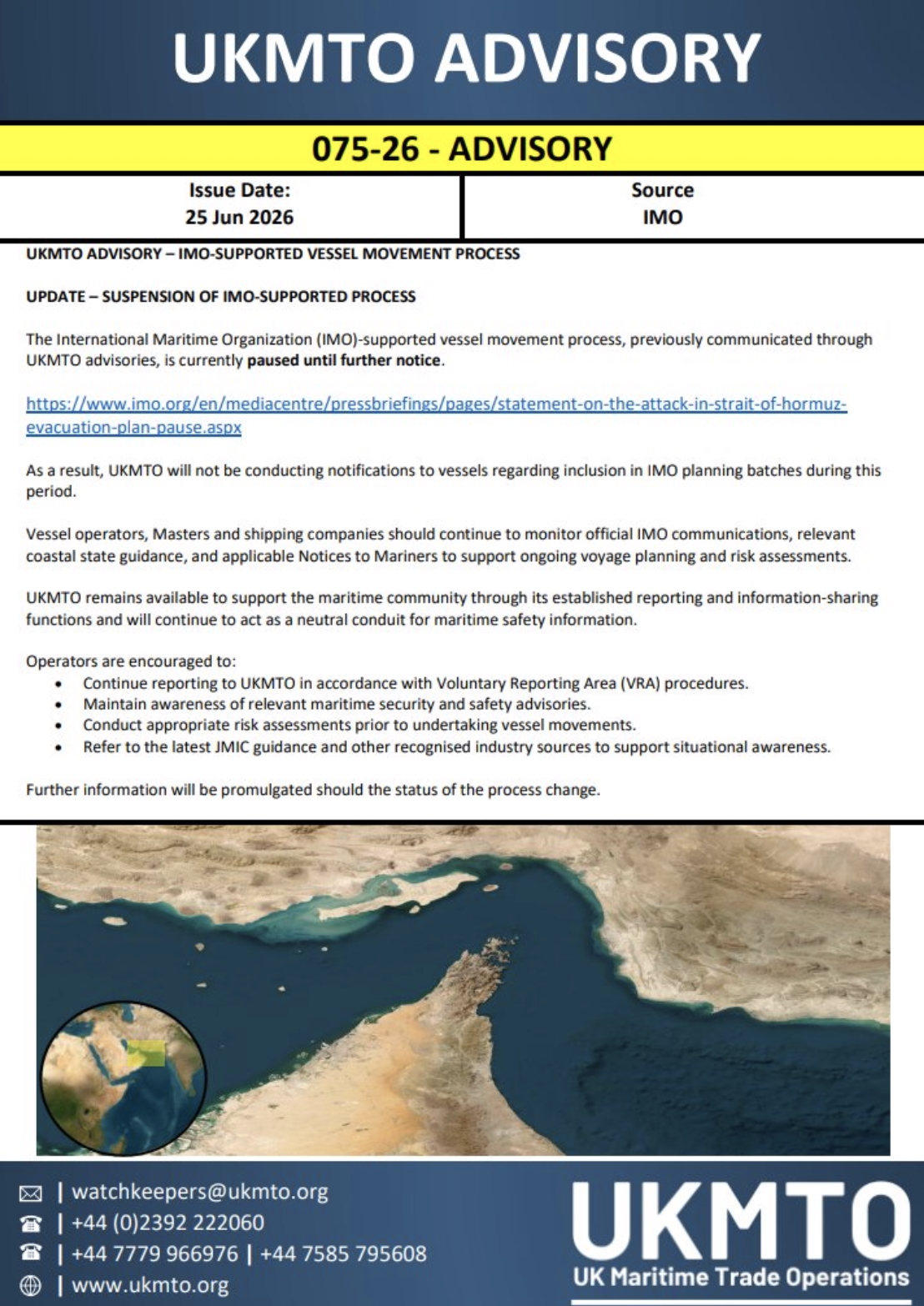

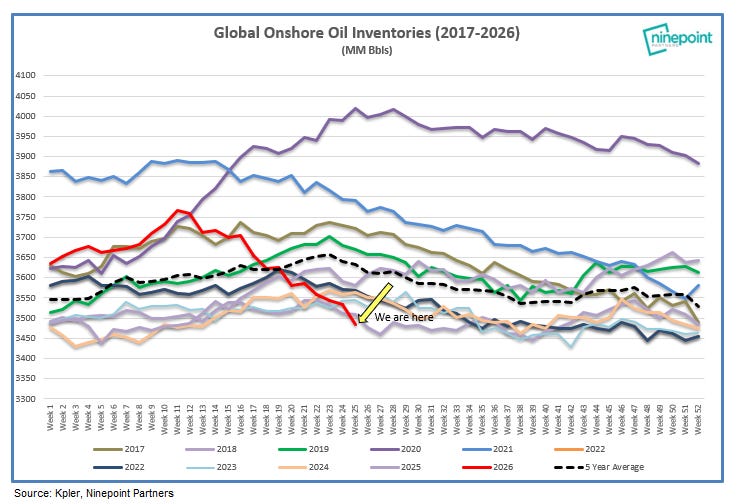


Seems Iran could easily say–under the MOU?–that Hormuz is closed until Israel withdraws from Lebanon. If an energy cliff is truly arriving in the next few weeks, Israel would be under enormous pressure not to crash the global economy.
But I’m not sure the ‘hardliners” in Iran much care what the world thinks–they think they can win against Israel and the US, and they want to proceed?
“Israel would be under enormous pressure not to crash the global economy.”
That pressure isn’t happening. The insurers, bankers, shippers, globalist apparatchiks of various sorts, etc. aren’t seeing Israel as crashing the global economy.
Not yet is said pressure happening, but if the spotlight were put squarely on that issue, and a serious global crash began, said pressure might materialize. As I keep saying, how much did you pay today for your Israel Tax?!
And it’s not out of the question that more pressure from various places might materialize on Iran.
Still rampaging in Palestine.
And I look around various media at sentiments and understand that anti-Trump doesn’t necessarily mean anti-imperialist or pro-IRGC.
Anti-Netanyahu doesn’t necessarily mean the same thing either…
No, the MOU does not provide for a mechanism for handling a breach of any provision.
Iran can make that argument and take that action but it is not contemplated as a remedy.
My impression was if any provision of the MOU fails, the whole thing fails, at least in Iran’s view, and so the war resumes? I don’t really think much of Iran wants that, but I don’t know, nor do I know what “resumption” might look like, but it seems they could threaten that.
It is also only an MoU. It isn’t binding in any sense, as I believe Aurelien has pointed out much more eloquently than I can.
And we know that the US is agreement-incapable, particularly with Taco at the helm. It is really hard for me to see a scenario where this thing doesn’t fail. We’re off to a really bad start, with both parties bickering over the terms, lying about what the other side did or didn’t agree to, and generally acting like a divorcing couple (see “War of the Roses” or “Marriage Story” for movie references)
Not really. This MOU has always been about optics and narrative. Those of us who follow alternative media might agree that Iran has the right, but main stream media will paint them as the “bad guy”.
Again, Trump go what he wanted, he got paper oil below 70.00 (WTI) and if Iran attacks again they look like the aggressor, particularly if they would attack ships in Omani waters.
Iran got nothing but empty promises. Even the Russians knew NOT to give a ceasefire. You negotiate WHILE you shoot, not when the shooting STOPS.
Yes, I did not incorporate a point, consistent with yours, that Alexander Mercouris has been making since he returned from a trip to Russia. Officials there told him they had warned that the MOU was a Minsk-Accords ruse, merely to buy the US and Israel time to rearm.
However, the US is so depleted and also keen to mix things up with Russia (at least derivatively, by selling weapons to Europe and potentially more directly if you believe the analysis we just posted from Andrew Korybko), that might take a hell of a lot longer than they think.
Iran is probably reloading and resupplying. They do seem off their game right now.
I wonder if their waiting for their team to either win the World Cup, or be eliminated and safely back in Iranian airspace to act on the MOU.
Hopefully the IRGC is rearming at top speed too. And developing or acquiring longer range anti-ship missiles. And updating all their targeting information from the latest satellite photos. I saw a snippet of a WSJ report earlier talking about the widespread destruction of US bases in the region, which had the throwaway line that there were no US troop casualties despite the rain of missiles and drones. Amazing! I guess we’re going to wait a long time before we hear the real story about casualties.
China gets a vote, too, with the rare earths export ban. And Le Chemise Verte is running through stocks of Patriot Interceptors like Taco with a bag of fries at a burger joint.
So re-arming could take a long, long time.
That pronoun should be la instead of le (shirt is feminine) however I won’t harass you if you decide to keep using the original ;-)
As I see it, Iran’s problem is that it is keen to convert the control of the SoH from military use of force against enemies and their allies legitimized by an argument of self defense to a different legal basis somehow compatible with international and maritime law and interpretation of the MoU. I cannot comment on the legal stuff as it’s way beyond my ken.
But overall this attempt to shift away from a military/political justification is, in my opinion, incompatible with its apparent objective to drive Israel out of Lebanon, Syria, Gaza etc. Defending itself in the war that started Feb 28 is an easy moral argument to make with broad support. Insisting that Israel desist from genocidal expansion and ethnic cleansing is also broadly arguable. But how is this to be done? As I see it the only way is to fight. That’s Iran’s quandary. Negotiate peace or fight? This situation with crummy legal arguments and interpretation of of the MoU is half pregnant and not an expression of moral clarity. I don’t find pointing out that the USA or Israel broke such and such a contract paragraph very persuasive and I guess I’m not alone.
To put that in simpler terms, Iran can’t uphold itself as a model of both international law/liberal norms and of moral resistance to the settler colony because the international community is immoral and aligned to the settler colony.
If Iranians decide that they don’t have the means or stomach for the big decolonization war or can’t survive the likely repercussions then I won’t blame them for that. Listening to Syriana Analysis indicates there’s a good range of opinions in play. I guess Iran is in the process of making up its mind. Good luck to them.
Sorry, Verifyfirst. I shoulda ended that by going back to SoH.
I am not persuaded by the idea that the MoU affords Iran justification for attacking boats in Oman’s territory. I think that if Iran wants to use SoH as a lever to get Trump to lean on Israel then Iran should use the language of war instead.
Sure, but now Oman is ignoring what Iran says and letting ships pass on their side of the strait.
Thus, Hormuz is NOT closed and has been decoupled from Israel’s actions in Lebanon.
I am not saying this as support for Omani actions, just noting the ground game has changed.
Oman is a signatory to UNCLOS, which provides for free passage of commercial vessels.
It is not “letting ships pass.” That presupposes Oman has the means to stop them. It seems vanishingly unlikely that Oman has invested in the capability to do so.
UNCLOS is a peacetime treaty (and unenforceable even then), and while it does not cease to to be in effect during an armed conflict, it is superseded by the laws of warfare.
So there is an ample room for the interpretation that Iran can limit civilian transport of the belligerent countries (most of the Gulf) while there is no state of peace. And in order to define the nature of the traffic, Iran can inspect the vessels passing trough what is indeed a conflict zone.
I cannot stand the way normally sound readers are Making Shit Up to defend Iran. This is a textbook example of the cognitive bias called halo effect, of needing to see people and groups as all good or all bad. So Iran deeds that are dodgy are whitewashed because readers are on Team Iran.
Sinking civilian ships is against international law, specifically a war crime, just as bombing bridges is.
That is, of course, not at all what I said. But it’s your place and your rules, so I’ll excuse myself.
Oh, come on. Iran is shooting at civilian vessels. You can’t pretend they are doing otherwise.
A blockade would be permissible but Iran would have to announce it, enforce it, and apply it to ALL ships. No giving Chinese vessels special treatment. And a blockade would violate the MOU.
Iran could declare a maritime exclusion zone , but those are intended to keep commercial ships out of an active combat area, and a merchant ship entering an exclusion zone does not make it a target.
So again you were Making Shit Up. You asserted there was “ample room” without appearing to have done any investigation. I take umbrage at being forced to do research and summary to clean up readers misinforming the community.
Re: “ The British maritime security agency UKMTO reported on Thursday that a ship had been struck 7.5 nautical miles southeast of Oman’s port of Dahit by “an unknown projectile”.
It’s interesting to me that the initial UKMTO report here on NC yesterday said the ship was hit on the starboard side, whereas this report does not specify a side. If struck on the starboard side by a ship exiting the strait, it was therefore hit from the Oman side, not an insignificant detail. Suggesting to me the purpose of the strike and the ambiguity around which side was hit may be a US strategy to wrest the media narrative and paint Iran as the Bad Guy as readers just assume the implied, that it was Iran which struck the ship.
Please read the post in full, as we require in our written site Policies as a condition of commenting. It was hit by an armed skiff, as in a vessel at sea, so the side tells you nothing.
I’m aware and still think it’s relevant which side the hit came from.
The nearest direction would still be Oman. Given the location shown on the chart in the report, a skiff would have squeezed between the target and Omani shoreline, a very odd thing to do, although perhaps Iran has loads of armed skiffs sitting around in Omani waters, waiting. Nevertheless, I think we can’t discount that the source of the attack may not be Iranian, but the way the stories are written it is what we’re led to believe.
Will the US now target and hit all skiffs, I wonder.
‘Will the US now target and hit all skiffs, I wonder.”
They do in the case of Venezuela. And that isn’t even a war zone.
I discount the War on Drugs since that is really a war against America’s “noncompliant” populations.
With miles of open water on either side, I don’t understand what difference it makes. A skiff dancing around a ship could fire from any direction (if that is indeed what happened).
To be precise, the ship was struck 3.6 nautical miles off Oman’s Khawr Naiwah. So within sight of shore. For reference, the Brooklyn bridge is 2.6 nautical miles across.
By a “projectile”, which could be anything including a hamburger or peanut or rock, which did “minor damage” only to a window on the bridge and no other damage.
The references to “armed skiffs” in the Hindustan Times video were all related to attacks a week or so off the coast of Yemen, not yesterday’s attack off Oman. Are there other sources that say the Ever Lovely was attacked by skiffs, or name any other specific launch pad for the “unknown projectile”?
Also, that video (and other sources, too) mentions statements from Iran as related to the attack without clearly reporting the relative timing, which matters.
Not trying to nitpick, snark, or snipe; just trying to get solid info on what actually happened, and getting really frustrated by how hard that’s been.
Most MSM sources blindly accept US Govt claim that it was hit by an Iranian drone. That may well be the case, but I’ve seen no reliable independent confirmation or even circumstantial evidence.
I did find the track of Ever Lovely in Marine Traffic video linked from the HFI Xeet., which at least confirms that the ship was going South along the coast after exiting the (thinnest part of) the Strait. I had been wondering about that; the BBC report said that the ship had “since safely transited the strait”, which seemed (to me) to imply that it continued North and West, *inbound* rather than outbound. An inbound path would have meant that the starboard side was facing out to sea. The fact that the ship was really going South amplifies E s Ce Tera’s questions about whether Iran would be running armed ships in Omani waters (between Ever Lovely and the coast).
My best guess at this time is that Ever Lovely was hit by a (very?) small drone, perhaps even a recon drone sans explosive payload? I have seen no reports mentioning “explosions” (though there were enough explosions in the HT vid to confuse it for a trailer for Fast & Furious 19!).
Again, I’m really frustrated by not being able to find reliable reporting on this incident, where the details really matter in assessing the consequences.The references to “armed skiffs” in the Hindustan Times video were all related to attacks a week or so off the coast of Yemen, not yesterday’s attack off Oman. Are there other sources that say the Ever Lovely was attacked by skiffs, or name any other specific launch pad for the “unknown projectile”?
Also, that video (and other sources, too) mentions statements from Iran as related to the attack without clearly reporting the relative timing, which matters.
Not trying to nitpick, snark, or snipe; just trying to get solid info on what actually happened, and getting really frustrated by how hard that’s been.
Most MSM sources blindly accept US Govt claim that it was hit by an Iranian drone. That may well be the case, but I’ve seen no reliable independent confirmation or even circumstantial evidence.
I *did* find the track of Ever Lovely in Marine Traffic video linked from the HFI Xeet (see 0:10-0:15), which at least confirms that the ship was going South along the coast after exiting the [thinnest part of] the Strait. I had been wondering about that; the BBC report said that the ship had “since safely transited the strait”, which seemed (to me) to imply that it continued North and West, *inbound* rather than outbound. An inbound path would have meant that the starboard side was facing out to sea – and def not part of the IMO evacuation plan, and therefore a more likely target for Iran. The fact that the ship was really going South amplifies E s Ce Tera’s questions about whether Iran would be running armed ships in Omani waters (between Ever Lovely and the coast).
My best guess at this time is that Ever Lovely was hit by a (very?) small drone, perhaps even a recon drone sans explosive payload? I have seen no reports mentioning “explosions” (though there were enough explosions in the HT vid to confuse it for a trailer for Fast & Furious 19!).
Again, I’m really frustrated by not being able to find reliable reporting on this incident, where the details really matter in assessing the consequences.
Argh, sorry, I hit Paste twice because my Chromebook is so slow that it looked like the first Paste didn’t work.
Given the apparently dire situation of US and global oil markets, Iranians probably view Omani transit as somewhat annoying rather than problematic. They have time to fix that problem and are most likely preparing for how to respond when the US and Israel lash out when the tanks reach bottom, as Trump most inevitably must do. When gas prices reach $5/gallon he must “do something” no matter how self-defeating.
Thanks for all your hard work.
I don’t know if you saw it, but we had a reader comment yesterday that there is an actual shortage of Kerosene in PA:
https://www.nakedcapitalism.com/2026/06/iran-war-omani-route-tests-iran-control-of-strait-of-hormuz-as-rubio-gcc-states-reject-iran-management-iran-yet-to-respond-to-israel-ceasefire-violations-intent-to-stay-in-lebanon-more-doubts.html#comment-4435594
Cliff hitting sooner than thought? Or maybe a regional thing? I may try to ask around here if I get the time this weekend.
I thought about that comment when I read it and wondered what the Amish did for oil before Kerosene came on the scene. So, maybe whale oil? I guess that that option is out.
IIRC, coal oil. Which you get by baking coal for coke and catching the volatiles.
Thanks. I should have thought of that. I had a distant relative that worked in the coal mines of Pennsylvania where the Amish live now.
…wondered what the Amish did for oil before Kerosene came on the scene.
Wood for cooking and either tallow or beeswax candles for lighting?
At least in Southern Ontario, one often moved the wood stove into the “summer kitchen” to avoid overheating the actual kitchen. My guess would be that the “small kerosene single burner stove” is a substitute for moving a wood-burning kitchen range. Sone of them were huge. This looks like a mid-sized one.
https://i.pinimg.com/originals/29/71/22/29712242dd9aa9fff3b282296a44cbf0.jpg
Wikipedia
An agha. Yes it looks about mid-sized. I’ve seen larger ones looking at rural rentals in Ireland.
Another possibility is “panic buying”, which might be hyper-local. Search does not suggest a regional shortage, though I suppose there could be one that is not yet well-reported.
In recent weeks I’ve noticed episodic inventory outages of dried beans at a local discount food retailer. Different types are out of stock on different visits. I suspect that there is some stockpiling going on by justifiably alarmed customers. It seems plausible to me that this sort of thing might be happening in other contexts here and there.
We have stockpiled six months’ supply of food. I noticed recently at Costco that a fair few people were buying rice and flour in bulk, maybe more than usual.
We’re buddies with the owners of a local flour mill in W WA, and they have promised to let us know if/when flour is getting scarce. The also offered to let us buy lots and keep it in their inventory, as long as we’re not hoarding and gouging others.
Kerosene and jet fuel are basically the same refinery cut. So shortages in one translate to the other.
The problem could be distribution.
Jet fuel is transported in bulk, many airports and military bases have pipelines or rail celery.
Consumer kerosene is handled in small loads, biggest is rail. Some off it might be shipped as drums, packaged fuel.
Per EIA Kerosene stocks in U.S. last week are little changed from one year ago.
If ships can just pass along the Omani coast then what leverage did Iran ever have?
Several sunk ships that made their point. And I just heard today that some of them will have to be removed because they are causing obstructions in navigational channels. That’s gunna be fun.
It’d be a real shame if some naval mines fell off the back of the boat in that narrow passageway. A real shame.
Fun fact. Trump boasted how he sunk all of Iran’s mine laying ships. The same ones that would have been tasked with retrieving any laid naval mines.
In wartime, Iran is more freely able to assert the blockade regardless of territorial waters because they’re, well, in a war, and an existential one at that, brought upon them by the US already committing the absurdly illegal act of assassinating a foreign head of state and hitting many other targets besides during negotiations. If Iran hits a tanker in Oman’s territorial waters when at war with the US, then Oman might be angry, but they’ll have to get in line behind Israel, Saudi Arabia, the UAE, Kuwait, Jordan, and so on.
But Iran isn’t some pirate state – they want at least some kind of legal basis for their actions that can be used to assert control when the missiles stop flying, because they do want tankers to keep sailing through Hormuz. Not just for the world economy, and not just for their own economy, but also because it’s hard to toll – er, collect service fees – from ships that aren’t there. And shipping companies are understandably going to be pretty skittish if Iran plans to assert their sovereignty over Hormuz *only* through firing drones and missiles for the coming years and decades.
So, while Iran *does* have major leverage in wartime, and has de facto control over what comes in and out because no military force can dislodge them, they are now discovering that unless the Oman issue (an issue from their perspective, at least) can be solved, that they don’t have that same degree of leverage in peacetime.
I agree with your analysis. The smart move IMO is for Iran to continue to use whatever means necessary to stop all traffic until the conditions precedent to the beginning of the MOU to take effect are met by the US. Immediately start halting any traffic in Omani waters and tell the US that it will stop as soon as the US lives up to its side of the bargain. The impetus on the MOU ceasefire is to stop the march towards disaster because of the world oil supply and nothing more. Anything that helps the US goals without any tangible gain for IRAN is counter productive. The US and Israel are not refraining from attacking because they are nice guys. They know if they do attack they will be hurt beyond what they can stand. My father used to tell me that when you see someone acting foolishly you need to stop and ask yourself are they dumber than you or much smarter than you. Right now I think Iran is acting foolishly but…we’ll see.
It’s not just the strait traffic, which is a biggie, but also all the refineries in the ME are within Iranian missile range. And yes, there’s the possibility of mines. And the nature of the strait itself is that foreign navies can’t get in to project power because there is a fortress called Iran overlooking the entrance.
As we explained very long form yesterday, Iran thought it could come to an agreement with Oman regarding operation of the Strait of Hormuz. That clearly has not happened.
In addition, we had seen comments in Twitter, and a reader yesterday firmed that up, that the Oman channel is not able to handle as much traffic as the old channel in the center of the Strait of Hormuz or the one Iran established to the north, by its coast. Kpler says only ~40 vessels can transit the Oman channel per day. I had thought that the depth of the channel was a limitation, as in VLCCs night not be able to pass. I am not sure of that. However, if we are talking oil alone, 20 million barrels was the Gulf supply to the world. That’s 10 VLCCs each way. So if VLCCs can transit the Oman channel, even at the much smaller vessel count it could erode the oil cliff.
Just a guess, but Oman has to tack back and forth between Iran-compliant and US-compliant actions, based on fairly short term threat assessments. With the military phase of the conflict in temporary abeyance they likely feel more vulnerable to US coercion if they appear to comply with Iran. When military conflict upticks they will be able to “explain” an apparent tilt to Iran more convincingly. I’m assuming that, however dunderheaded US diplomacy is, the US has to give countries under fire some slack since the US is no longer in a position to protect them. I think this goes in some way for all of the Gulf satrapies.
And divining how they’re reading Iran delaying retaliation on Israel drives us further into the fog. The mounting pressures on the Ukraine front, mounting Russian exasperation with Euroelite provocations, is likely shaping what Russia is conveying to Iran re forms of support. How much that matters, who can say? (I refer to Russia because Mercouris has been stressing how out of patience Russia has become.)
Oman right now is hedging their bet pending a clearer picture of the ultimate outcome of the war. I suspect that all of the GCC countries will get closer to Iran when the war is finally over. I could be wrong but right now Oman can’t be seen breaking from the existing bromance with the US. Down the road all bets are off.
On the hedging, just seeing this headline from Bloomberg – https://www.bloomberg.com/news/articles/2026-06-26/oman-tells-allies-ships-going-through-hormuz-may-have-to-pay
Paywalled, so unfortunately I can’t see the details.
I have access to that article. Tack back and forth is a way to classify the Omani public statements. Here are excerpts from the article:
And elsewhere in the article:
If USA and Israel get The Mediterranean routes and infrastructure to their liking, it could also diminish the Strait as leverage.
I’m not sure having your justification lawyer-proof is so important in international arena. There are courts but no police to enforce the judgements, and the ones eager to play world policeman already fired their shots. Furthermore, as evidenced by the UN votes right after the start of war, there is no argument Iran can invent that would convince unaligned states to voluntarily give up free passage thorough the strait when they aren’t responsible for the war and obviously don’t think they should pay for it. However, as long as Iran stays reasonable and charges something like dollar per barrel, I think the rest of the world, after filling its official protestation, will go with it. Likewise for Oman, as long as Iran doesn’t fire at or interfere with Omani own ships, it doesn’t materially affect them how many other nations ships pass thorough their half of the strait. And if Iran bribes them with some development projects, which are absolutely not financed from the tolls, they may even like it (unofficially).
It matters because (now confirmed by a tweet added to the post from Tasnim News) Iran is indeed explicitly and clearly misreading the fifth paragraph of the MOU to justify its action against ships operating in the Oman channel. That is the sort of bad faith you expect from the US.
When the US and vassals ignore the law, treat it with contempt, negotiate in bad faith, attack during negotiations, and the emperor himself says he does not need to follow the law etc., then yeah, why should Iran even bother? If this is the Law of the Jungle and only brute force matters, what good is the law here?
I’ll go out on limb: Iran has been legalistic and relatively cautious, and has been careful to appear to the lawful one, it has not directly targeted civilians, acts in self-defense and has bent over backwards to negotiate, despite the deceit and perfidy of the US. One could argue this burnishes Iran’s PR image and ‘soft power” in the larger context. Iran can thus claim the moral, legal and political “high ground”. I would also imagine that Russia and China are pressuring/encouraging Iran to take this course and not abandon any semblance of law and protocol.
Going forward, I would guess that Iran’s general legal approach will help their trustworthiness and credibility, as they aim to become the regional hegemon.
Joe Rogan and comedian Tim Dillon clip.
Tim Dillon on Israel, Iran, AI, and Palantir
https://www.youtube.com/watch?v=DyKSUEEPb74
At the 12 minute mark…Joe Rogan almost grasps MMT intuitively…
“What’s out debt? Nearly 40 trillion? Who do we owe that to? Tell ’em to go F off…lol…”
Yeah, Joe, that’s just it. We can do that, and we do, we just don’t do it out in the open like that. We’d rather play nice about it (most of the time) to keep everyone plugged into our financial system as a mechanism of control/influence.
JR’s rhetoric sounds to me like threatened default. I think a more MMT-oriented response would be, “tell ’em that they can roll their maturing notes at some positive nominal yield or accept zero-interest paying reserves in accounts with the Fed.”
Just so everyone knows, this has never happened in the oil market.
@HFI_Research
·
20h
Just so everyone knows, this has never happened in the oil market.
Cracks are back to the highs, and crude timespreads are in contango.
Never happened.
Thanks.
https://x.com/HFI_Research/status/2070171245287784812
This is indicating no supply issues? Would the spread be suppressed by reserve outflows?
Edit: I figured it out. 3-2-1 spread indicates high refinery demand but the other one in contango indicates oversupply
demand destruction?
@morgan_downey
China yesterday raised refined oil export quotas for July vs June, boosting diesel/gasoline outflows and indicating domestic oversupply.
Not a sign of macro strength from China. Adds to the global commodity macro woes coming which began the iron ore market.
This and more in today’s commodity news. Free every morning. Signup for the full issue in the comments.
All done! I did add a few tweets, so if you were an earlier arrival, please reload this page and re-skim, The few updates should be easy to see.
Yves – Thanks for these Iran war posts.
Been wondering and meaning to ask… When you update a post after it initially launches, do you typically append new material at the end or also insert new material in the middle? Obviously asking because I always wonder if I need to reread the entire post or can just look for the new stuff at the end.
Thanks for your readership and your kind words,
I hate to tell you, since it is more work but you need to reskim the entire piece. For instance, in one recent post, a section on Lebanon was in the middle and I got to that last, as in after the initial posting. On top of that, if I find information (say on Bloomberg’s or Aljazeera’s live feeds, Twitter, Hindustan Times, which provides good fresh material, or sometimes from NO1’s daily updates, which he posts only shortly before my daily pieces go live) thot can generate substantial new items and even some reordering so the presentation is cleaner.
Thanks! It’s all good. And know I know to reskim the entire post. ;-)
Cheers
Thank you for your devotion to providing open and objective news.
I think back to the various conversations here about how international law and agreements have no enforcement mechanisms and would therefore be of no real use to Iran. Aurelian has made this point multiple times. And the MOU is non binding by design and was created as the starting point for negotiation, it is not even an agreement.
The US is creating a challenge for Iran, presumably attempting to exploit differing factions within Iran with more or less hawkish views while Iran places pressure on the US relationship with Israel. I suspect, like the initial unlawful attack by ISR and the US, this will empower the more militant voices in Iran.
Iran has the military capability to stop transits and it has the capability to destroy the gulf monarchies. It is at war, and its survival is at stake. At the start, Iran threatened to close the strait. Without assumed cooperation by Oman. That threat holds, I think.
I heartily agree — esp on the point that the MOU is “not even an agreement.” Keeping one’s word and abiding by “understandings” is nice — but as Prof. Pape has repeatedly stated, losing control over the Strait is simply not something Iran will allow — even under pressure the “international norms” police or Chinese diplomats. Only a few ill-willed geopolitical actors and shortsighted business fascists will blame them for going hard on Strait-passage.
The US has proven itself treacherous beyond comprehension, as have the Gulf States. Who outside the GCC and the US is going to come to Oman’s aid over closure of a sea lane to which they signed away all rights decades ago? The Chinese might not like seeing the global economy crashed, and I suspect Iran might be cooperating with them to some extent in these early days, but I just do not see any intelligent Iranian giving up crucial leverage against the US.
There is much that Iran can do and might do. I could and might sink a ship in the Omani side channel. It could and might deliver a missile on Tel Aviv for each bomb of Lebanon. It could and might demonstrate the accuracy of its weapons to the GCC states. It could and might render those US bases in the gulf less functional than they are now. Would that violate a lawyer’s idea of lawful action? Could be, but the US does it all the time so that makes it alright since whatever the US does cannot be anything but right and proper. Just ask Donnie or Marco. Looks like that MOU was just a piece of paper to stop the shooting, which were ripping up the US and Israel, so as to get to the yammering and BS-ing, to Donnie’s ranting and raving, to the logic chopping and hairsplitting. There will come a time for Iran to show what it can do and might do to jar the fools back to the reality of the situation.
Except as we pointed out, Iran does seem very much to want to sell oil on the global markets, which it can do only if the MOU is still in place.
Only as long as the blockade is lifted, I think. China will buy it if the ships get through, as they did pre blockade. Not if the US imposes a blockade again.
I have long thought that the US blockade could have easily been broken had Iran used its’ submarines to teach a lesson to a few of the ships implementing it. How many ships are in the US blockade, and how many precision guided hypersonic weapons does Iran possess?
It is not like there isn’t a precedent for sinking ships around there; the US sank an unarmed vessel transporting cadets from an Indian parade, and Donny can’t seem to stop himself from telling everyone how much of Iran’s navy he has sunk whenever he can get himself in front of a microphone.
That blockade just seems to be the easiest part of the equation, and yet they do nothing about it. It ranks right up there with the sitting duck tankers populating Ben Gurion airport. Why have they been pulling their punches? I just don’t get it.
Trump’s “Little Excursion” has reportedly cost US Taxpayers $80 Billion.
Enough to house every homeless American., of course spending $80 Billion to house the Homeless is “An extravagance America simply can not afford” as Chuck Schumer so eloquently put it.to
Endless $ for prisons and Wars of choice, no $ to feed the Hungry, house the Homeless or provide the sick with medical care.
You don’t want to be downwind of that “Shining City on a Hill” unless you have a very strong stomach.
As the old story goes:
‘Lord,’ the minister said, ‘I see you spend millions on soldiers and forts and weapons, and not one farthing to lighten the sufferings of the poor.’
“‘Yes,’ said the king. ‘When the revolution comes, I will be ready.'”
Which, if history is any guide, does not actually work out that well for either side.
0712 PDT
IDF braces for Gaza riots along ‘yellow line’ on Friday, Fatah uses social media to spread the word
https://www.jpost.com/israel-news/article-900603
Judge Napolitan and Col. Macgregor.
[EXCLUSIVE] COL. Doug Macgregor : Judgment Day for Trump’s War. Does he Know He Lost?
https://www.youtube.com/watch?v=wAV0xMapy30
Maybe on alternate days he has a clue.
Oman Tells Allies Ships Going Through Hormuz May Have to Pay
Per Bloomberg….
Oman has told European officials there’s no way of going back to the pre-war status quo with the Strait of Hormuz and transiting ships may have to be charged some fees, according to people familiar with the matter.
While Omani officials said they will always abide by international maritime law, they added there could be fees for services related to de-polluting the strait or helping ships navigate it, the people said, asking not to be named discussing private matters. It’s unclear if Oman said all these fees would be obligatory.
Oman is analyzing systems used for chokepoints across the globe, including the Malacca strait in Asia, said the people, an area where there are no mandatory shipping charges.
I would suggest a subtle but important distinction between getting the US to agree to an MoU, and the observance or not of the particular terms of this one. The first is very important politically, because the mighty US, having tried to destroy the country and then demanded unconditional surrender, is now reduced to signing a very one-sided document. Nothing like this political transformation has happened before in such a short space of time. On the other hand the MoU is a mess, conceptually and verbally, and Paragraph 1 in particular is ambiguous to the point of meaninglessness, and in the end it will be the situation on the ground that counts. Time is on the side of Iran, and its priorities are economic and sanctions-related. Lebanon is very much a secondary issue, and Iran is not going to prejudice, say, the lifting of sanctions, just to avoid Hezbollah getting hit.
Surprise surpise. It turns out capitalism wins again.
Who could have guessed this “multipolar” anti-US shtick is just a cover for everybody else in the world to get their bag?
I agree with you on most of those points. One quibble: As noted a couple of days ago here, some (like prof. Robert Pape) see Lebanon as key to Iran’s regional security and projection of power in the region. Prof. Marandi seems to be saying that Iran will not abandon Hezbollah. Perhaps Lebanon/Hezbollah is more important to Iran than we believe. Assad is gone in Syria, so it could be that Iran views Hezbollah as more important than ever, and launched an attack on Israel in retaliation to attacks on Lebanon. I’m not so sure if Iran will throw Lebanon under the bus, I would say no.
But we will have to see what happens since Israel won’t withdraw and will continue to attack. The “ceasefire with Israeli characteristics” (Chas Freeman) is to be expected. As usual, we’ll stay tuned
Oh, I agree that Hezbollah is important to Iran for the reasons you give. It represents their only card in Lebanon and it’s a big one. It’s just that I think Hormuz is a greater priority. Lebanon, unfortunately, in itself is not a priority except as an area of influence. I can see them allowing the Hezbollah/Israel conflict to wind down, which would be in their interests, but not making a big thing of it compared to Hormuz. We’ll see.
That’s pretty much how I’ve been seeing it, and I see the extended negotiation period as the US coming to terms with its inability to change the facts on the ground.
I personally think your prediction about Hezbollah is wishful thinking but time will tell. And I’ll argue that if Israel remains a belligerent in Lebanon then it will just be a matter of time until Iran is attacked again. I certainly doubt that Iran will be moved by revokable actions like lifting sanctions.
Cushing expanded its capacity, I think around 2014, which has the effect of also expanding the required amount of oil necessary for operational minimums. The fact that Cushing was at 11 million in 2004 does mean anything.
Some SPR links:
https://eprinc.org/wp-content/uploads/2014/07/EPRINC-Shages-SPR-July-11-2014.pdf
https://www.energy.gov/documents/ins-l-12-06pdf
Its clear from the MOU that there was no real meeting of the minds, and most, if not all, of the promises made, neither party had any real intention of abiding under. It was ambiguous on purpose to avoid any real agreement, and simultaneously overpromised on both sides, making it possible for both parties to renege at any time and accuse the other of violating it. Diplomatically, its is a perfect ceasefire in that both sides agreed to stop shooting, but has a built-in ability for either side to accuse the other side of perfidy and start shooting again. The real question is i.) who starts shooting first, ii.) when, iii.) what is the shape of the oil market at that time. Both sides have reasons for seeking the ceasefire now, and Iran is exporting with the sanctions waiver, which is benefit. But undoubtedly, both sides are plotting round three at this time.
I suspect that Iran is going to have to make good on its promises to destroy a significant amount of GCC petroleum infrastructure-without America coming to the rescue-before the Gulf States could get onboard with Iran’s control of the Strait of Hormuz, which is the lynch-pin of the strategy probably driving certain elements of the IRGC. Since this objective would be accomplished with ballistic missiles, it should rule out pipelines as a viable alternative (and probable target). They also probably need to give Israel a metaphorical bloody nose, and maybe shift the calculus from expansion to state survival. The next phase could easily involve a ground war in the Gulf, because while missiles are effective, only soldiers can occupy (or threaten to occupy) territory. I don’t know what Iran’s capabilities are/may be in the future, but they are going to have to increase the coercion on the GCC over the next phase if they want Hormuz.
The real question is i.) who starts shooting first, ii.) when, iii.) what is the shape of the oil market at that time.
Issue 17 of the friday follies
Centcon says US forces have carried out a “powerful response” to Iran’s alleged attacks on the commercial ship yesterday. A link to this developing story at RT is here. According to the command, US aircraft struck Iranian missile and drone storage sites, as well as coastal radar facilities. Are the markets closed yet?
Thanks a ton for the Cushing factoid.
Aiee, you may be right about the destruction of GCC infrastructure….but China would put the kibosh on that. Its domestic economy is in such a mess (huge industrial overcapacity, real estate hangover) that it really needs exports, so no global depression-creating actions.
Do you think shutting Bab el-Mandib + the Strait would do?
I don’t know, it takes a lot to get a nation to the point of capitulation, if we have learned anything from Ukraine and this conflict. Obviously, its different for the US because all these wars they fight are primarily fought out of spite combined with MIC quarterly earnings reports and pressure from various ethnic lobbies (Cuban, Israeli, Ukrainian) so its easy to cut and run. I think it is going to be hard to get MSB to sign off on either de facto or de jure Iranian control of the Strait of Hormuz, for example.
I’ve seen conflicting reports on whether the Houthis would fully shut the Bab el-Mandib based on agreements they have with the Saudi’s–they obviously could break the agreements but I assume the agreement (if it exists) is in their interests, so I don’t know that they are going to privilege Iran over themselves. I don’t think Iran will be able to hold Hormuz long-term unless the Gulf Countries capitulate.
I see Hormuz as the key for Iran to breaking out of the cage the US has put them in for the last 47 years. That’s why I believe, whether it violates international law or isn’t cricket or seriously annoys a friendly country, I think the regime is going to do whatever it can do to extend and maintain control over Hormuz. At the same time, its unclear what their real capabilities are, and their biggest danger is overplaying their hand and getting overextended.
Having discussed this with people whose businesses are petrochemical adjacent, and who still can’t imagine a critical supply shock occurring, I think it is going to take the pipelines running dry and has stations shutting down before they can accept a change. As sad as it makes me to say it, Iran will have to break the US before we give in. There is no hope that Israel will ever break. I believe Bibi would do anything to keep things from changing.
If Iran wants a different world where they have regional autonomy, they’re going to have to take it by force and keep defending that reality for some time before the opposition accepts it.
Great comment!
There is much uncertainty. For example, if USA fails in an invasion, it may not be necessary to destroy a significant amount of GCC infrastructure.
Thinking about this, I’m not certain that Iran has to repeatedly interrupt Strait of Hormuz traffic to assert its power or new status on the world stage.
Having done it once, rather easily, I think they have made their point: They are in a position to block the Strait of Hormuz at will. I don’t think this genie can be put back in the bottle. For example, the US dropped two hydrogen bombs on Japan; the US doesn’t need to keep dropping them in order to convince the world that it is a nuclear power that should be taken seriously with respect to nuclear weapons. Just the possibility of doing it again is enough. The possibility of the US using nuclear weapons again will always be lurking in the background.
I think the situation is comparable with Iran; it will forever be a nation that can interrupt the world’s energy supply by giving the word, even though they may never actually do it. In fact, having Iran periodically interrupt Strait traffic would probably be to Iran’s disadvantage; they had the good fortune (!) this time in having had a worthy excuse and did not end up seeming like the bad guys (much like the US had World War II as an excuse in the example above).
My point is that the apparent split between Iran and Oman it’s probably not fatal to Iran’s emergence as a world power and in fact maybe something of a blessing since it gives Iran an excuse not to pull the trigger unless they really need to.
No, oil prices keep falling. Pretty much no one believes a crisis is nigh. We have to at least hit the oil cliff to sober the optimists up.
Iran is asserting a Right to Self Defense. Israel repeatedly does the same and everyone shrugs. Why would anyone believe that Iran would bow to that double-standard?
Controlling the Strait isn’t just controlling commercial traffic. Iran can also ensure that the Gulf is demilitarized. After suffering two surprise attacks and constant US-Israeli meddling, that seems like a logical move.
Iran is going further than a de-militarized Gulf – its proposing a nuclear-free Middle-East.
= =
● Iran has an ‘inherent right to legitimate self-defense’: Foreign Ministry
● Palestinian, Lebanese struggles are legitimate under international law, says Iran
● What Iran’s Foreign Ministry said on US, GCC and the Strait of Hormuz:
Please stop with this sophistry. It verges on Making Shit Up.
Iran is making no such claim. I showed that Iran itself it trying to invoke a strained reading of the MOU, precisely because an assertion of self defense here is nonsense. This is not at all like bombing US based used to make attacks on Iran.
Since when are commercial ships in the Strait of Hormuz seeking to escape after having been bottled up in the Gulf a threat to Iran?
Maybe I got over my skis a bit with reasonable inferences. Allow me to explain further.
I think Iran always intended to take control of the Strait. They added provisions to the MOU that would attempted to create the basis for that and make it palatable. Any ‘strained reading’ is an attempt to continue under the format that they thought would grease their way to control.
Absent agreement by other parties, Iran doesn’t appear to have a legal right to control commercial traffic in the Strait – even while the MOU is active – yet Iranian statements and actions – especially in the last two days – indicate that that will not deter them:
But we also got a series of messages today from a senior advisor to the Supreme Leader with potent warnings / implied threats to the Gulf States wrt their opposition to Iranian control of the Strait:
= =
IMO any assumption that Iran will be constrained by the niceties of International Law, or International Relations is now fraught. They see control of the Strait as vital.
Aside: The historical assertion is ‘smart’ in that it is absolutist, with no possibility to negotiate conditionality. It may also be illegal – but who’s going to stop them?
While the Strait was always theirs (in their view), they are asserting control now due to an existential threat.
I hope my reasoning about this is more clear now.
One last thing: demilitarizing the Gulf just seemed like a logical excuse exercise control of SoH indefinitely (they’ve already said hostile warships can’t enter!).
This is posturing. Excessive belligerence in statements is an admission of weakness. This is the sort of the thing the US does.
Neither China nor Russia will support Iran if it goes to war with its neighbors over control of the Strait of Hormuz. Russia and China will both suffer if Iran acting like a dog in the manger triggers a global depression. Both states have urged Iran to settle the conflict.
Iran is proposing that the Middle East become a nuclear free zone because currently only one regime in the ME is known to have nuclear weapons, Israel. This is probably intended to deflect from the fact that Iran is a nuclear threshold state (in violation of their obligations under the NPT), in that they (probably) don’t have nukes, but could develop them in short order. They are most likely a nuclear threshold state because they want to have a credible threat of nuclear retaliation against Israel, but don’t want to encourage further proliferation in other countries. If Iran gets nukes, it is almost inevitable that Saudi Arabia and Turkey also develop nukes, which Iran doesn’t want (they already border Pakistan). The best case for Iran is to get Israel to get rid of their nukes, but that won’t happen. This has nothing to do with de-militarization of the ME, its posturing with respect to nuclear negotiations.
They are seeking the de-Americanization of the ME, but that is close to baked in at this time. De-Americanization won’t mean the disappearance of American weapons, and even if it did, they would be replaced by Russian, Korean and Chinese systems. Iran already has constraints around Saudi Arabia, which has a defense agreement with nuclear Pakistan, and I have read accounts that the Houthis have a deal with the Saudi’s, so they may not be willing to completely close the Red Sea. Iran does not want to mess with Turkey which has a real army and influence in Syria. There is no way Iran will seek a de-militarization of the Middle East nor do they have any capability to achieve that goal. On the other hand, control of Hormuz would provide regional influence, wealth, and would make continued US/EU sanction regimes difficult (as paying shipping fees would violate sanctions). It would break them out of the American-enforced economic isolation of the last 47 years.
aye. way i see this shaking out, if Iran gets its way…is usa out of the region, persian gulf run by the folks who live there, and coming around to some regional security arrangement, sans usa.
the contours of this are already apparent, if one squints just so at all the flurry of meetings between everybody from Egypt to Pakistan, and everybody in between.
i reckon its an unspoken commonplace with just about everybody around there that usa is nothing but trouble, havent held up their end, etc.
but just like the slow-moving shift more broadly away from usa imperial systems, who gon go first?
well, Iran did, because it had to…so now the fourth wall is broken.
i imagine theres all manner of heated discussions with lotsa that too sweet tea they all seem to love happening in boardrooms and such all over the region.
i also make it a habit to keep reminding myself that we americans are defacto trained up to be short-term thinkers…all tactics, no strategy.
all these folks, on the other hand, are not that way. patient and circumspect.
and regarding Oman…they are the most patient and circumspect of the lot….hard for most of my countrymen to fathom…although i certainly admire them for it.
i figger tank bottoms in the usa…ie: real economic pain and shortages and such…are what the Iranians are holding out for.
we’re gonna blink.
trumpy, et alia have been pretty good at keeping paper oil bearish.
that can only obtain for so long.
so i’ll keep breathlessly waiting each early am for Yves’ war report,lol(when do you sleep, girl?!)
but it will continue to be this back and forth, headfakery and chaos and confusion…with a drone here, a missile there…until the usa economy starts to scream.
if my dad was still around, i’d be asking him what his oil exec buddies down at the marina in clearlake, texas are talking about.
but i no longer have access to that sort of thing.
get yer preps in.
Oman warns Strait of Hormuz won’t return to pre-war conditions, ships may have to pay (Clash Report)
https://clashreport.com/world/articles/oman-warns-strait-of-hormuz-wont-return-to-pre-war-conditions-ships-may-have-to-pay-ami1j3dal1c
Oman tells allies ships going through Hormuz may have to pay (Bloomberg) [couldn’t get archive . ph or other alternates to load to archive this, sorry]
https://www.bloomberg.com/news/articles/2026-06-26/oman-tells-allies-ships-going-through-hormuz-may-have-to-pay
I suppose Oman wouldn’t sign on to such a thing unless it was certain that the US could be thrown completely out of the region which seems unlikely in the very near short term…
The Forever War in West Asia and its Implications. (Ambassador Chas Freeman)
https://chasfreeman662157.substack.com/p/the-forever-war-in-west-asia-and
Notably, Iran has form – had it continued its 12-day war another few weeks, the last war might have been avoided (due to low US munitions). Basically, when the Israelis/US start to scream/get desperate, they have only had enough pain to desire a time out for perfidy and a resumption of hostilities. Of course, Iran has other factors to consider, as did Russia, but Russia learned to never cease fighting for talks. And those other factors will be irrelevant when the US has another go. It’s clear from China’s current stance toward the US (No!) that it understands Iran’s situation.
Because the US remains just weeks away from running out of munitions to defend its extensive global positions (recycling and cannibalization to rebuild are insufficient, given the rare-earth blockade). Use those munitions, and only an empty bluff remains to prevent being overrun everywhere or at least anywhere. Having lost its goodwill (from WW2?) almost everywhere, many opposition forces will start pushing. And desperation is the only thing that will force the US to actually keep its word – something it almost never has done (even MAD no longer works) – remember the Native American experience.
“A time out for perfidy”
Perhaps we should take inspiration from the World Cup, and call these ceasefires “perfidy breaks.”
You know, give the players a rest, get some hydration, and buy time for more treachery, bad faith, and unclean hands.
It would be interesting, wouldn’t it, if in 60 days, China blockades Taiwan, Russia launches into Rammstein and Iran repudiates the MOU.
I have that thought every day.
It seems that Russia could bombard all the NATO bases in Eastern Europe into rubble, achieving the removal of the US from Eastern Europe, and Iran showed the US will do nothing. Or rubble-ize all the NATO bases in Europe, pushing the US off the continent. Sure it would erase a few hundred thousand US soldiers, but karma is balance.
1. We do not know the real economic and military situation within Iran – especially what it was at the time, given the Internet shut-down (which has since been lifted). We do know that the leadership was split, fairly closely, on whether to continue the war or to try the MoU. We also know that the moment the blockade-of-the-blockade were lifted Iran pushed >40mm barrels out the door inside of a week, so their floating storage capacity must have been nearing some kind of a limit.
2. We do not know exactly what China was telling Iran, though we can hypothesize that the Chinese were in favor of wrapping things up as quickly as possible.
3. We do not know where the Iranian leadership thought – or thinks at present – they can push the conflict to before nuclear strikes by the US or Israel become a real possibility. Yes, there would be retaliation, but only after millions of civilians were lost (with the attendant damage to infrastructure, etc.).
If life were a computer game, yes, Iran should have continued the war. Mathematically speaking. In practical terms, however, all we really know is that Iran ultimately decided to roll the dice on the MoU. Probably figuring that this would make them the “good guy” who “tried” with the perfidious Americans. Meanwhile, there aren’t that many more Tomahawks that can be manufactured inside of 60 days.
But on the other hand, yes, if one assumes the MoU will ultimately fail, which is a fairly fair assumption of fairness, all this is just a pause before Round 3 (counting from the 12-day war last year), and in Round 3 the US will be able to, at least initially, do more damage than it could have done at the end of Round 2.
One big plus for Iran is that while the MoU is in play they can sell their oil. This might be such a big thing for Iran (we don’t know) that they may bend over backwards for 60 days, and maybe beyond, to keep the MoU on life support.
re: munitions depletion, I think that there are still large stocks of “dumb” iron bombs and even significant inventories of JDAM kits to make these more accurate (but not stand-off).
What seems to be low is long range high end strike weapons and high end air defense interceptors.
Against adversaries without advanced air defenses, I think US could still do a lot of damage using existing stocks of munitions.
@clashreport
BIG: Iranian missile and drone attacks caused major damage to the U.S. Navy’s base in Bahrain, including the Fifth Fleet headquarters, communications facilities, warehouses, and support buildings, according to satellite imagery analyzed by The Wall Street Journal. The extent of the destruction had not been publicly acknowledged by the Pentagon.
Although the Pentagon maintained that operations continued and casualties were minimal, the strikes exposed significant vulnerabilities in America’s Gulf bases and have prompted a broad review of the U.S. military’s regional posture.
Officials are considering redesigning or relocating key facilities farther from Iran’s missile range, with options including dispersing forces, hardening infrastructure, and expanding basing in locations such as Israel.
The damage at Bahrain alone is estimated to cost roughly $400 million to rebuild, while total damage to U.S. bases across the region may exceed $2 billion.
I always feel so small and naive for thinking this, let along writing it – I just want the US to stop. All of these wars do nothing to help our citizens or the people in other countries. Why can’t we just stop? Yes, there’s the money. Yes, there’s the conflict of interests. Yes, of course, there’s Israel. Or with respect to Ukraine, the EU and UK. But why do we have to feed all of that? Is it really so impossible to even imagine that the US could stop supporting war, or causing wars, all over the globe? Could we maybe stop being the bad guys?
It would be so novel to have at least a few years in my life when we weren’t at war.
Here we go!
USA blames Iran for the attack on shipping through the Oman-IMO corridor.
US CENTCOM says aircraft struck Iranian ‘missile and drone’ storage locations.
= =
This is a direct challenge to Iranian control of the the Strait. Iran will have to respond if it continues to want control.
Yves: looks like we may need you this weekend !
Some tit for tat action.
https://www.nytimes.com/live/2026/06/26/world/us-iran-strikes-hormuz
Iranian Lego animation social account says Iran will respond. Can’t believe that is my info source but here we are.
Because the media environment is only becoming more & more polluted, I don’t know if much can be read from any day-to-day news, even actual military attacks. It’s just my personal take, but I still think the war hasn’t even reached the beginning of the end yet. A few random thoughts based on the post & some comments:
* On the MoU, I think Iran mainly conceives it as a no-lose action. At best, the US actually follows through on some points, but at worst, it’s another way to pace the war by hooking into domestic politics, both at home & abroad. Now whenever Iran acts (even if they’re fudging the justification some), Iran can cut through decades of propaganda & point to something the US said it would do a month ago.
* More generally, even if Iran is maybe sympathetic to the vaguest goals of international law & their diplomats know to speak the language, I don’t think the Iranian government or most of the population really cares. Iran has been on the receiving end of the long-standing hypocrisy of international law more than most, plus it is a deeply Islamic country. If push comes to shove, divine law & paradosis take priority over what is clearly a failed, post-Enlightenment project to prop up European influence.
* On international relations in general, even the oil trade, I think people still aren’t considering how much Iran has become politically more like North Korea, especially the past couple years. Not only is the pro-Western camp, which was always overestimated, being continually neutered since the Jan. riots when not outright purged. The wider interest in conventional economic growth or lifting sanctions is dying too (Pezeshkian is arguably its last gasp). Iran will gladly trade on fair terms when it can, but the hard power & autarky camp are clearly ascendant.
* As a result of that, the expectation many people have that Iran will abandon Hezbollah is probably further away than ever. Even with the recent escalations by Israel, if people ask “Why won’t Iran respond?”, I would reply “Are you sure they haven’t?” All of the supposed claims that they held back after Trump promised something seem to come from US or US-aligned media. Meanwhile someone like EJ Magnier will drop a short comment to the effect that only the combatants see how much Hezbollah is bleeding the IDF white. Consider the possibility that the only thing all sides have really agreed to for now are to contain the war to the Lebanese front. If Israel is logistically an extension of the US though, why wouldn’t Iran return the favor?
* On Oman, I don’t know it as well as Iran, but I mostly agree they’ll do a savvy job of maximizing their interests & preserving neutrality. Even if they protest occasionally on one hand, I suspect with the other they will gladly participate in a totally-not-a-toll-but-some-other-fee regime with Iran. I’d even suggest that Oman & Iran have settled into sort of a good-cop, bad-cop routine with some Omani statements as pure kayfabe (especially after Trump threatened to bomb them)
* Finally, a bit more on Oman that may be relevant. While the Ibadi sect is distinct from both the Sunni & Shia, it has arguably always been much closer to Shiism, culturally & philosophically. The first Ibadi (a.k.a. the derogatory khwarij) were originally the most diehard followers of Ali, who (in my eyes) held a borderline anarchist view of authority, turning even on Ali when he agreed to a compromise in the First Fitna. More materially, the Ibadi always had strong republican tendencies, and until the Jebel Akhdar War of the 1950s, the Oman highlands were ruled by an Imamate with electoral aspects. Even today, there are a lot of cultural differences between Omanis from the coast & the highlands. So although the al Busaid family (originally themselves “imams”, then just sultans of Muscat) seem to be very good statesmen, well-liked, & stable, there probably is some underground sympathy for Iran’s system. The gentlemen’s agreement seems to be the Iranians don’t exploit that so long as the sultan maintains good relations.
From DD Geopolitics:
US and Israel violated para 1 of the MOU in establishing plans to disarm Hezbollah using the rump government of Beirut!
Attack happened after NYSE close, TOFU will be pleading for new MOU Sunday!
Oil has ticked up above 70 on the 1h chart, and this is likely why:
The war seems to be starting up again this weekend.
https://m.youtube.com/watch?v=311PIhRuvyI
Others have already said it but I’ll leave it here.
NYT (paywalled?):
Live Updates: U.S. Military Strikes Missile and Drone Sites in Iran
Nothing seems to stay put for very long.
Of course, they waited until after the markets closed.
MoU, RIP.
Iran’s Revolutionary Guards say it targeted US positions in the region in response to a fresh U.S. strike against Iran
https://www.reuters.com/world/middle-east/irans-revolutionary-guards-say-it-targeted-us-positions-region-response-attack-2026-06-26/
https://houseofsaud.com/gcc-manama-iran-missiles-phase-2-washington-conceded/
I’ll just include the first and last paragraphs. If you want to grab a drink and wade through the middle…
“The six GCC foreign ministers who gathered in Manama on June 25 demanded that Iran’s ballistic missiles, drones, and proxy networks be included in Phase 2 of the US-Iran nuclear deal. The demand arrived eight days after President Trump, standing at the G7 summit in Évian, invoked Saudi Arabia’s own missile arsenal as justification for Iran retaining its own — a concession that removed the item the Gulf states now say they want back…
“…Three requirements would need to be met for the GCC’s missile demand to enter the Phase 2 process: both the United States and Iran would need to consent to expanding the mandate, a new working group or agenda item would need to be chartered, and the compressed timeline would need to accommodate a subject that defeated negotiators across eighteen months of JCPOA talks in 2014–15. As of June 26, none of the three has been proposed by either party at the table. The mechanisms that would convert the Manama demand into a negotiating position belong to Washington and Tehran. The Gulf ministers asked. The answer will be decided elsewhere…”
Demand is a strong word, more so when the US has not demonstrated the capability to defeat Iran. This sounds like a risky stance for the gulf states. Like something Kaja Kallas would say to Russia.
“The demand arrived eight days after President Trump, standing at the G7 summit in Évian, invoked Saudi Arabia’s own missile arsenal as justification for Iran retaining its own…”
An additional point: If Iran doesn’t have missiles, that would probably affect demand for weapons from GCC countries.
Or maybe not…some of them have had “aggressive adventures” elsewhere.
Hormuz can be closed and re-opened. The destruction of the gulf monarchies is irrevocable. So, Hormuz is the better pressure point. Destroying the gulf is their nuclear option held in reserve and hopefully never employed. IMO.
‘However, Iran has a long history of spectacular military successes over much bigger powers, only to be short changed when the losing state cheated on settlements, such as violating what we would now call non-aggression agreements.’
The footnote added in support of this generalisation mentions the Battle of Carrhae. Was there something like a non-aggression agreement between Rome and Parthia after Carrhae that Rome violated? I can’t find any mention of that.
In any case, I wouldn’t say that Rome was a *much* bigger power than Parthia at the time, at least not in a way comparable with the difference between the US and Iran today, when Iran is a total underdog facing a global empire. Iran was a great power in its own right during the longstanding rivalries between the Parthian Empire and later the Sassanian Empire on the one hand and Rome and later Byzantium on the other. There was a similar rivalry between the Safavid Empire and the Ottomans later. Iran was arguably the weaker party in each of these cases, but not by much – they were powers in the same category. Iran was never completely conquered and incorporated by its adversary in these great power rivalries (the capital did fall on a couple of occasions, but the state quickly recovered each time).
The Byzantines (they still called themselves Romans and used Latin in the court until 610) in the Byzantine–Sasanian War of 602–628 at first fell back and lost much territory, but then regrouped and forced the Persians into defeat. It was a pyrrhic victory as both were enfeebled upon which the Arabs took great advantage. It is said to be the last great war of antiquity. The Safavids (900 years later) are said to be the beginning of modern Iran. Off the top of my head.
The Arabs being Islamic.
The geopolitical situation in the Strait of Hormuz remains highly volatile. Shipping companies seem to be weighing the high insurance premiums against the cost of rerouting around the Cape of Good Hope. It’s a high-stakes game of chicken.
Rerouting around the Cape of Good Hope will not magic oil or LNG out of the Gulf.