Category Archives: Doomsday scenarios

The 1677 Statute of Frauds: History We Neglect at Our Peril

Have you ever signed a document disposing of something valuable, like a house or your estate? Did you find you needed to get it witnessed, and that the witnesses couldn’t be family members, and had to put their addresses on the document too? Then it may surprise you to learn that you are following legal precepts established by a long dead Welshman; this one, in fact:

[caption id="attachment_14376" align="alignnone" width="631" caption="Sir Leoline Jenkins (hat tip Wikipedia)"](h/t Wikipedia)[/caption]
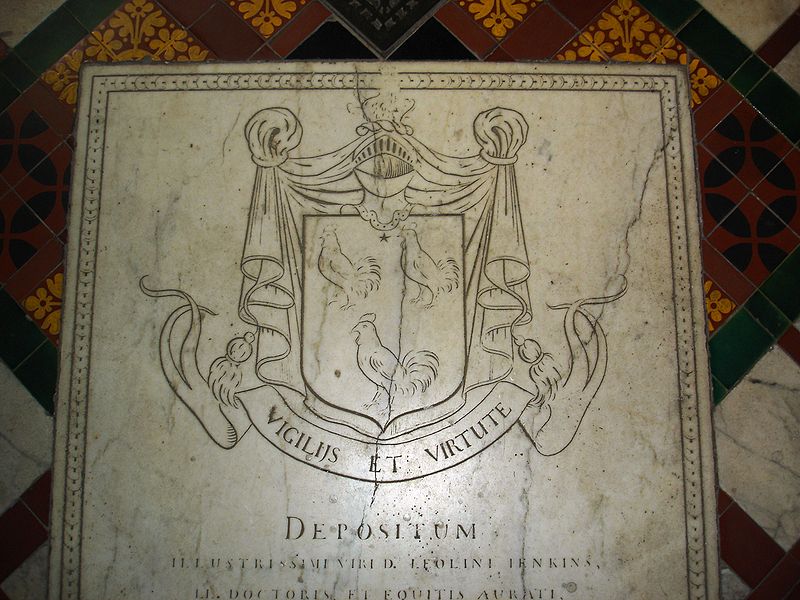
whose tomb is at Jesus College, Oxford; oddly, no more than ten minutes’ amble from where I am sitting, carving out this post. I like the way his “Llewellyn” has been semi-Englished to “Leoline”. Right now, he is probably spinning, at a fair clip, for he is the originator of the Statute of Frauds.

Read more...

Will Thousands of Foreclosures Be Voided Because Non-Lawyers Prosecuted Them?

If you thought robo signing was bad, you ain’t seen nothin’ yet. The website 4ClosureFraud presents the gory details of a potential major new front in the foreclosure mess. A Pennsylvania foreclosure mill, Goldbeck McCafferty & McKeever, is accused by Patrick Loughren of allowing non-attorneys to file and prosecute foreclosures. A DailyFinance story gives the […]

Read more...

The man with the magic words

…turns out to be Trichet, this week, anyway; the bond markets are soothed. Two key comments: We have got a monetary federation. We need quasi-budget federation as well. a statement which ought to have all the Eurosceptics, and many others, chorussing “told ya”; then Mr Trichet also hinted that the ECB could extend its purchase […]

Read more...

Euro Bank Stress Tests Hoist on PR Petard

We’ve been critics of bank “stress tests” from the get-go, because they were a shameless misuse of regulatory credibility as a tool to prop up bank stock and bond prices. It was in some was the inevitable result of how badly financial authorities (save some lonely but prominent figures in the UK, like Mervyn King […]

Read more...

Pettis on Eurozone Pathways and Endgames

Michael Pettis, like Simon Johnson a few days ago, has tried mapping out what he thinks future scenarios for the eurozone might be, and what that means in terms of possible winners and losers. One of Pettis’ strengths is that he takes the time to be explicit about his reasoning, which gives readers the opportunity […]

Read more...

Marshall Auerback: Bankers Gone Wild in Ireland AND Germany

By Marshall Auerback, a hedge fund manager and portfolio strategist who writes for New Deal 2.0. Despite a blame-a-thon on Ireleand, Germans banks are really at the core of the eurozone catastrophe. Much ink has been spilled in the press over the Irish problem and the laxity of the country’s southern Mediterranean counterparts in contrast […]

Read more...

Jim Quinn: Lies Across America

Yves here. While Quinn has a deliberately (some might say overly) provocative style and I quibble with some of his supporting arguments, his overarching observation, that America is wedded to an economic model past its sell by date, and that model has damaging social and political consequences, is one I believe will resonate with many […]

Read more...

The plank in Schäuble’s eye

From the look of it, the Irish bailout is taking another chunk of another one of FT Alphaville stalwart Neil Hume’s weekends. From Peston European finance ministers are struggling to reach agreement on the interest rate to be paid by Ireland for the €85bn of rescue finance it is set to receive from the EU […]

Read more...

Guest Post: Will the Irish Crisis Spread to Italy?

By Paolo Manasse, Professor of Macroeconomics and International Economic Policy at the University of Bologna and Giulio Trigilia, Master’s student at Collegio Carlo Alberto. Cross posted from VoxEU. Is Italy the next European country to go? This column argues that the jury is still out, although the grace period will not extend beyond three years. […]

Read more...

Systemic coupling round-up

Time to count up the systemic implications of the Irish crisis, following up on some of today’s links and other news. First, the usual contagion to Portugal and Spain is now in full swing, propelled by another barrage of bumbling Euroannouncements: Weber announced that if necessary, the EU would increase the ceiling of the EFSF […]

Read more...

“Waiting for Godot”, or “Endgame”?

No formal announcement yet, but some presumably well-sourced rumours about the size of the Irish bailout (EUR 85Bn), and the rate (7%, via the redoubtable Twitterer on all matters Irish @LorcanRK). While we await the budget statement, there are reasons to suspect, or hope, that the bailout, like Godot, will never come, because it’s failing […]

Read more...

South Korea Scrambles Jets in Retaliation for North Korean Fire on Populated Area

I was going to relegate this story to Links, but it is escalating before my eyes. North Korea is known for saber rattling and firing rockets that conveniently fall in the ocean when the verging-on-starvation nation needs a handout. But even at the outset, its latest move looked uncomfortably more belligerent than its usual ploys. […]

Read more...

The British mess (II)

First, let’s have a quick trip down memory lane. The financial crisis got going properly in the UK in August 2007, with the ABCP seize-up leading to the run on Northern Rock in September. Congdon illustrates how dependent banks had become on wholesale funding: At June 2007 UK banks’ cash deposits at the Bank of […]

Read more...

Stockman Savages Buffett Op-Ed, Bailout Canards

One of the annoying and persistent Big Lies of the financial crisis is that the rescues were a really good thing because they saved the world as we know it. That argument is dubious for a host of reasons: the world as we know it is the very same one that went off a cliff, […]

Read more...

Noose Closing on Ireland

We indicated yesterday that the Irish government had been in the process of trying to steer an inevitable rescue operation towards salvaging its bloated, cancerous banking system rather than a government bailout, which would not only further reduce national sovereignty but also saddle Erin with debt that could not be restructured. Stratfor describes how the […]

Read more...