Yves here. BWAHAHA. There is so little good news on the mass surveillance that every win ought to be celebrated. And the precedent here is important if it holds. The cities affected by the setback to Flock using license plate reading as a pretext for pervasive visual data hauling seem not to be willing to bet on an appeal succeeding. Enjoy the schadenfreude of the rapid retreat. If we are really lucky, Flock will suffer irreparable financial damage.
By Thomas Neuburger. Originally published at God’s Spies
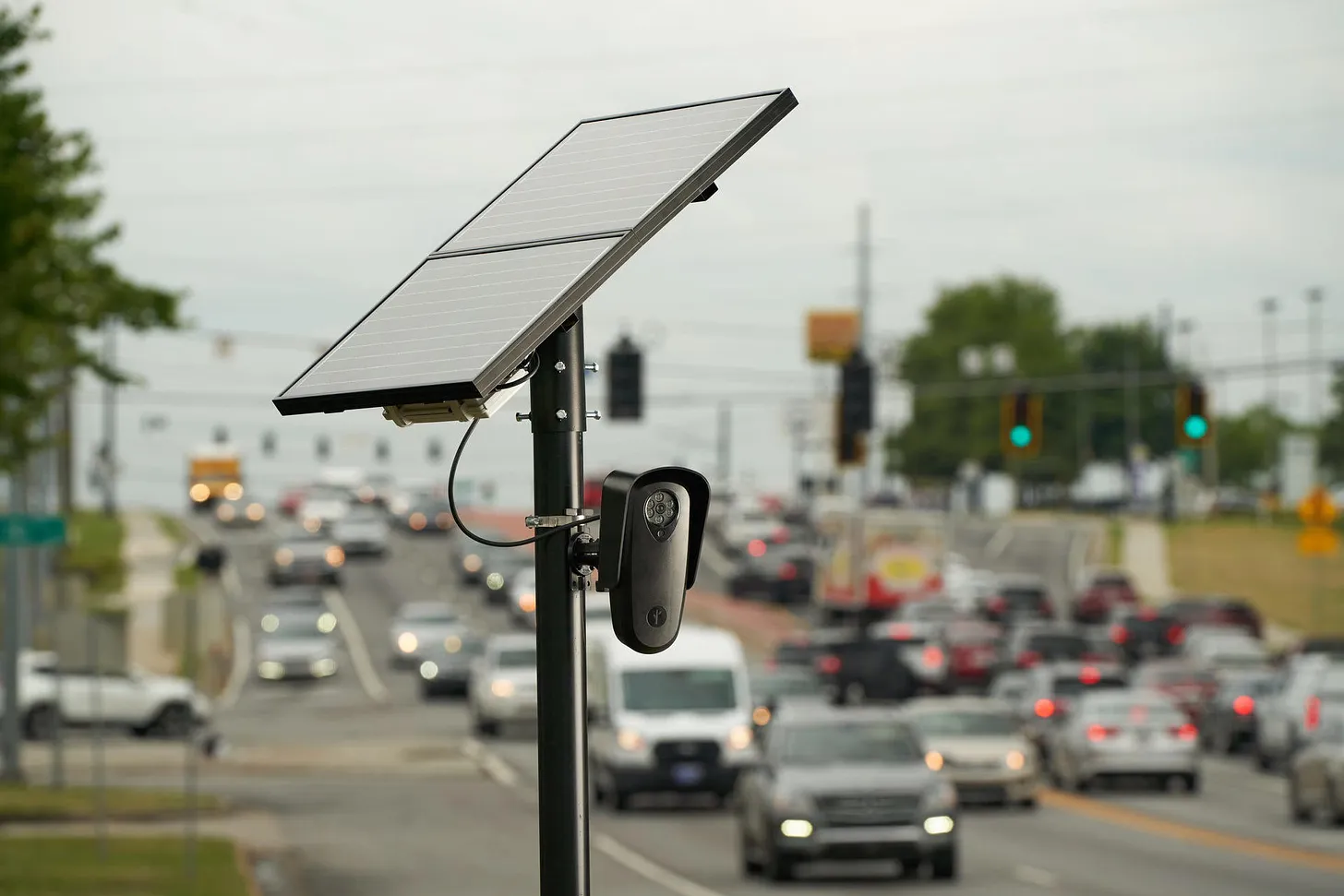
This is a tale of Flock cameras, something you may never have heard about. Flock cameras are sold to the gullible and the complicit as simple “license plate readers.” Flock cameras are designed to watch cars. For safety, of course. Because crime. But they are much more.
Spyware Supreme
The theory is this:
Flock Safety, a fast-growing startup that helps law enforcement find vehicles from fixed cameras, has released a slew of new features meant to make it easier for users to locate vehicles of interest.
Overall, the moves push the company’s software in the direction of giving police the ability to search for vehicles using whatever cameras are at their disposal — a security camera at an ATM, a homeowner’s Ring doorbell, even a photo somebody took on their cellphone. The company’s new Advanced Search package — which costs between $2,500 and $5,000 a year, depending on how many of Flock Safety’s cameras the agency operates — includes a feature that allows users to upload a picture of a vehicle from any source and then perform a search to see if any of the company’s cameras have seen it.
It doesn’t just search for license plates, either. The company has designed its software to recognize vehicle features such as paint color, type of vehicle and distinguishing features such as roof racks.
The tell is in the name: Flock Safety. Because “keeping you safe” is the reason for every intrusion. As one police-oriented site puts it (note: “you” here is the cops):
7/10 crimes are committed with the use of a vehicle. Capture the vehicle details you need to track leads and solve crime. Flock Safety’s patented Vehicle Fingerprint™ technology lets you search by vehicle make, color, type, license plate, state of the license plate, missing plate, covered plate, paper plate, and unique vehicle details like roof racks, bumper stickers, and more.
The reach is stunning in breadth. Flock captures everything it sees. Everything. Not just vehicles. People. Everything.
Think that’s a problem? So does a Washington state judge, who ruled that the sweep is so great that its data is a public record. Public means open to all.
That freaked out so many towns that the company is starting to lose contracts.
Across the United States, thousands of automated license plate readers quietly watch the roads. Some ride along in police cruisers [note: unrelated link, but a helluva story], others perch on telephone poles or hang above intersections, clicking away as cars glide past. They record everything in sight, regardless of who’s behind the wheel.
It’s a vast, largely invisible network, one that most people never think twice about until it makes the news.
Well, it turns out that those pictures are public data, according to a judge’s recent ruling. And almost as soon as the decision landed, local officials scrambled to shut the cameras down.
The tale behind the case is interesting:
The ruling stems from a civil case involving the Washington cities of Sedro-Woolley and Stanwood. Both sued to block public records requests filed by Oregon resident Jose Rodriguez. He works in Walla Walla and sought to access the images as part of a broader inquiry into government surveillance.
Judge Elizabeth Yost Neidzwski sided with Rodriguez, concluding that the data “do qualify as public records subject to the Public Records Act.”
The decision immediately led both cities to deactivate their Flock systems. Flock cameras are mounted along public roadways and continuously photograph passing vehicles, including occupants, regardless of whether any crime is suspected.
Concerns about privacy are central to the case. City attorneys, defending against Rodriguez’s suit, said releasing the data would compromise the privacy of innocents. But they saw no problem with the government keeping the same data.
Privacy for Me, Surveillance for Everyone Else
This gets us to the central problem of today’s surveillance state. No one running the cameras wants to be observed. One reason that city officials object to releasing Flock data, for example, must that they themselves are among the recorded. The cameras are on them too; they too can be tracked. Everything means everything for these everywhere cameras.
The rich want to hide their crimes (hello, Mr. Epstein’s friends), ICE wants to mask its thugs. Billionaires think you have no business in their affairs.
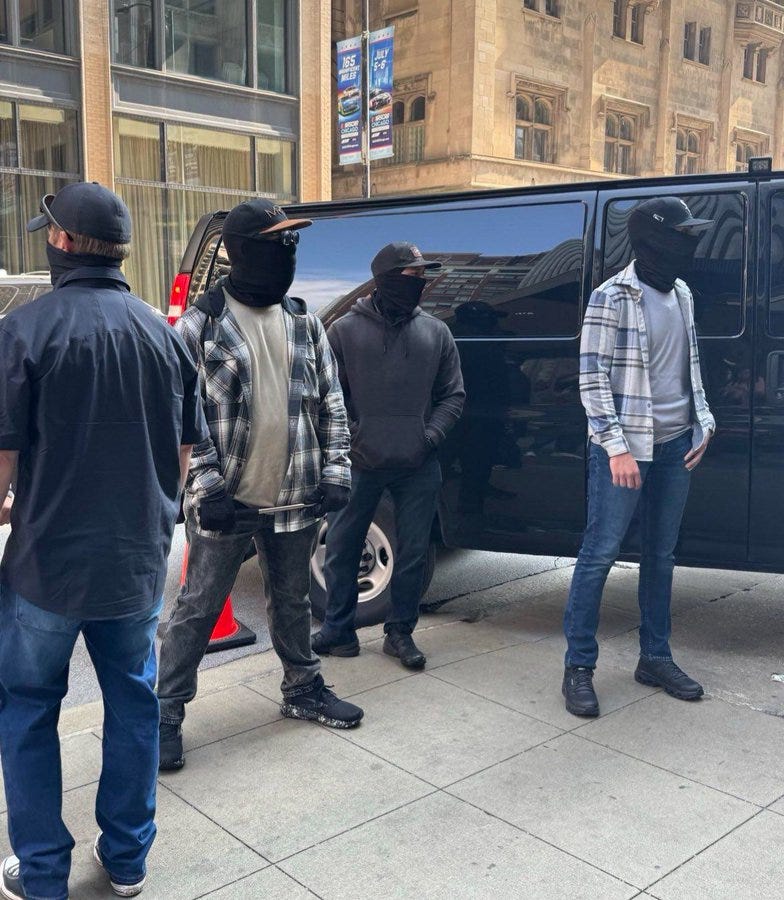
Yet they want to have every right to be deep into yours. Look at the ICE agents above. Then consider that one of the uses of Flock is to help ICE do what it doesby stripping the whole world naked as much as it can.
Or consider the trick used by cities like Eugene OR to hide the Flock cameras from view so they could record without them being unobserved.
Or that Congress had no problem at all with domestic spying, until they were the spied upon. Here Feinstein makes, ahem, the constitutional argument.
Irony much?
There’s more to be said, but I’ll leave it there for now. The revolt against Flock is spreading. Stay tuned.


From personal experience, I can say this technology has been in use from before the pandemic, is used aggressively in relatively small municipalities and is both mobile and extremely fast.
I live in an affluent 25k town in central NJ. Sometime in the late 2010’s, I bought a new car and swapped plates. After mounting the back plate, I found the front plate on the car was rusted on and I didn’t have the tools necessary to get it off. With mis-matched front and back plates and the spare new plate in the car, I drove to the hardware store. I made it about four blocks when I passed a municipal police patrol car going the other way. The patrol car swung a u immediately after going by and then put on the lights and pulled me over. The officer approached the car from the back and didn’t look at the front of the car. He asked for paperwork and I held up the spare plate. He said, Ah, yes, what’s up? I explained the stuck plate and he gave me grace after reviewing my papers. He didn’t say that cameras mounted on both the front and the rear of his patrol car scanned and compared my plates in approximately 5 seconds but that is obviously what happened.
I also see in the police blotter section of my local paper that the plate readers at the town borders notify the police office when a wanted car enters the town and then officers are dispatched to find it if possible.
I once had a back plate stolen with new tags. Put the front (tagless) plate on the back, following the reporting officer’s tip.
For reasons related to a botched address change, went months without receiving the replacements. I thus got quite good at driving “mindfully”. ;-)
The old now-reported-lost plate number apparently threw ALRP flags as a potentially-stolen vehicle. I was closely followed a few times as cops connected the dots of my somewhat-rare vehicle perfectly matching the registration linked to the tagless plate, could see the fees were paid up, and then didn’t pull me over. I also got pulled over a couple times. Once even with backup called and guns not yet drawn but at-the-ready. In both cases the story cleared up pretty quickly just with my explanation (which I could back up if needed with the stolen-plates police report I carried with me).
What I noticed during those months: Seemingly, only front-facing cameras from police cars going the same direction somewhere behind me were of concern. Never had any pass in the opposite direction and turn around, to the point that I factored that in to my “low profile” driving methods as something not to worry about.
Would be interesting to know more about the technical details of the various setups.
Hmmm… I saw a similar story in the Houston CBS affiliate this week. It was specific to West University, a wealthy enclave within Houston, near Rice University link:
No mention of the vendor, but I assume that’s Flock. I wonder if their PR department is doing damage control by getting these pieces planted in local papers?
‘Cameras everywhere, capturing everything’?
Here’s Peter Mandelson, sometime UK Emissary to the USA, captured yesterday ‘In flagrante delicto’ and published today in The Telegraph.
https://www.telegraph.co.uk/politics/2025/11/15/lord-mandelson-relieves-himself-against-wall-notting-hill/
The city of Redmond, WA recently took its Flock cameras offline when city officials were alerted by University of Washington researchers that the surveillance recordings were accessed by ICE which seems to have led to incarceration of immigrants. This is against state law.
As someone who works in public records for the state this ruling, if it holds and I suspect it has a good chance, not only lays bare the extent of surveillance, but it would also become an undue burden on the municipalities who use the system. Small cities like Stanwood and Sedro Woodley already struggle with records requests. Adding to that burden are the requests for video from police body cams. To increase that burden using Flock cameras would likely devastate a city budget. A cost-benefit analysis on this ruling would make the “Flock solution” not a viable one – likely not even close.
That last point might really make the company nervous. They convinced cops to spend money on surveillance in large part because cops are biased towards that product. On the surface it might sound good to politicians and citizens concerned about crime. However, the number of crimes solved, the amount of property safe guarded likely doesn’t come close to the investment. That’s before we get into where one houses such convicts or what one does with lazy or corrupt cops looking to pin crimes on folks to increase their solved rates.
Very helpful, thanks!
I was photographed by flock cameras when I got into a minor scrape after another driver merged into the side of my car. I didn’t realize the pervasiveness of these cameras until the local police released the footage to me, after my insurance company wanted to see it. I’d heard about the case before as I live in the same county where this case was brought. It’s great they are having to take the cameras down – it’s a small win but still to be celebrated!
We here in the South Mississippi region of the North American Deep South have an “entrepreneur” from the Gulf Coast who is attempting to set up camera systems that read license plates and identifies vehicles that are not registered in the auto insurance company data bases. In one or two towns so far, you are liable to get an automated ticket for no auto insurance in the mail. We are talking about several hundred dollars, of which, roughly half goes to the camera company. A sweet racket, but a racket nonetheless. Public policing for private profit. As neoliberal as you can get.
My inner cynic views this as a part of the Jackpot Program. Essentially, it is the gentrification of personal freedom. If you will own nothing, and everything will have a price, then what does that make the lower socio-economic classes? Commodities, also known as serfs and slaves, to the wealthy.
Stay safe, go grey.
You’ll know when the Jackpot starts to kick off when people use those camera systems for target practice and start shooting them out. Blinding the surveillance state then will be a priority.
why the priority of a divided citizenry, especially in a nation as armed as the USA … if MAGA and ANTIFA ever join forces, the Two Party Tyranny may tremble
I am told by “concerned parties” that the 5G telephony substations, usually mounted high up on poles along city streets will also be targets for “plinking.” Since mobile telephone “handshakes” with cell towers is a primary means of tracking the movements of the citizenry, elimination of the telephone nodes is a strategic move in anti-surveillance strategy.
The Revolution won’t be televised, or streamed, if we have anything to say about it.
We may have finally found a valid use for all the guns in America.
Phoenix city set up a private partneship for speeding tickets. Shut down when people discovered that there’s no obligation to pay a ticket issued by a private company.
I didn’t know there are 26 Flock cameras in the city for 2 years.
2 Syracuse politicians want to cut all ties with license plate reader company over privacy concerns syracuse.com
Call me paranoid but just because in Syracuse the department opted out of being included in the database doesn’t mean that ICE or another agency isn’t still looking at the footage.
just a few publicly available flock municipal contracts:
Fort Bend County, Texas (2024) – 5-year agreement, 31 cameras, $387,500 total
https://agendalink.fortbendcountytx.gov/AgendaWeb/CoverSheet.aspx?ItemID=16769&MeetingID=1124
Ardmore, Oklahoma (2024) – 2-Year Main Contract and Master Services Agreement
https://ardmorecity.org/AgendaCenter/ViewFile/Item/8899?fileID=13876
Dublin, California (2024) – Agreement with Flock Group Inc.
https://citydocs.dublin.ca.gov/WebLink/DocView.aspx?id=76082&dbid=0&repo=CityofDublin
Los Gatos, California (2024) – Staff Report with contract attachments
https://weblink.losgatosca.gov/WebLink/DocView.aspx?id=313478&dbid=0&repo=CityOfLosGatos
East Wenatchee, Washington (2024) – Resolution 2024-58, Flock Camera Contract
https://ewdocs.eastwenatcheewa.gov/WebLink/DocView.aspx?id=27862&dbid=0&repo=EastWenatchee
Whitestown, Indiana – Flock Group Inc. Services Agreement Order Form
https://whitestown.in.gov/egov/documents/1706537914_92482.pdf
Austin, Texas (2023) – Memorandum regarding Flock Safety Agreement
https://services.austintexas.gov/edims/document.cfm?id=403506
Flock’s Standard Terms and Conditions:
https://www.flocksafety.com/terms-and-conditions
BC no longer requires yearly stickers on license plates since I believe every RCMP car has readers. It has been this way since 2022.
I think Ontario gave up on the vehicle registration renewal stickers a couple of years ago as well. It was part of Doug Ford’s re-election platform, if I recall correctly.
The UK stopped requiring vehicles to display road tax discs on 1 October 2014.
Aside from some viewpoint webcams in the National Park, we’re largely camera free around these parts which is mostly nature acres, well except for a bunch of game-cams that locals have to track wildlife.
Some related links:
Flock Camera map (find out where they are in your city)
https://deflock.me/
Stop Flock (“Mass surveillance isn’t public safety – it’s public control.”)
https://www.stopflock.com/
…which also has an app:
https://www.stopflock.com/app
Eyes on Flock home page shows that it’s an awful lot of surveillance and data:
https://eyesonflock.com/
Zooming out a bit, via EFF:
https://www.atlasofsurveillance.org
Related, if you have a Ring doorbell you need to review settings routinely.
For instance, see if you magically enrolled in the lost dog option. That mini-network may seem innocuous at first, even humanitarian to help reunite people and pets.
The automated signup for that feature didn’t seem to notify me so I stumbled across it and then uncheck the box.
Slippery slope from lost pet to 24/7 monitoring. As if there aren’t enough ways to chip away at privacy!
A slippery slope with constantly changing policies as a notable lubricant.
I can’t find it now, but I came across an article once about a person having to field request after request of the police wanting their Ring Camera videos, which turned into some kind of colossal time sink for the individual. Can’t find that story now.
Looking for it though, I did find they Ring has changed its policies on police access and related integrations quite a lot these past few years. Might be worth researching further.
Two Ring-related links I came across in my brief search above which may be of interest to those reading:
Ring Just Made It Way Easier for Cops to Grab Your Camera Footage—Again
https://balleralert.com/profiles/blogs/ring-axon-police-video-requests/
The Legal Case Against Ring’s Face Recognition Feature
https://www.eff.org/deeplinks/2025/11/legal-case-against-rings-face-recognition-feature
Cameras generate enormous amounts of data. Some security cameras I was using recently generated about 1 GB of video data every five minutes. That translates, worst case, into a DVD for every 20 minutes of recorded video, or (for purposes of visualization) 72 DVDs per day.
There are ways to compress the data. Delete frames that are redundant. Accept a lower granularity of events and discard all but one frame per second. Compress what’s left. Parse the data, doing image recognition, looking for objects, details and faces.
But where does the data get stored?
Oh, right, “the cloud”. But it’s not just getting saved to a filesystem as a timestamped file. All those details are going into a database.
What’s the name of that database vendor?
Oh, c’mon, you all know. It’s Oracle Corporation.
I hate to sound like a broken record but it seems germane to point out that Oracle Corporation executives and managers lied under oath to the San Mateo Superior Court thirty years ago, that someone may have been murdered to conceal a crime, and that there is no statute of limitations on murder.
Also, notice that Oracle Corporation has been publicly accused of perjury and spoliation and concealing witnesses and destroying evidence and the sum of their response could be described as “la la la la I can’t hear you”.
Also, note that they moved their corporate headquarters to Texas after this all happened – it might be fair to say the company is no longer welcome in San Mateo County.
More info: https://ca-civ393104.org
Is Oracle Corporation worthy of our nation’s trust?
I say, ‘no’.
Why are we giving our data to criminals?
Food for thought, comrades
Just one of the many reasons so many governments are now changing FOIA laws to allow much higher charges for information requests, especially video.
“We published a searchable database of the entire set of new Epstein files and emails.”
URL: https://journaliststudio.google.com/pinpoint/search?collection=2283eeed70befac7
I just did a quick search for “Ellison” and discovered what some people might regard as pay dirt:
https://journaliststudio.google.com/pinpoint/document-view?collection=2283eeed70befac7&p=1&docid=5997bd13b4c2cb96_2283eeed70befac7_0&dapvm=2
‘Oracle Corp. CEO Larry Ellison gave a hilarious lecture on “How to Destroy Evidence and Make False Statements.”‘
Hilarious! He told his audience the stone cold truth and they all laughed and pretended it was a joke.
California Department of Justice, are you awake? Or are y’all drunk at the switch, AGAIN?
More info: https://ca-civ393104.org
See also: https://salanave-runyon.org/herbie.html#06oracle
Has anyone ever heard of ‘Shitat Matzliach’?
It refers to a behavior that is encoded in the following joke:
Guy goes into a restaurant, has dinner, receives the bill.
Scrutinizes the bill. Sees he is being billed $20 for ‘works’.
“What’s ‘works’?”, he asks the waiter.
“Sometimes it works, sometimes it doesn’t”, the waiter answers.
Another word for this behavior is ‘chutzpah’.
It would seem that this Shitat Matzliach is the soil in which chutzpah flowers.
And so I am trying to better understand Shitat Matzliach.
This seems to be the best explanation I’ve been able to find so far:
https://gameruprising.to/thread-64607.html
More info: https://salanave-runyon.org/herbie.html#08jdl
Food for thought
“Shitat Matzliach” (שיטת מצליח) is a Hebrew slang term that translates to “successful method” or “trying it on”. Last ‘outbreak’ was global, something to do with a killer virus called “SARS-CoV-2”.
Using the helpful links above for Eyes on Flock and the EFF search engine, I see that the three areas I searched, including my own, have a retention of 30 days for footage. If, as the judge ruled in Washington, these are truly “public records”, then that retention rate will likely be considered woefully inadequate, especially by defense attorneys and insurance companies as well as privacy advocates.
In Washington the State Archivist typically weighs in on proper retention rates. There was a proper outcry over the past couple of years when state officials set retention rates for Teams conversations at three days. That was laughable and currently such records are being held indefinitely while proper guidelines are being drawn up. It seems to me that 30 days is equally laughable, particularly if the footage is used as the basis or partially so, for a legal charge. How far back will footage of an alleged perpetrator need to be maintained? A day of surveillance? A week? What happens to the other footage which tracks the driver? Do they ditch the footage from two miles up the road that shows nothing, but keep the footage of the infraction which police maintain shows intoxication, for instance? Maintaining all of this footage comes at a cost, especially if the retention is beyond 30 days and small communities may not shoulder such costs given the rates of arrests based on the evidence.
Finally, some enterprising individual in WA might request records, now, beyond the 30 day retention (especially enticing if there was an incident they were involved in) and sue under the Public Records Act. The courts have traditionally frowned upon inadequate retention policies and in some cases rewarded the plaintiffs sizeable monetary recompense.
I did the research. It turns out the state does have guidelines for video footage from cams. 60 days minimum retention if no citation or crime is involved. If a citation or crime is involved, then footage must be maintained until after all appeals are exhausted. That might raise alarms.
First of all, Yay!
Also, I can think of two reasons cities would shut down Flock cameras if data is deemed a public record.
– They have to respond to requests to get data, very expensive.
– They will get sued by residents once the residents SEE what’s being recorded.
Basically just a big hassle.
I assume the cities/police only have access to what Flock decides to show them. The data is held on Flock servers, or in a proprietary format? Otherwise how can Flock bump their prices 10x when they become indispensable. It would be a mandatory approach to get VC funding.
The Flock camera system and a private citizen making a request to make it all public certainly is an interesting wrinkle in the tale of government surveillance, but I wonder if the Naked Capitialistas can really do a deep dive, philosophically and ethically into what level of surveillance is the correct one.
Isn’t having police officers with sharp eyes and excellent memories a positive bonus for the state and the community?
How can it be the case that we get a better government ( community society etc.) by it knowing less about what’s really going on?
A just community can’t be built on a fundamental premise that nobody else has a right to know what I actually get up to.
Time and time again I see complaints about surveillance systems that are actually complaints about rotten government.
Yet another reason to move to the middle of nowhere and rediscover what it means to be human.
YouTuber Benn Jordan has just released a pretty damning bit of video covering Flock cameras and their vulnerabilities. It really is worth a watch.
https://www.youtube.com/watch?v=uB0gr7Fh6lY