Yves here. Some claim that the US contacted the Iran government and basically asked them to stand down in the face of a performative/face-saving attack (which is what happened with the “obliteration” of the nuclear sites) and Iran said no.
The head of the Iranian Journalists’ Union, Mashaallah Shamsolvaezin, revealed during an evening program on Al-Mayadeen TV that Washington informed Tehran, through a third party, that it would carry out strikes on Iranian facilities, and that Tehran should absorb them.
Tehran’s… pic.twitter.com/FWs1tAOOT9— IntelSky (@Intel_Sky) January 24, 2026
If L’Orient has this right in its Strike or deal? What Washington and Tehran are negotiating, the US is making over-the-top unreasonable demands.
The latest regime-change attempt in Iran seems to have considerably stiffened some spines. Iran has said it will treat any new attack as war and will retaliate. Alastair Crooke has said that Iran has communicated that that includes closing the Strait of Hormuz for at least three months. Dramatically higher oil prices going into the midterms would be fatal to the Republicans, charitably assuming they happen. So Trump needs another face-saving retreat. And Greenland shows he’ll take very little compared to his original demands and tout it as a great success. So what Korybko describes below could allow Trump to beat a retreat.
By Andrew Korybko, a Moscow-based American political analyst who specializes in the global systemic transition to multipolarity in the New Cold War. He has a PhD from MGIMO, which is under the umbrella of the Russian Foreign Ministry. Originally published at his website.
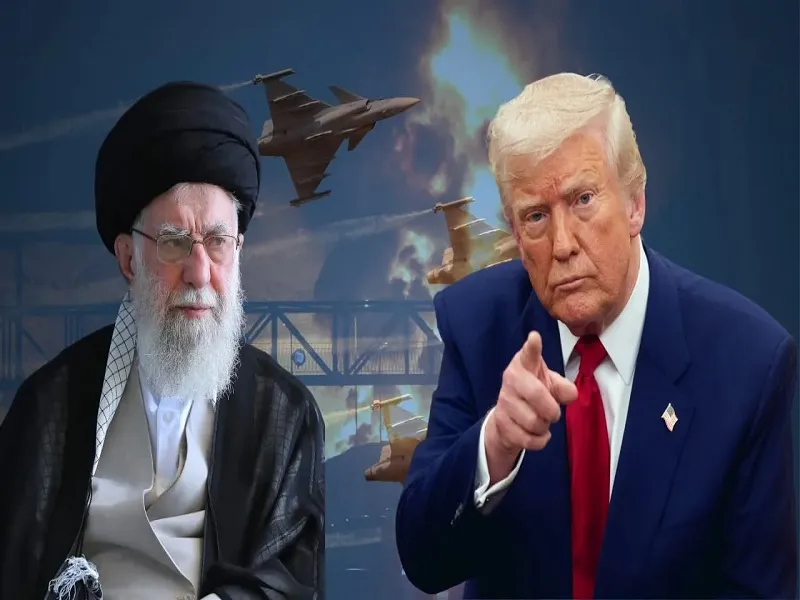
Redirecting Iran’s oil exports from China to India in exchange for partial US sanctions relief could avert another American attack by satisfying its goal of depriving China of some of the resources that it requires for maintaining its rapid superpower rise without risking a potentially disastrous regional war.
The US’ deployment of an aircraft carrier to West Asia and its newly announced aerial drills ominously hint that another American attack on Iran is forthcoming, one which could embolden neighboring Azerbaijan, Pakistan, and/or Turkiye (which are allies with one another) to try to militarily “Balkanize” it. In connection with that scenario, the Middle East Eye recently reported that the Turkish Foreign Ministry briefed lawmakers about a plan to carve out a “buffer zone” in Iran ostensibly for sheltering refugees.
Since they consider themselves to be “one nation, two states”, and the border is largely populated by ethnic Azeris, Turkiye would certainly coordinate its “buffer” with Azerbaijan, which could then lead to a joint operation for forcibly annexing Northwestern Iran into Azerbaijan to create a Turkic superstate. Even if that particular scenario doesn’t unfold, the prerequisite of which is US strikes leading to large-scale instability in Iran, then Turkiye could still intervene on the pretext of fighting Kurdish separatists.
Be that as it may, it’s still possible that Trump doesn’t strike Iran seeing as how he claimed that “They want to make a deal. I know so. They called on numerous occasions. They want to talk.” His Special Envoy Steve Witkoff said in mid-January that any deal would have to address Iran’s nuclear enrichment capabilities, existing stockpile of enriched material, ballistic missiles, and regional partnerships with non-state allies (“proxies” as he described them). Such a deal might be difficult to reach in the near future.
Nevertheless, Iran might be able to buy time and possibly get the US to drop some of the aforementioned demands through creative energy diplomacy, namely that which aligns with the “Trump Doctrine” as understood by the new National Security Strategyand National Defense Strategy. As explained here, a significant part of it is placing the US in a position where it can deny China access to the energy and markets that it requires to maintain its growth and thus its rapid rise as a superpower.
It was recently assessed that “The US Wants To Replicate The Venezuelan Model In Iran”, which is to say that the US wants to exert influence over the Iranian energy industry at the very least, specifically its exports. Iran has some of the world’s largest oil and gas reserves, but production and exports have been handicapped by US sanctions, thus resulting in minimal sales abroad. Pretty much all that it sells nowadays goes to China and at a steep discount too. The US has an obvious interest in changing that.
Accordingly, Iran could propose redirecting its energy exports to India, which the US has pressured to dump Russian oil. The US would have to lift some of its sanctions on Iran, however, but Trump might do so for denying China access to Iranian oil without having to risk the regional war that could follow another American attack to that end. Russia might also accept India importing less of its oil if it averts Iran’s possible “Balkanization” and the consequent creation of a Turkic superstate on its southern border.
Russia could always obtain new oil clients since any deal over Ukraine would likely involve sanctions relief for facilitating that, but it couldn’t put Iran back together again if it “Balkanizes”. Moreover, Russia’s North-South Transport Corridor with India via Iran would then become unviable, which is another reason for Russia to support any Iranian-US deal. Apart from Iran’s strategic capitulation to the US, the creative energy diplomacy proposed in this analysis is the best bet for averting another American attack on Iran.


You can’t bargain with these people they want it all. Either you give in or you fight. More than one country has pop up mines sitting on the bottom of the Straights ready to blame Iran.
Anyway the Nipah virus is getting away this time probably due to Covid induced immune damage on an epic scale so a war may not be needed.
The wee problem is of course that the government of the USA, especially when headed by Trump, has a deplorable tendency to renege on the deals and treaties it strikes with other countries.
Hence, for such an agreement to come into force, I presume that Iran will want to iron out all relevant aspects (such as payments) and anchor it with serious third-party guarantees, for instance, making it a matter for the UNO security council — thus bringing China and Russia on board.
I don’t see this as a viable path. This isn’t a situation where there are goals that both sides want to achieve and war is a means to achieve those goals.
The forces in DC and Tel Aviv that are pushing for war want to destroy the nation-state. There’s no real path to that WITHOUT war. Any deal that averts war will only be a brief respite before tensions are ramped up, again.
Literally, no one was satisfied with the outcome of the 12 day war in June.
Agreed. The main issue with Iran is iran. It’s not the oil. Trump is losing all over the place, his power is shrinking I think the Israel see their window of opportunity shrinking and will do something soon. It’s never been about oil. Trump can’t stop the world oil because it’ll harm the US.
And just so I understand, the us which has all but lost India, wants them to not buy cheap Russian oil but Iranian oil. So the Russian oil then goes to China. Russia and China win.
And yeah I’m sure the Iranians will 100% believe all this and that Trump will keep his word.
That is not a retereat it is a victory lap and once he gets this then he will want more and more. Once the Chinese economy is destroyed I am sure America will be fair with everyone.
forsaking their ally on whom Iran’s survival depends would fatally weaken the regime for the next wave of riots or next US/Israeli attack. it’s possible that a government would choose certain defeat later over possible defeat now, but it’s not a very deal.
Iran needs more Chinese investment, especially China’s technology of turning deserts green.
And technology that converts missiles into scrap, aircraft into flowerpots, and ships into coral reefs, and terrorists(Isil or otherwise) into worm food. Only then will Iran gain peace.
Math problem here? China just replaces the Iranian oil with Russian oil. If India buys more from Iran, they’ll need less from Russia. I’m sure that will make Lindsey Graham gloat, but in terms of holding China down, it’ll be a nothing burger.
Then again, I doubt that TACO does math well.
Just as the Chinese seem to have replaced Venezuelan heavy crude with Canadian. Playing Whack-a-Mole with oil suppliers is a hell of a strategy.
Trump does not need a real win. That is the big reason I featured this piece. His “obliteration” attack was all optics and the opening tweet indicates that Trump was seeking another optical event.
I keep assuming that we’re dealing with serious people here. My bad.
A face-saving Kabuki theater “win” that has all the real-world effect of a gnat flapping its wings into a 40 mph gale is right up TACO alley.
Make a deal with the devil and he will keep his end of the bargain. Make a deal with Trump? Sure as long as you are locked and loaded, eyes wide open, waiting for the knife.
The same guy who bombed your country while having peace negotiations.
A question. Has Trump kept any of his so called negotiation’s promises? Whether tariffs or something else.
Seems like a very unlikely play for Iran to make. Better to stand their ground now and from now on in the footsteps of Russia; they won’t lose.
China’s rise can not be constrained without Russian cooperation, and that is no longer obtainable.
This is not very creative! Russia would sell its oil to China instead of India. As regards China losing the Iranian market, it is not so large, $40 billion is peanuts, just 1 percent of total Chinese exports.
I’m waiting for the Houtis’ to sink the ‘Lincoln’. And then we’ll see what happens.
I wonder if the Iranians will follow “American Rules” and double tap the survivors.
Lately, there has been even more upheaval in Yemen. An attempt to keep them preoccupied? Enough to?
Remains to be seen.
Are they going to become more concerned with securing more Yemen territory?
And I’ve always wondered…
I wouldn’t put it past the US to give them something to shoot at as long as it wasn’t Israel.
Here is a video by daniel davis going over what has been said about Iran and what they have to do or they will be bombed. The amount of fire power that is now in place.
Now maybe it is all about china but I have never bought that argument its still to me about the Israel/US group think. Super scary
https://www.youtube.com/watch?v=GFHHGfZNQ24
Is it as much firepower as brough against Iraq in 1990s and in 2003? I don’t think so.
Korybko wrote an entire article about Iran and didn’t once mention Israel. Some of the links in it may…but still…
Just spitballing here, but here’s an idea – how about dropping the sanctions, withdrawing the armada, and treating Iran like an equal, letting it conduct business as it wishes?
But I’m sure that won’t happen until somebody turns a few US aircraft carriers into artificial reefs.
Many a time I don’t understand where Korybko is coming from. This lack of understanding even let to me being band on his site, me who I am agnus dei so to speak.
Iran has a 25 years agreement with China which also covers oil and investments in the oil sector and purchases of oil by China. Any serious analyst would have remebered such a thing. And so many more inconsistencies in this hairbrained proposal. But don’t publish them on Korybko’s site, you’ll be banned.
I don’t follow Korybko too closely, but I’ve noticed a lot of specifically American or European sources (IIRC Korybko was born-and-raised in the US) that can see the state of Ukraine pretty clearly just revert to CNN-level stereotypes once Iran comes up. It’s not just the more liberal sources either.
I don’t want to impugn anybody because I don’t think they’re doing it in bad faith. But I do think a lot of Americans and Europeans, even if they’re well-read analysts, have latent biases (anti-clerical on the left, ethnocentric on the right) that keep them from seeing Iran as it really is.
Iran definitely isn’t perfect, but I think a lot of people just don’t want to consider that maybe Iran actually is a strong, adaptable society advancing through tough circumstances (from even worse ones) with a ruthlessly smart, committed, and yes, sufficiently popular government.
Iran is not stable.
Disregard any US or Israeli meddling and it’s still unstable.
Tehran has no water.
The government has no money and no plan to stabilize the economy.
The Iranian people are sick and tired of the corrupt theocracy.
It’s falling apart, the only question is how and how fast.
Oil exports really won’t pick up much afterward because even if it avoid falling into chaos, the lack of water will continue to disrupt the economy and the country.
Look for a mass exodus, though to where I do not know.
How many thousands of years should a country be around for it to be considered stable?
Are you referring to Persia?
The name “Persia” originates from Parsa, the region in southwestern Iran where the dominant Achaemenid Persian people lived; the Greeks adopted this name, calling the area Persis, and the term eventually became the Western name for the entire empire, though the people always called their land Iran (Land of the Aryans).