Yves here. This Jeff Masters post describes the severity and the health/lifespan costs of exposure to the sort of hazardous smoke that descended on the Great Lakes and extended to the east coast. It’s not over, even if the intensity of the pollution has eased off. From USA Today:
Air quality alerts remained in place on July 19 in parts of Minnesota, Michigan, Wisconsin, Illinois, Indiana, Ohio and New York, as well as in some regions in Idaho and Oregon, according to the National Weather Service, as smoke from the Canadian wildfires makes its way south and east…
Canadian authorities say there are still more than 950 active wildfires burning, very few of them under control.
Perhaps it may seem like overkill to plan for dangerously bad air as part of the new normal, but Masters explains why more frequent and severe fires are baked in with global warming. A good air filter will considerably improve the quality of air with high PM2.5. But truly hazardous air merits a respirator. This is the kind I own and can recommend:
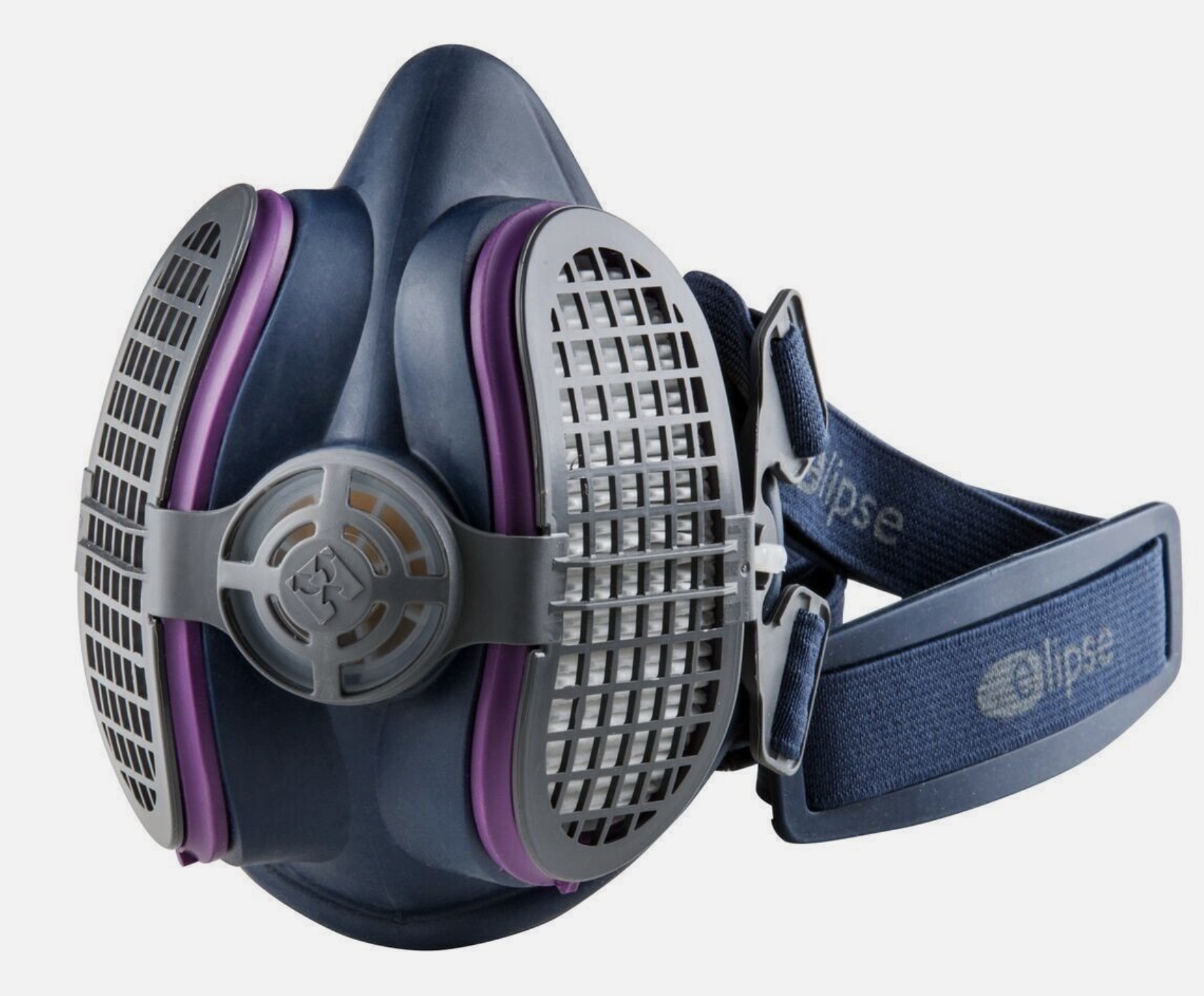
Even though it pinches the face more than an N-95, it is more comfortable for sleeping than an N-95. I often switch from an N-95 to the Darth Vader mask on airplanes because it’s easier to breathe through it. I notice on long-haul flights that I inhale a tad harder when I am trying to sleep, perhaps to compensate for lower oxygen saturation.
By Jeff Masters, who worked as a hurricane scientist with the NOAA Hurricane Hunters from 1986-1990. In 1995, he co-founded the Weather Underground, and served as its chief meteorologist and on its Board of Directors until it was sold to the Weather Company in 2012. Originally published at Yale Climate Connections
As climate change bakes forests across North America, dense smoke from dozens of out-of-control wildfires burning in northern Minnesota and adjacent portions of Ontario is blanketing tens of millions of people with hazardous pollution.
The fires are bringing the worst air quality on record to much of the Great Lakes, mid-Atlantic, and Northeast United States. Pollution from small particles called PM2.5 — the fine particles less than 2.5 microns in diameter are the primary air pollution killers — has been far into the “Hazardous” range across five states since Wednesday morning.
The award for worst air in the nation yesterday went to the city that has in the past billed itself as a climate haven: Duluth, Minnesota. The city’s 24-hour air quality index, or AQI, for PM2.5 particle pollution hit 934, over three times the threshold for “Hazardous” pollution. This shattered Duluth’s previous all-time AQI record of 159 set July 20, 2021. EPA pollution records go back to 1999.
Record poor air quality
Duluth: 934 AQI for PM2.5 (Old record: 159, July 20, 2021)
Chicago: 511 (Old record: 246, June 28, 2023)
Detroit: 490 (Old record: 226, June 28, 2023)
Cleveland: 297 (Old record: 285, June 28, 2023)
Milwaukee: 414 (Old record: 270, June 27, 2023)
Flint: 343 (Old record: 178, June 27, 2023)
These photos of FNs community members fleeing their homes by boat are genuinely apocalyptic
(Photo via Wayne Wastaken of Collins, Ontario, who says his “hometown is gone”)
www.facebook.com/share/r/1ArN…
— Luke LeBrun (@lukelebrun.ca) July 15, 2026 at 10:18 PM
Because of the huge number of people affected, and since this is occurring at the same time as a severe humid heat wave, this extreme and widespread pollution event — which will be followed by many months of repeated wildfire smoke incursion into the U.S. — will undoubtedly cause hundreds and perhaps thousands of premature deaths. The only comparable wildfire smoke event affecting this portion of North America occurred in 2023; a 2025 study blamed that event for 33,000 premature deaths in the United States, 8,300 in Canada, and 23,000 in Europe. According to the EPA, a premature air pollution death is one that occurs on average 14 years before a person would have otherwise died.
The AQI in Toronto this morning is 170-180, solidly in the Red “Unhealthy” range.
— Dr. Jeff Masters (@drjeffmasters.bsky.social) July 15, 2026 at 9:42 PM
Woah. It’s raining ashes due to wildfire smoke in the Upper Peninsula of Michigan.
Source: www.threads.com/@michiganuns…
— Dr. Lucky Tran (@luckytran.com) July 16, 2026 at 10:54 PM
The Climate Change Connection to the Wildfires
As the climate warms, fire danger increases, mostly because the atmosphere gets “thirstier” – more water vapor can evaporate into warmer air. This results in more water vapor evaporating from plants, which dries them out and creates an increased risk of large and intense fires that can generate huge smoke plumes. Most of the fires grew out of control under extreme heat conditions made up to five times more likely by climate change (Fig. 1). According to Climate Central, the heat that helped fuel these fires would have been “highly unlikely” to have occurred in a world without climate change.

3/ When wildfire smoke occurs during heatwaves in areas where a portion of the population doesn’t have access to air conditioning, people face the dilemma of opening their windows to avoid heatstroke, but searing their lungs with smoke. Smoke + heat can become even deadlier than either alone.
— Jonathan Vigh (@skywatcher77.bsky.social) July 15, 2026 at 7:40 AM
2/ Known as the “silent killer”, long-term exposure to wildfire smoke is estimated to kill ~24,000 people per year in the U.S. There is no safe level of wildfire smoke exposure, with mortality effects estimated to occur up to 3 years after exposure.
www.science.org/doi/10.1126/…
— Jonathan Vigh (@skywatcher77.bsky.social) July 15, 2026 at 7:40 AM
Five States Recorded “Hazardous” Air Quality on Thursday
On Thursday, July 16, portions of Ontario and five states — Minnesota, Wisconsin, Michigan, Illinois, and Ohio — experienced 24-hour levels of PM2.5 with an air quality index in the “Hazardous” (brown) range. According to the U.S. Environmental Protection Agency, these conditions necessitate health warnings of emergency conditions, with the entire population more likely to be affected. Purple “Very Unhealthy” air was observed in three other states — New York, Pennsylvania, and Indiana. This level of pollution triggers a health alert, and everyone – not just people with vulnerabilities – may experience more serious health effects.

According to air pollution scientist Ryan Stauffer, yesterday’s air pollution event blows away the previous most extreme wildfire smoke event in this region — in June 2023 — for extremity. During the 2023 event, only about three EPA monitors, all in Pennsylvania, recorded a 24-hour AQI in the hazardous range. But on Thursday, 50 official EPA monitors recorded a 24-hour AQI in the “Hazardous” range (Fig. 2), plus an additional nine monitors in Ontario. According to rankings at iqair.com, Detroit was the most polluted major city worldwide for most of Thursday, with Chicago bumping Detroit out on Thursday night. On Friday morning, the top five most polluted cities in the world were all in North America: Detroit, Chicago, Washington D.C., Toronto, and New York City.
On an hourly scale, some truly extreme AQI readings above 1,000 were recorded Thursday in Minnesota, Wisconsin, and Michigan. The “Hazardous” (brown) range is for an AQI in above 300, so these readings were more than three times beyond the “Hazardous” threshold. The most extreme readings occurred in northern Minnesota downwind of the fires burning in the Boundary Waters park, where an AQI of 3,567 was measured by a purpleair.com sensor.
At 4:50 pm Wednesday, July 15, Sea Gull Lake, MN, hit an AQI of 3567. Anything over 300 is Hazardous, so this was over 11x higher than the Hazardous threshold. This is a location downwind of the out-of-control fires in Boundary Waters Park.
— Dr. Jeff Masters (@drjeffmasters.bsky.social) July 17, 2026 at 12:31 AM
How the Trouble Started: Record Heat and a Record-Strong High-Pressure System
The wildfire event began on Monday, when the strongest upper-level ridge of high pressure ever observed in the north-central U.S. baked the region. All-time record heat exceeding 100 degrees Fahrenheit (37.8°C) was observed, worsening existing moderate to severe drought conditions. Thunder Bay, Ontario, on the north shore of frigid Lake Superior, hit 39.5 degrees Celsius (103.1°F), smashing its all-time heat record by over 2°C. To the north, Armstrong hit 40.7°C (105.3°F), the hottest temperature observed in all of Ontario since the great Dust Bowl heat wave of July 1936.
Strong winds moved in with the heat, fanning multiple wildfires that feasted on the dry fuels, which featured plenty of dead trees from a spruce budworm infestation and a 1999 derecho event that felled thousands of trees. Extreme fires with a rapid rate of spread resulted and created at least two massive pyrocumulus clouds — giant thunderstorms spawned by the heat of intense fires that reached the stratosphere. Tomer Burg has an excellent thread explaining the meteorology that led up to the wildfire event:
Parts of the Northeast US have been under a thick plume of smoke today overspreading the region from fires across south-central Canada – the worst smoke plume to affect the region since the infamous 2023 NYC smoke plume.
Thread for the meteorology associated with this:
— Tomer Burg (@burgwx.bsky.social) July 16, 2026 at 4:10 AM
The Current Situation: Over 20 Large Fires Out of Control
As of Friday, there were 193 active fires covering 1.7 million acres (673,000 ha) in Ontario, with the vast majority of these considered to be “out of control,” according to the Canadian Interagency Forest Fire Centre. Of the 22 large fires in over 2,000 acres burning nearest the U.S. border, 18 were receiving a full fire-fighting response, and four were not being fought. In the U.S., the National Interagency Fire Center reported six large fires in northern Minnesota, all 0% contained, covering 60,000 acres.

The Forecast: Relief Coming by Saturday for the Worst-Affected States
Thunderstorms moved over the Minnesota/Ontario fire area Friday morning, bringing up to two inches of rain. This water will help firefighting efforts, but the fire danger index in Ontario is still high to very high, and the thunderstorms may have sparked additional fires.
The cold front accompanying this storm will bring westerly winds that should flush the worst of the smoke out of Chicago and Wisconsin by Friday afternoon, and out of Michigan by early Saturday morning. However, a renewed invasion of smoke is predicted for Michigan and Wisconsin Saturday night into Sunday, bringing more “Hazardous” AQI conditions. Another pulse of smoke is predicted to move deep into the central U.S. on Wednesday, perhaps reaching Arkansas and Missouri.
We can anticipate that some of the major smoke-emitting fires in Minnesota/Ontario will continue to burn for an extended period, with some lasting until the first snows come in October. The long-range fire assessment (Fig. 3) calls for above-average fire risk over much of the forested areas of northern Canada and the western U.S. this summer, and we should anticipate frequent bouts of poor air quality from wildfire smoke across much of North America. July and August are usually the peak months of fire season, which typically extends well into September. A potent North American Monsoon is now bringing heavy rains to parts of the southwest U.S., so the overall fire risk in that region may decrease to average levels by August.
Many lightning-caused fires occurred in the Pacific Northwest yesterday. With hot, windy weather expected to move in during the coming week, some of these fires may well become significant smoke producers.
A major new wildfire outbreak is now underway across interior Pacific Northwest, with dozens (or more) new wildfires already popping up in eastern Oregon & Washington following tens of thousands of lightning strikes in region experiencing moderate to extreme drought. #ORwx #WAwx
— Daniel Swain (@weatherwest.bsky.social) July 17, 2026 at 7:04 AM
Many new wildfire starts, especially in the Cascades and Blue Mountains of Oregon, thanks to a dry thunderstorm outbreak yesterday and overnight.
#ORfire #ORwx #WAfire #WAwx
— Mark Ingalls (@ingalls.mstdn.ca.ap.brid.gy) July 16, 2026 at 10:13 PM
Climate Change Predicted to Further Worsen Wildfires
The number of people in the U.S. who experienced at least one day each year with smoke-related fine particle pollution levels at three times over the EPA standard has increased 27-fold over the last decade, and we can expect climate change to significantly worsen wildfire smoke problems in North America in the coming years.
For example, the frequency and magnitude of extreme wildfires around the globe have doubled in the past 21 years because of climate change, according to a study published last year in the journal Nature Ecology & Evolution. Rising temperatures have ushered in an era of hotter and drier weather, lending the right conditions for wildfires to erupt, the researchers found.
Here are some additional resources on climate change and wildfires:
- Explore how climate change has worsened wildfire smoke.
- Explore how fire weather has changed in your area on Climate Central’s interactive map.
- Visit their More U.S. Fire Weather analysis for science background and methodology.
- Explore our guide to staying safe from wildfires and smoke.
Fantastic post on why wildfires in Canada's forests are much different than in the western U.S. "Canada’s area burned has surged, and it has surged in step with warming: hot, dry fire seasons burn far more forest, with area burned rises roughly 80% for each 1°C increase in temperature."
— Dr. Jeff Masters (@drjeffmasters.bsky.social) July 17, 2026 at 11:46 PM


The resistance of most to wear a mask never seems to amaze me. I’ve seen patients with very bad Spring allergies who simply refuse to wear a mask outside to increase their quality of life. And the images of people sitting outside in 2023 surrounded by a red haze but without masks really blew my mind at the time.
In Ontario here, the corrupt and incompetent Ford government last year planned $135 million for emergency firefighting but ended up spending $271 million. After that year’s experience, the budget was $150 million for this year showing not much was learned for disaster planning. There is a train of thought that the Ontario government is lowballing the emergency budgets is intended to just outsource costs to the volunteer Ontario Corps, though I haven’t really looked too much into it.
https://www.cbc.ca/news/canada/toronto/ontario-federal-help-wildfire-evacuations-9.7272329
In AZ, where there isn’t much rainfall or lightning, they say the fires are almost always human caused. As a camping guy I have come to hate the campfire culture that many think nature visitations are all about. How many beautiful old trees are worth a serving of Smores?
Throw the book at the pyromaniacs I say. The murder of trees should be taken a lot more seriously.
Seems that if you live in those affected regions of North America, that a standard bug-out bag will now have to include respirators. Respirators – not just for airborne viruses.
During the Tubbs Fire I breathed quite a bit of toxic smoke and ended up in cardiac ICU with CHF ( I ran out of N95 masks after giving most of them away to a preschool).
My cardiologist , Patrick Devlin, told me that he was seeing people 5 years earlier than he would have expected prior to the fire.
The ones that made it in, that is.
Many older people died prematurely due to breathing that smoke and everyone who breathed it has permanent damage.
Look under your kitchen sink, your bathroom sink and what you have stored in the garage, that’s what you breathe in a wildfire where a lot of structures burn.
Keep N95’s on hand, consider building a Corsi- Rosenthal box so that you can have at least one room in your house with air fit to breathe.
Stay safe!
We spend the summer in northern Minnesota. Since Covic we have had CR boxes we run almost constantly. The summers of 21, 23 and this year wouldn’t be possible without them.