Yves here. London is not a great analogy for US cities. It does have one element that is America-like, in that on the whole, it is low-rise and sprawling. But it also has a highly efficient subway that is clean and transits long distances much faster than any US system. The viability of busses as an alternative depends on them being able to travel reliably at reasonable speeds. Admittedly, and this is n=1, New York’s implementation of bicycle lanes has led to them being (from my observation on a recent visit) used mainly by delivery services, at the cost of much greater traffic congestion. Cars talking longer to get from point A to point B increases carbon output and cuts into the benefit of reduced vehicle volumes. And even though NYC has bus lanes, I see cars cutting into them regularly and busses also routinely entering the often-sluggish car lanes.
That is a long-winded way of saying that success in cutting the use of cars is likely to be idiosyncratic. Sydney, by contrast, has been very successful in getting workers to use public transit for their daily commutes. But this result comes out of long-term planning, resulting in clean and efficient subways, busses, and ferries. And a key move was to make parking in the CBD scarce and expensive.
By Sarah Wesseler, a writer and editor with more than a decade of experience covering climate change and the built environment. Originally published at Yale Climate Connections
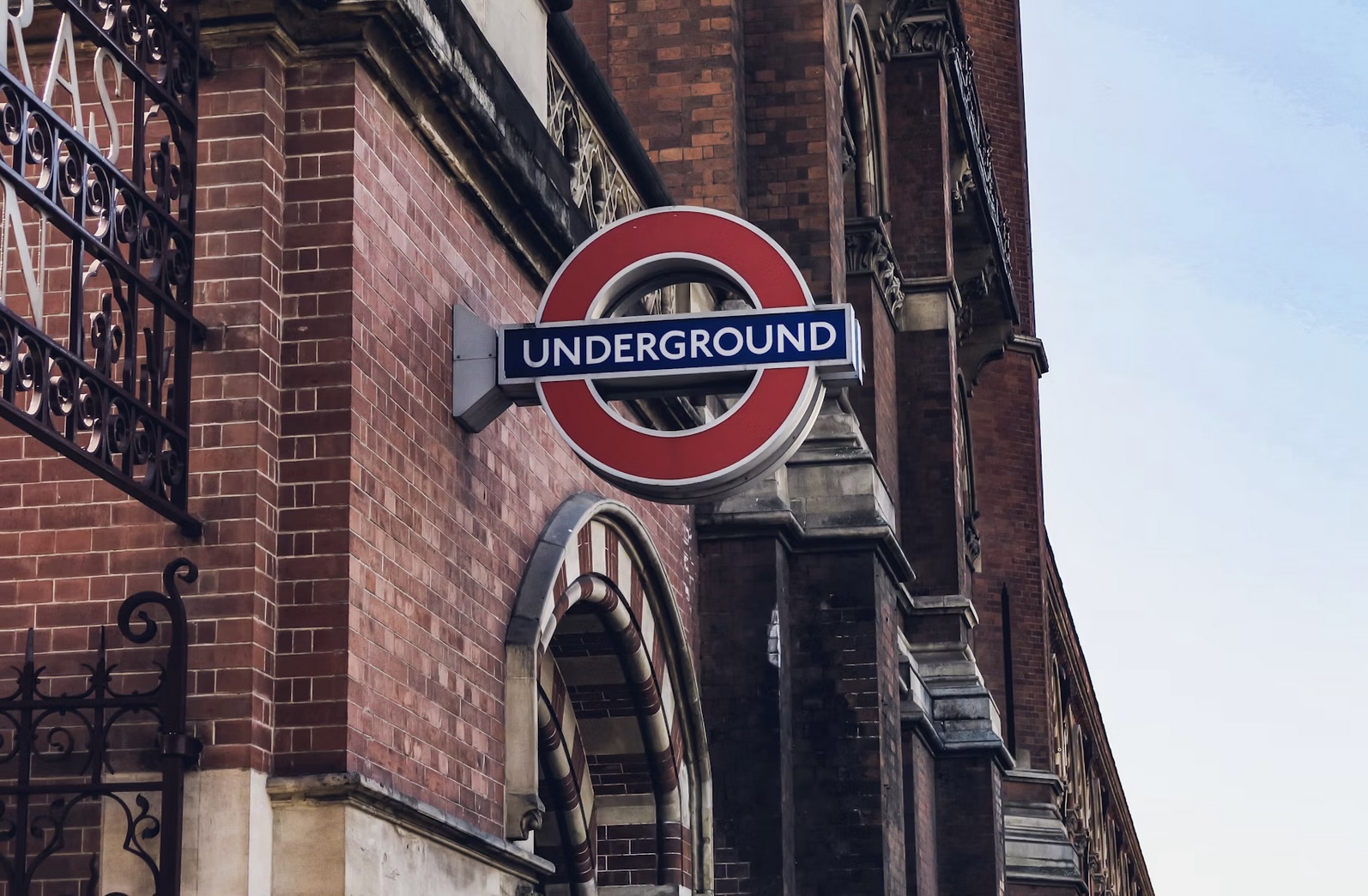
Compared to most American cities, London is a paradise for climate-friendly, car-free transportation. Around a quarter of all trips in the UK capital are made on foot, and cyclists are a frequent sight on many streets. Thousands of buses – many of them electric – and hundreds of train stations serve journeys across the city and destinations farther afield, including continental Europe.
“We see London as a beacon, really, when it comes to progressive and sustainable transport policy,” said Oliver Lord, the UK lead for transportation advocacy group Clean Cities. “London has a lot of influence on the rest of Europe as well, because a lot of people look to it as the only megacity in the continent.”
The local government wants to make it even easier to get around without a car. In 2018, Mayor Sadiq Khan, now serving a third term, set a goal for 80% of all trips to happen on foot, bicycle, or public transportation by 2041 – a significant increase from the then-current figure of 63%. His administration sees reducing driving as critical to meeting its climate goals, improving public health, and generally improving residents’ lives and livelihoods.
The government has taken major steps toward reaching the 80% goal, leading to, among other things, a 43% growth in cycling since 2019.
Despite this, the city is not on track to meet its overall target. As of 2024, the overall percentage of car trips was still roughly equivalent to 2018 figures.
Other indicators show that cars remain a problem. London’s traffic is the worst in Europe and the seventh-worst globally, according to transportation data company INRIX. And climate pollution from road transportation has declined relatively little in the past two decades.
“London has made a lot of progress compared to 10 or 20 years ago,” said Izzy Romilly, who leads sustainable transport campaigns at climate organization Possible. “But compared to what needs to be done, we’re still just not moving fast enough.”
Most concerningly, London’s government is not alone in failing to meet the moment, according to Robin Hickman, a professor of transportation and city planning at University College London. As he wrote in his 2025 book, which compares sustainable urban transportation initiatives around the world, “even in the so-called ‘progressive’ transport cities, transport CO2 emissions are decreasing only marginally.”
Making Driving Less Attractive
Restricting car use is a critical step in reducing car dependency. But in London, as elsewhere in the world, it often provokes intense backlash.
“We know from research going back years that just providing cycle lanes or better pedestrian areas doesn’t necessarily lead to car reduction,” said Jamie Furlong, a transportation researcher at the University of Westminster. “We can achieve more significant reductions in car use by making traveling by car more difficult, and that’s really, really politically difficult.”
Compared to American cities, London has taken bold steps to deprioritize cars. From a global perspective, however, its efforts look relatively limited, Hickman said.
These efforts started in earnest around the turn of the century. In 2003, the city implemented a congestion pricing program that charged drivers £5 ($6.73 in today’s dollars) to enter the designated area on weekdays, using cameras to record license plates. The proceeds were funneled to public transportation.
Although the program affected only a small part of the city, its impact reverberated throughout the transportation network, Lord said.
“It was that policy that initially helped the mayor at the time to introduce bus lanes, because it started to free up some of the capacity on the road network, and it also created a budget to make that investment.” (It also later helped inspireNew York City’s congestion pricing program.)
But Hickman said the city’s congestion pricing program had limited direct impact, in part because limited parking in the affected area had always kept some drivers away.
“Overall, it reduced traffic a little bit, but it’s only a very small intervention,” he said.
In 2019, the government introduced a second fee-based program, the Ultra Low Emission Zone, in the city center. It charged drivers of older, more polluting vehicles £12.50 ($16.80 in today’s dollars) to enter the affected area, with the proceeds going to public transportation. In 2023, the program was expanded citywide, despite significant controversy.
Another program that has reshaped parts of the city, low-traffic neighborhoods, has also been contentious. Designed to limit through traffic on residential streets using cameras or physical barriers like planters and curbs, low-traffic neighborhoods reduce climate and air pollution while making it safer to walk and cycle. More than 100 have been rolled out in London, although 27 were later removed due to resident complaints.
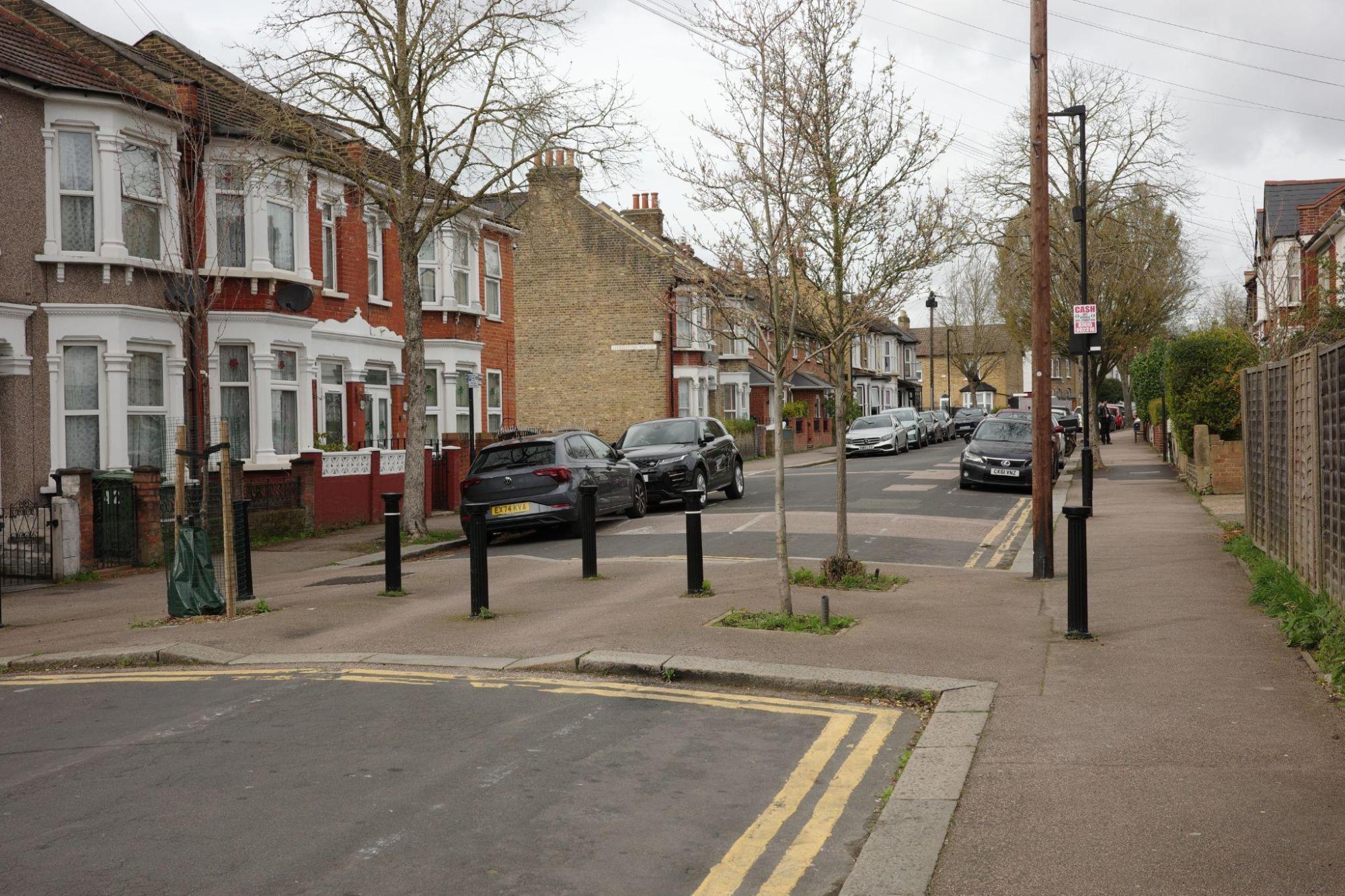
In general, however, low-traffic neighborhoods – known as LTNs – tend to be popular, or simply recede into the background once they’re in place, Furlong said.
“The evidence shows, in the UK, lots of people don’t even know that they live in an LTN after it’s been implemented,” he said.
Other efforts to restrict driving include 20-mile-per-hour speed limits covering half the city’s roads and a school streets program that prevents cars from entering streets near affected schools during specific hours. The government is also pedestrianizing much of Oxford Street, the city’s main shopping corridor.
Recent comments from Mayor Khan have led to speculation that the city may also start charging large cars like SUVs to drive in London. Hickman said this step, along with charging drivers based on the number of miles traveled (which Khan has pledged not to do) and eliminating diesel vehicles, would allow the city to make greater progress on reducing driving.
London on Two Wheels
Today, some parts of the city are notable for their bike-friendly infrastructure and the number of cyclists on the streets. There are 268 miles of protected bike lanes, with more planned. As bike infrastructure has improved, the number of cycling trips has risen dramatically, growing 43% between 2019 and 2026.
Despite this investment, cycling remains a small player in the overall transportation system, Hickman said. Roughly 5%of trips in the city are made by bike, he noted, compared to an average of 27% in the Netherlands.
Moreover, cycling infrastructure is highly uneven across the city.
“There are still huge gaps in the cycling network, particularly in outer London,” Furlong said.
This problem occurs partly because each of the city’s 33 local authorities manages its own roads. Local officials’ hesitation to upset the status quo is another important factor, Hickman said: “[London] is very slow in implementing good cycle projects because they tend to be controversial with the car-owning population.”
Public Transportation
What has been undeniably successful in the UK capital is mass transit, which carried around 8.8 million rides per day in 2024.
“London is one of the classic public transport cities,” Hickman said. “It has very high public transport use for trips.”
Moreover, the city continues to deliver major new mass transit projects like the Elizabeth Line, a regional express train that opened in 2022 at a cost of £18.8 billion ($25.3 billion).
Projects like this one tend to be easier to push through in London than efforts to restrict car use or improve bike infrastructure, Hickman said. Unlike in most American cities, Londoners from all walks of life view public transportation positively and believe it’s vital for the economy. Moreover, major mass transit projects tend to align with the logic of UK transportation planning, which weighs projects’ economic impact above factors like public health and climate change.
Although these dynamics have helped mass transit grow, the downside is that major projects often disproportionately serve wealthy communities and business interests, Hickman said. They “tend to link the financial district of London, Canary Wharf; Heathrow Airport … that type of thing. But they don’t really give better public transport for people in the suburbs.”
Suburban Car Dependency
Outer London, the suburban ring that’s home to more than 5 of the city’s roughly 9 million inhabitants, is much more car-dependent than the central city. Although the region is large and diverse, featuring everything from densely populated high-rise neighborhoods to semirural districts, much of it was built around cars, making walking and cycling more challenging. In a 2022 survey, only 32% of outer London respondents said they could live car-free, compared to half inner Londoners.
In recent years, the government has taken steps to improve public transportation in the suburbs, introducing a new orbital express bus network, adding bus lines, and opening stops on the Elizabeth Line. Generally, however, outer Londoners still have far less access to transit than people in the city center.
This gap creates feedback loops that complicate efforts to reduce driving. Lacking other transportation options, many suburban residents “might spend a huge amount of money on car ownership and use,” Hickman said. “And then if you say that you would like to take away that provision and give them full public transport or expect them to cycle … that doesn’t go down too well.”
Politics also come into play. Many parts of outer London are governed by conservative politicians skeptical of efforts to change the transportation system.
“There’s some unease with the right-wing councils about anything that infringes an individual’s personal freedom to drive where they like,” said Sharon Erdman, a volunteer coordinator at Mums for Lungs, a nonprofit focused on air pollution. “Whereas we feel that it’s not about them driving where they like, it’s about the cost to public health.”
Jane Dutton, a digital communications manager with Mums for Lungs who lives in outer London, said her borough leaders fit the stereotype of suburban politicians actively fighting sustainable transportation initiatives.
“The leaders are very open about absolutely, vehemently opposing things like the ultralow emission zone. They don’t think it’s necessary … They really favor cars over walking and cycling.”
Moreover, outer London officials sympathetic to efforts to reduce car dominance are often afraid to take bold action, Erdman said. In one borough she has worked with, “the council leader is really honest that they are guided by public appetite,” she said.
Since local officials have control over the roads in their communities, these dynamics have huge real-world implications.
“Ultimately, if a borough doesn’t want to do certain things, they don’t have to,” Dutton said.
Political Will and Public Imagination
Making progress on car dependency will require the government to lead more decisively, campaigner Izzy Romilly said.
“In the UK, there’s a real political nervousness around standing up against car dependency,” she said. “But when you actually have a conversation with people, time and again, they want less traffic, they want less congestion. Support for better public transport is absolutely through the roof. So I think it really is just a case of political leadership.”
But London residents also need to do more, Hickman said. Today, “there’s no great public debate” about what kind of transportation system people actually want, he said. “That is needed to dramatically remove road space from the car and give that back to cycling and walking and transport.”


Comparing cities isn’t always very useful as there are so many variables involved. One not mentioned above, and is very favourable for US cities, is the existing road network. The grid system of US cities makes laying out express bus lanes, streetcars (trams) and, for that matter, cycle paths, far easier than a city like London, with its narrower and more chaotic road system. City by city statistical comparisons also have to be interpreted with caution depending on the overall boundary – there is a huge difference in both transport provision and modal share between the central London boroughs and the outer suburban areas, so the choice of ‘urban boundary’ can make a big difference. If anything, countries like the Netherlands and Denmark have probably better modal shares than appears at first glance, as they tend to have much better public transport and cycling/walking provision in urban fringe areas.
One important point about bike lanes is that paradoxically they appear inefficient precisely because they are extraordinarily efficient in their use of road space. Properly laid out bike lanes can maintain a constant flow which can be highly deceptive – they have a very high carrying capacity while appearing to be empty. A typical one lane road line has a capacity of around 1,000 to 2,000 people per hour at normal car loads, while a metre wide bike lane would have a capacity of 7-14,000 people per hour. The existing passenger capacity of even very narrow urban streets can be significantly increased by contraflow cycle lanes, which are extremely cheap to implement and highly efficient. But the small physical area taken up by a cyclist combined with consistent speed makes them less visible than alternatives.
The provision of public transport is another very complex and city-dependent topic. The increase in working from home has significantly widened commuter areas in many countries, with consequent impacts on what constitutes ‘urban’ transport. While nothing can match heavy rail for high intensity point to point transport, buses and light rail can be highly efficient depending on local density and form (light rail can be more efficient for dense ‘corridors’ as opposed to node to node transport, but the latter tends to be more popular with politicians as despite the cost, they don’t interfere too much with the well funded car lobby.
Like you I am a lifelong cyclist although I don’t ride very much these days. However here in the USA the sometimes aggressive “share the road” movement mostly results in lots of cyclists getting killed. I personally know a woman who still has foot problems years after being slow speed rammed by a car in an intersection.
And car drivers are not wrong in their complaints about cyclists and the extra tax they present to their already challenged attention level in urban settings. Meanwhile pedestrians on mixed use trails also are at threat by the rival transportation of bicycles–either families wobbling unpredictably on their rarely used bikes or spandex speeders dangerously zooming by.
In short Yves is correct that the theories of urban planners are not really adding up. Urban bike use will only soar if you ban the cars altogether (with sidewalks for walking only). This Denmark-ization of areas devoted to commercial activity and making money is far fetched to say the least.
Here in my town they are building a huge new city/county government building reflecting where the real employment opportunities are in this former farm/textile area. Next to it is an equally huge new parking garage. Out on the streets the stripes designating new bike lanes are just for show. Bike traffic is sparse.
Regarding Denmark-ization, the 7th lowest number of cars per capita in the EU (see https://ec.europa.eu/eurostat/statistics-explained/SEPDF/cache/25886.pdf) comes at the cost of taxing cars at 180% of base value – plus 25% VAT (sales tax).
Essentially, buy one car pay for three.
I doubt that would be tenable anywhere else.
Try Singapore.
https://www.pilotoasia.com/guide/how-to-own-a-car-in-singapore
The COE is a killer.
This article highlights the deep urban bias in sustainable transport commentary. London is an absolute outlier but is treated as a blueprint. I reside in an adjacent county in a rural village where the economic and practical reality of public transport is dire.
Our local bus service was axed years ago. Getting to the nearest train station involves a 3 mile walk along unlit country lanes with no pavements and cars driving past at 60mph. Taxis from the nearest town are prohibitively expensive and reluctant to come out. You could cycle, but paying anything more than £50 for an old beaten up bicycle is likely to result in it going missing very quickly.
Compounding this is the absurd pricing structure of the railways. It is genuinely cheaper for me to drive into London, pay for diesel, pay for the ULEZ, pay for the Congestion Charge and for parking than it is to buy a train ticket. If I have passengers, public transport is laughably unviable. And now there are less cars there, it’s actually nice to drive round London (although 20mph does feel excessively slow).
Until policy makers realise that punitive driving charges without wiser rural infrastructure investment simply penalises and isolates communities, targets will continue to be missed. Punishing drivers who have been completely abandoned by public transport is not climate policy – it is an access tax
Public transport in the UK is very, very expensive. If you own an old beater car, you will travel more cheaply than it you take the train.
Public transport within London is similarly overpriced, though interestingly in the area around Heathrow Airport it is entirely free! A concession to the airport overlords, which makes one wonder if it could not be extemded to the entire city….
When I was in London back in the early 80s, cars never seemed to have a place there in the center. One time I took a bus in Oxford Street and went on the top deck. From there you could see far down that famous street and it seemed to be entirely made up of red busses and black taxi cabs with nary a private car to be seen.
an aside about NYC bike lanes, from Bike Snob NYC:
https://bikesnobnyc.com/2024/10/16/decisions-decisions-3/
Scroll through for the pictures. Talk about loading zones for delivery drivers! ha.
When I lived in NYC you also had the rich people with their limousine drivers double parked on those side streets–“standing” rather than parking. When a cop would wave them off they’d drive and come back to pick up their now purchase encumbered patrons.
Of course if you’re Bloomberg you fly your own helicopter to the East River terminal. Take that congestion.
In a working from home age one has to question the degree to which congested cities still make sense. But sprawl is bad too. I was once told that Greater Atlanta is as big as Greater London (with far fewer people). And Greater Atlanta seems to cover most of North Georgia.
Thank you for covering this topic.
As a life long cyclist, and someone who has parked his auto for several years, I’d like to add a couple observations.
First, one explanation of the increase in cycling popularity since 2019 might be explained by the gaining popularity of e-bikes.
Second, not all bike trails are created equally. In my area, which has extreme seasonal temperatures, the rule of thumb to avoid frost heave, that occurs in the spring, is to install a sufficiently a deep gravel road bed beneath any pavement (here it’s >40″). Cities where I live do this under any roadway, but bike trails do not qualify. The standard for the past number of years where I live is only 5-8″. As a result all of the bike trails installed in local neighborhoods are rendered useless in about five years. The old railroad beds from 1880s do much better.
Third, inasmuch as the “recreational trails” from abandoned rail road beds are so popular that during the peak usage hours (weekends after 9 am), they are too congested due to with a large assortment of strollers, dog walkers, and varying speed cyclists, and can be very dangerous to use for a cycling transportation. However, this “problem” itself is an endorsement of car free tree lined corridors. It is like a park that covers several cities.
Fourth, this “problem” make your displayed photo of a London traffic barrier very important, The general rule of thumb in my neck of the woods, is that any direct through street available will be taken over by autos, making them to dangerous to use for slower moving traffic.
If one examines maps of a local city one can often find low traffic roads that can be used by cyclists. Many times they are subject to barriers that break up auto traffic. Your photo example displays how local planners can very inexpensively create bike ways out of existing residential roads. Additionally, these routes are often older, providing scenic tree lined routes.
Fifth, where we live the Minnesota State Department of Motor Vehicles has gotten much money to construct bike ways adjacent to high speed highways. While somewhat useful, they have a number of problems as the State traffic planners, based upon my observations, have an auto-centric view of the world, and consequently have a very poor record of creating bike ways people want to use. 1) They always run along the highways which cyclist want to avoid due to traffic pollution, 2) ignore presence of large hills, which detract from the low energy availability of cyclists, 3) being along a highway they are not protected from high winds, because builders often cut down any aligning trees that provide wind protection, in the interest of traffic safety, (seriously! I’ve actually had a road engineer tell me that), 4) they are rarely scenic.
One final note. While cycling has served me very well my entire life, not all people are created equally with regard to eye sight, spatial skills, and interest in balancing on two wheels. Many of my associates cannot or will not get on a bicycle. This is remedied by early childhood training on bicycling safety to get children to have good start on a wonderful means of transportation.
Thanks for the good comment. In my very hilly piedmont area you do have to be reasonably fit to do much cycling on any trail that didn’t used to be a grade limited railroad path. I have a skinny tire bike that is practically effortless to pedal on level ground and is, in that sense, a low tech triumph of human ingenuity. But start climbing those hills and fitness is paramount. These days, after knee problems, I mostly just walk or drive.
Dear Carolinian- and all here:
I cannot recommend highly enough a test ride on a latest-production pedal-assist non-throttle e-bike.
(Gazelle get very good reviews… but there are others)
They are truly a delightful – in my mind, potentially the most positive transformative tech that we humans have come up with.
Yes, that includes and usurps A.I. ten-thousand bazillion-fold!
I agree, with one proviso: these e-bikes are very heavy, easily weighing in at over 50 pounds without the battery.
For upstairs apartment dwellers where there’s no elevator and/or no secure garage parking, e-bikes are a no-go, unless you can easily lift and carry that amount of weight up and down stairs. / ;)
For everyone else they look great!
I’ve never owned one but think they tend to have fat comfort tires adding to that weight and tire rolling resistance. With no wind and only the mildest of downslopes it’s as though my bike already has a motor!
Maybe I need one of those secret hub motors like they (probably) cheat with in the Tour de France.
Seriously though thanks Jefmnt for the suggestion.
We rented four ebikes (various manufacturers) non- throttle, to do a tour of Tippet Rise sculpture ranch (Absorokee, MT… look it up).
I rode every bike home from bike shops, without power, just to see how they rode on flat terrain, in my town, to assemble bikes for the big trip.
Very nice modern bike, very low rolling resistance. I was pleased and impressed. I had a Kona…
https://tippetrise.org/
They/ their weight were a farking DRAG on cliff-banded single track, but any bike and me would have battled. Should have stuck to the gravel.
OK, test an ebike, and smile.
My e-bike is a circa 2006 Schwinn Sting-Ray turned into an E=Ray by my buddy who’s a whiz at such things.
It’s my ride when I do the Tour de Burn on the playa in Black Rock City.
https://www.nbcnews.com/id/wbna5436894
And the Burn is probably the safest place to ride it.
Yes, the ‘PedElec’ (pedal-electric motor assist) is a delight to ride. I own one. My city allows a vendor to provide them to the public. With a debit/credit card they can be picked up at numerous stations around town and dropped often at any other station.
The ‘pedelec’ system gauges torque you apply to the pedals. Then the motor assists your effort with a prescribed amount of power. Some human effort must be applied to the pedals; no effort, no power support. (This is in contrast to e-bikes with a throttle controlled electric motor in the wheel hub at the axle.)
Throttle-controlled ebikes are readily modified to exceed the mandated 20mph top speed and create dangerous collision opportunity that are becoming the norm in my town.
While ebikes may add new riders to bike lanes and trails, many (40%) return/re-sell/garage them after discovering the numerous dangers of sharing a road/trail with others. (“distracted driving/riding” is a danger to all.)
It’s funny how I will see portly riders on the new looking e-bikes and the first time is the last time.
Think if I’m going to go electric I’d prefer one of those stand up scooters.
Scooters are unstable at speed. Impact pedestrians if used on sidewalks. Incur upset when used on uneven street pavement. Do not present visually to distracted drivers (the King of the transportation jungle).
Let me share a humorous anecdote about using the Tube in London. When I was near the Holborn station, the subway operator announced, “Now arriving at Holborn.” Then she announced the station name again when we stopped. I assumed that my hearing experience with the British accent was minimal, and I asked the man next to me to pronounce the name of the station. “hoe ‘BURN.” One more time, please. “hoe ‘BURN.” I pronounced it the same way, the supposed correct way. Then I said, “So, you are telling me it’s pronounced hoe ‘BURN even though the way that it is spelled, it should clearly be pronounced ‘HOLE born.”
“Yes, that’s right,” he affirmed.
I was deeply puzzled. “Why is there an L right in the middle? Do you pronounce the Australian city Melbourne as meh ‘BURN?”
He laughed. “Well, no. But we invented English.”
“I don’t dispute that, but it’s still ridiculous. Or let me say it the British way. This is a load of bollocks!”
Don’t get me started on Worcester, MA.
I was in Paris (for the first time) last month and was amazed at its dramatic move away from private autos. Bike lanes are numerous, wide and obviously well used. Lots of rental bikes easily available. The public transport network is large, easy to use, and reasonably priced. And then there is walking–lots of people walking. Streets are busy to jammed but mostly with delivery vehicles, busses, taxis, Ubers, etc. Despite the traffic, the couple times we used Uber, our drivers seemed very able to get through it. A survey I saw after getting back reported less than 2% of residents claim to regularly use a car, while almost 90% walk regularly and over 50% use the metro. And the new mayor wants to increase bike ridership even more.
When in London, I paced off the street width across from an Oxford Circus tube station–one of the busiest shopping districts. The width of pavement for cars: ~40′–flanked by wide sidewalks and with a large center island separating four 10′ lanes. In California’s sprawl, newer, tertiary, residential streets have two 8′ parking lanes and two 12′ travel lanes. That’s also 40′ for a two-lane road. This American street design invites speeding so much (12′ travel lanes are what freeways have) that it’s part of local street design standards that the road must turn every 1,000 lineal feet…otherwise the neighborhood kids would be mowed down…making for suburban spaghetti streets.
Surveys say pedestrian-friendly (narrow travel lanes, vertical curbs, wider, or set-back sidewalks) mixed use (stores and offices among the residences) cuts vehicle miles traveled roughly in half.
As long as the US continues to build suburbia with these street standards, where every trip of significance requires an auto, London’s efforts are merely a pipe dream.
Recommended reading in this connection: Suburban Nation: The rise of sprawl and the decline of the American dream (Duany, Plater-Zyberk, Speck)
This design enshrines an incredibly regressive tax–having to own a car–and the ill health of suppressed walking in concrete.
Fire Code is often the deciding factor in street width. The Fire Marshall has a seat at the ‘design review’ table.
What are those of us who live in very rural locales such as myself supposed to do? An electric bicycle is out of the question where I live considering our harsh winters and roads without shoulders and I work a half-hour’s drive away from where I live. The US has a lot of very sparsely-populated places and owning a vehicle is a must in areas like mine.
I often wonder if there should be some sort of assistance program to help people purchase vehicles in places where it is a necessity, as the cost of vehicles is also skyrocketing. Perhaps some arguments can be made over what type of vehicle and electric vs. combustion engine, but electric charge stations out here are very few and far between and very cold weather limits the range of the battery not to mention the drain on the battery that running the heater during the winter causes.
To be fair, most of the driving that I and others do in rural places is on the highway rather than city-driving so our requirements might be different than those of urban-dwellers.
How is a rural dweller to survive without a car?!
Perchance ask the Amish.
I cannot afford a horse nor do I have property to build a stable to keep one in. I live in an apartment complex in the hinterlands twenty miles away from the large town I actually work in.
I also live in a rural area with harsh winters and roads without shoulders. I would strongly oppose an assistance program to help people purchase vehicles. Where I live most of the assistance programs already initiated by the county and state have been afflicted with a peculiar illness that seems to distribute the pecuniary benefits of the those assistance programs disproportionately into the pockets of the helpful “do-gooders” well-connected to local government. Aside from this problem with assistance programs there are other ways to help those who for whom an electric bicycle is out of the question. The state could do a great deal to bring down the costs of car insurance — though this would require dealing with considerable difficulties returning the public to control over the governor, state legislature, and insurance commissions. Another problem with cars in my locale is the disproportionate fondness for super-large trucks. I understand the utility of having a large truck but few of the trucks I have seen appear to see much if any such use. I suppose I should not forget to mention the pushy and aggressive nature of many of the drivers in this area.
That said, I also drive, and sympathize with your comment regarding the necessity to drive a reasonably large [for safety against aggressive truck drivers] gasoline car to get around. Public transit is expensive and extremely limited, and riding a bicycle or walking — weather allowing — is far too dangerous on present roadways [sidewalks are a rarity] and the limited highway shoulders are typically set at a considerable tilt down into the adjacent drainage ditches.
However, thanks to Trump, we may soon find ourselves in an entirely new world when we encounter the pending petroleum ‘limitations’.
My car is far from big, but there are simply a lot of places in the US where simply need some form of automobile to get from point A to point B in a reasonable amount of time, especially because of the limitations imposed by weather conditions to say nothing of trying to transport large amounts of goods such as being on a big shopping trip.
I am not sure if you could make the logistics work for a public transportation system in very rural places.
I agree with your comment that the only practical means to get around in many rural areas is a personal car, and I agree that operating a public transportation system in very rural places is difficult and problematic — perhaps impractical. As I live in one of those rural places, I am very worried about the ramifications of the pending petroleum “limitations’. Gasoline shortages and/or price increases trouble me, but the impacts of diesel shortages and/or price increases could/will indeed make the logistics for maintaining the flows of goods to my area a most serious concern.
I suspect the impacts of diesel could/will indeed make the logistics for maintaining the flows of goods in many areas a most serious concern — perhaps more serious for some urban and suburban areas than for rural areas. There is nothing quite like waiting to see what happens between now and the next few months and after that.
Don’t wait! Stock up the pantry. Get rudimentary portable solar (pv) system with 100 amp hour battery for night lighting in the kitchen and phone/radio operation/charging. Research water storage/heating and a composting toilet. Have a bicycle on hand to travel on roads that will have many fewer cars/trucks. Be Prepared!
“London has a lot of influence on the rest of Europe as well, because a lot of people look to it as the only megacity in the continent.”
Have they never heard of Moscow?