Category Archives: Social policy

Iceland: From Crisis to Constitution

Yves here. I’m intrigued by the way Iceland’s post crisis experience does not get the coverage it warrants. This is a country whose banking system collapsed and its citizens suffered months of real privation (I dimly recall that it was difficult to import medicine, for instance, because no finance more or less means no trade). Yet after a period of serious dislocation, things somehow got sorted out, and with a cleaned up financial system and a much cheaper currency, the Icelandic economy has rebounded nicely.

One aspect of this housecleaning was writing a new constitution. Its preamble calls for a just society, an idea which seems to be at the core of OccupyWallStreet’s demands: “We, the people of Iceland, wish to create a just society with equal opportunities for everyone.” I think readers will find both the process of developing and ratifying this document as well as its major provisions to be eye-opening. The model for the US Constitution was the Corsican constitution of 1755. Could this Icelandic document also have a disproportionate impact?

Read more...
On Wall Street’s Private Police in NYPD Uniforms

We reported a bit more than a week ago on how JP Morgan had given a troublingly large donation of $4.6 million to the New York City Police Foundation. As we recounted, that foundation was established in 1971, which was when the city was sliding into its fiscal crisis, as a way for companies and individuals to bolster the NYPD’s budget. And even though in theory contributions go into a general coffer, one has to suspect in practice that big donors will get more attention from the cops. Even though this donation was the biggest the police foundation had ever received, it was still peanuts relative to the total NYPD budget. Nevertheless, as Richard Kline pointed out, the gesture was significant:

To me, the telltale with the JippyMo ‘donation’ is that it was _publicly_ announced. Jamie the Demon and his top heads want the public to know that the banksters LIKE the police, as opposed to those daft, sloppy, protestors.

The bankster/Kochster assault on unions was excruciatingly badly timed. It aims directly at public service unions. At their pensions. At their staffing levels. At their equipment. One of the most cogent remarks coming out of the intitial Wisconsin action (before the org-heads diverted it into failing to elect more Democrats) came from the police there, to the effect that lower staffing levels threatened _their_ safety. The local police were markedly sympathetic to the capitol building occupation in Madison. Some of this has clearly been whispered in the ear of the financial oligarchs by their paid consultants to the effect that alienating the police is not in the interests of the 1%. I don’t think that the sum of money is especially relevant or substantial. What matters is that it is a public demonstration that the banksters _like_ the police, with the implication that they will be prepared to drop a little more loose change on them if they’ll clap the rabble into Rikers like good fellows.

And it turns out that big financial service firms have also been buying protection via the NYPD. Literally.

Read more...

On #OccupyWallStreet and the Power of Open Source and Consensual Processes

I’m fascinated by how many political operatives seem keen to tell the participants in OccupyWallStreet that they are doing lots of things wrong, and really should shape up and follow traditional lines, like issuing demands and seeking to apply pressure in more conventional ways. Given that the movement is getting lots of free and mainly favorable PR and is mushrooming all over the US, there does not seem to be a lot of empirical support for this view.

Read more...

#OccupyWallStreet Publishes First Issues of “The Occupied Wall Street Journal”

The first issue of “The Occupied Wall Street Journal” was published last week, and I’m surprised that it hasn’t gotten much notice, given that reader Deontos tells me they printed 50,000 copies. It’s a quick read but nevertheless helps give a feel for what the movement is about. We’ve posted the second issue here, which puts more stakes in the ground than the first (both contain a section which lists five things that people who want to help can do now)

The first is an initial statement of principles, or more accurately, “Principles of Solidarity”:

Read more...

Alan Grayson Shreds P.J. O’Rourke on #OccupyWallStreet

One of the intriguing things about the commentary by the media and political operatives on OccupyWallStreet is how often they try to denigrate it, usually via ridicule and attacks on the appearance or presumed demographics of the participants. The underlying message is that the protestors are slovenly unproductive losers and hence have nothing in common with respectable middle class people. That flies in the face of the evidence on the ground, where the crowd in Zuccotti Park has gotten to be both older than it was at its inception and more mixed ethnically, and many of the Occupy demonstrations in other cities have solid representation of the middle aged and retirees.

Read more...

On #OccupyWallStreet and the Danger of Elite Capture

We’re now in the process of clearing up an interesting blogoshere miscommunication. Paul Krugman made a gracious reply to a remark in Links on a post of his on OccupyWallStreet that I was very keen about (Krugman gets it) and a related New York Times op ed that I liked save one paragraph which rubbed me the wrong way:

Read more...

Philip Pilkington: Marginal Utility Theory as a Blueprint for Social Control

By Philip Pilkington, a journalist and writer living in Dublin, Ireland

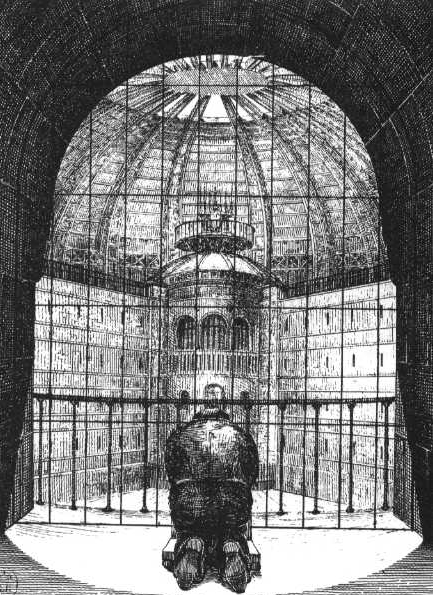
A prisoner kneels before the watchtower in a drawing of Jeremy Bentham’s ‘Panopticon’. The Panopticon was an architectural form that Bentham envisioned for a variety of social institutions. The idea was to have a central platform where an observer could cast their gaze over all the observed, thus making them feel constantly under watch and ensuring, in Bentham’s own words, “a new mode of obtaining power of mind over mind, in a quantity hitherto without example.” Jeremy Bentham is also the father of modern utility theory – a theory often associated with individual liberty, which is actually at heart a blueprint for social control.

It’s not hard to forget just how nonsensical, simplistic and childish the so-called theory of marginal utility is.

Read more...

Mark Provost: Occupy Boston – Day One (and Other OccupyWallStreet Updates)

Yves here. Police efforts to contain OccupyWallStreet have had the opposite effect to what the officialdom no doubt assumed would happen: that the demonstrators would either become discouraged or become violent, which would make it easy to discredit them. Instead, the macing of a group of women last weekend, followed by the arrest of over 700 people on Brooklyn Bridge on Saturdy, has given the movement legitimacy and media attention. It was the lead item on the BBC website over the weekend.

Press efforts to diminish the potential of this effort are now shifting.

Read more...

Is JP Morgan Getting a Good Return on $4.6 Million “Gift” to NYC Police? (Like Special Protection from OccupyWallStreet?)

No matter how you look at this development, it does not smell right. From JP Morgan’s website, hat tip Lisa Epstein:

JPMorgan Chase recently donated an unprecedented $4.6 million to the New York City Police Foundation. The gift was the largest in the history of the foundation and will enable the New York City Police Department to strengthen security in the Big Apple. The money will pay for 1,000 new patrol car laptops, as well as security monitoring software in the NYPD’s main data center.

New York City Police Commissioner Raymond Kelly sent CEO and Chairman Jamie Dimon a note expressing “profound gratitude” for the company’s donation.

“These officers put their lives on the line every day to keep us safe,” Dimon said. “We’re incredibly proud to help them build this program and let them know how much we value their hard work.”

Read more...

Friedrich Hayek Joins Ayn Rand as a Hypocritical User of Medicare

We’ve been a bit hard on the left of late, so we figured we’d take some steps to balance our programming. Mark Ames, who has been doggedly on the trail of the Koch brothers, found a delicious failure to live up to his oft-repeated standard of conduct by a god in the libertarian pantheon, Friedrich Hayek. And this fall from grace was encouraged one of the chief promoters of extreme right wing ideas in the US, Charles Koch.

Read more...

Matt Stoller: #OccupyWallStreet Is a Church of Dissent, Not a Protest

By Matt Stoller, the former Senior Policy Advisor to Rep. Alan Grayson and a fellow at the Roosevelt Institute. You can reach him at stoller (at) gmail.com or follow him on Twitter at @matthewstoller.

Last weekend, I spent a few days with the protesters downtown near Wall Street, and it was an eye-opening experience. The people there want something, but it’s not a list of demands, and it is entirely overlooked by the media and most commentators on the protest.

If all you read are news stories and twitter feeds about #OccupyWallStreet, the most trenchant imagery that will stick in your mind is that of police brutality, and the politics of Wall Street greed. The debate seems to be organized around whether the protest will be “successful” or not, how the protesters are stupid or a new American Tahrir Square, or rhetoric designed in a media sphere that maximizes attention. Glenn Greenwald suitably demolishes the sneering commentariat. But I think there’s something to add about what exactly this protest is, what it is doing, and most of all, what the people there “want”.

Read more...

Obama’s Work for Almost Free, Maybe You Get Hired Program

I so often criticize the New York Times for doing stenography for officialdom that I feel compelled to point out a case of good reporting on an Obama initiative I’ve seen criticized in other venues and failed to shred on NC.

The Times piece focuses on a Georgia “tryout” program in which workers still on unemployment get to work for free for prospective employers for a maximum of 24 weeks. The employer is under no obligation to hire anyone. Needless to say, this program is more than a tad skewed in favor of companies. But it costs no money and creates the impression the government is Doing Something. So since no one in DC wants the government to spend more money, particularly on little people, this gimmick is perfect fit with the “let them eat cake” zeitgeist.

Key sections of the Times piece:

Read more...

The False Dichotomy of Greed

By Sell on News, a macro equities analyst. Cross posted from MacroBusiness

The Euro crisis appears to be developing into something similar to the 1980s Latin American debt crisis when the idea that, to quote Walter Wriston, who ran First National City/ Citibank from the 1960s into the 1980s it was assumed that: “countries don’t go out of business.” The Latin American leadership demonstrated that they, in effect, could, by defaulting. As a number of bloggers at MacroBusiness have pointed out, government finances are not like household finances, although they are often seen that way. That much is well understood in the financial community, although perhaps not as well in the wider public.

Read more...

Richard Kline: Progressively Losing

By Richard Kline, a Seattle-based polymath and poet

Those anywhere to the liberal side of the Anglo-American political spectrum have been on a long losing streak. As of this summer of 2011, they are wholly in disarray. In my considered view, ‘progressives’ lose because they do not have it as a goal to win. Their principal concern is to criticize the moral failings of others in society, particularly the moral failings of those in power.

At best, progressives seek to convert. In the main, they name and shame—ineffectively. American ‘progressives’ distrust political power, period, are queasy about anyone having it, and suspicious toward anyone who actively seeks it, including other putative progressives. The contest as progressives conceive it is fundamentally a moral one: they believe they are right, and want their opposition to see the light and reform/conform. Thus, they don’t frame what they engage in as a fight but rather as a debate.

There has been another and more radical trend on the left-liberal end of the spectrum previously. That trend derived from radicalized, Continental European, immigrants, it sourced much of labor activism, and is largely extinct in America as of this date. It is the atrophy of this latter muscle in particular which has rendered progressive finger-wagging impotent.

Read more...

The Decline of Manufacturing in America: The Role of Government Neglect

As I mentioned in a Labor Day post, I grew up in an America where manufacturing was still the backbone of the economy. I may be more aware of that than most in my age group by virtue of spending much of my childhood in small towns where the local paper mill was the biggest employer. Similarly, when I went to business school, many of my classmates had worked for major manufacturing firms, and the ones who had been in finance (for the most part, two year credit officer programs at major banks) weren’t seen as having better backgrounds than their classmates.

While as other economies developed, the US share of global production was bound to decline, I’m disturbed by the assumption that labor costs are the sole determinant of success. My contacts is that it is an article of faith in Washington is that the US can be competitive only in finance (and presumably in commodities businesses like agriculture). This story line is terribly convenient, since it gives diseased, greedy, and incompetent American managers and policymakers a free pass.

Read more...
